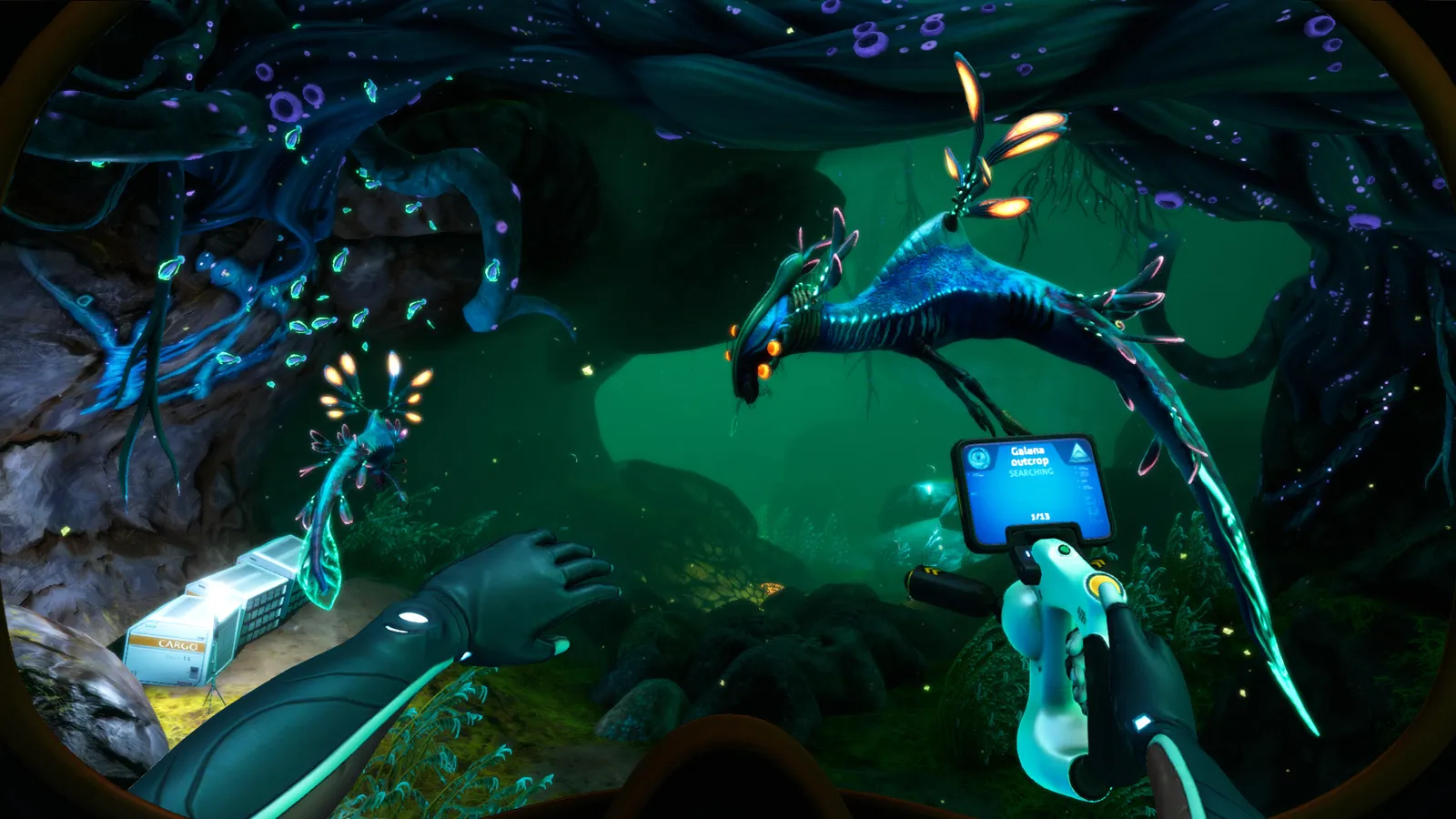
The Subnautica map explained: all 18 aquatic biomes with depth ranges, resources and dangers, plus how to navigate without an in-game map.
Subnautica Biome Map — Every Biome, Depth Range and What Lives There
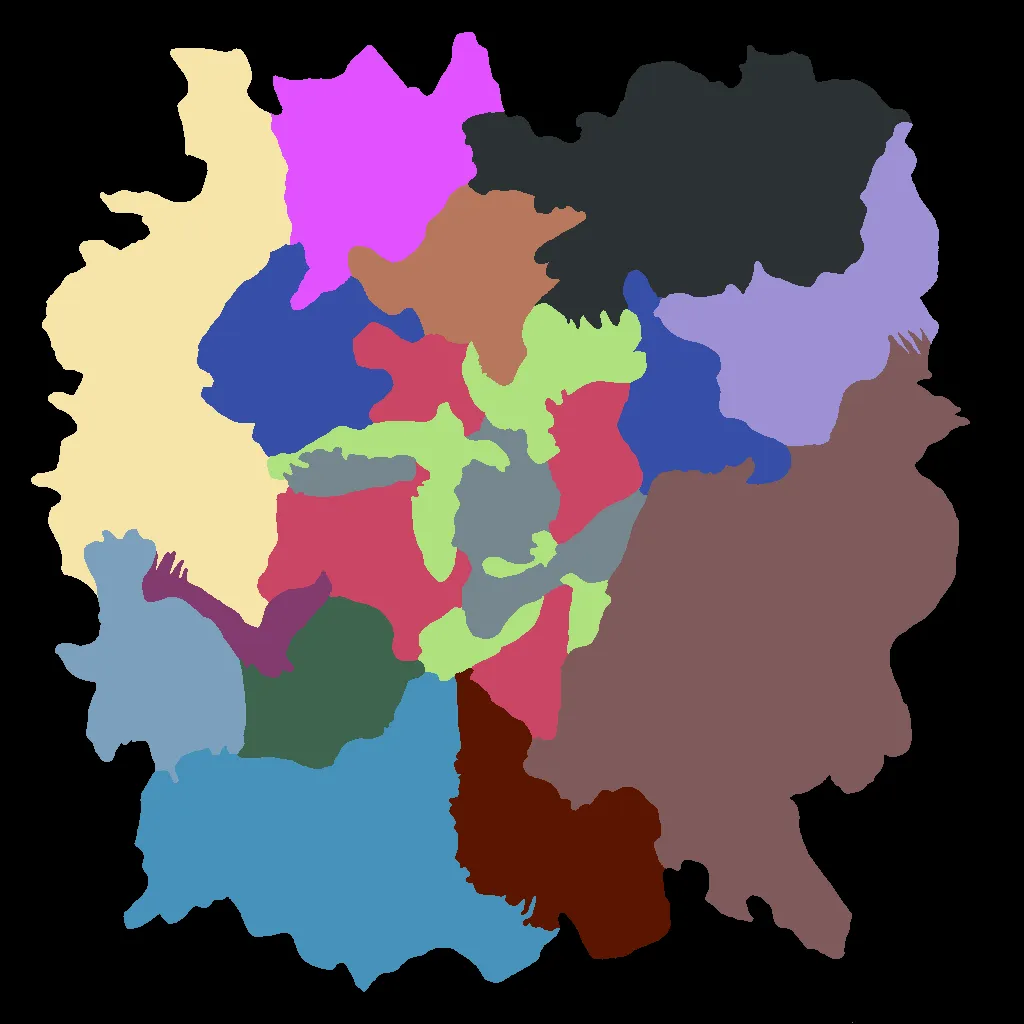
Subnautica has no in-game map — the entire game takes place on Planet 4546B inside a volcanic crater roughly 2 km across, and you navigate it with landmarks, beacons and the F1 coordinates window. The crater is divided into 18 aquatic biomes plus the Aurora, ranging from the 80-meter Safe Shallows where you start to the 8-kilometer Crater Edge void at the border. This guide is the complete map breakdown: every biome with its depth range and key resources, what Planet 4546B actually is, how to navigate without a map, and a detailed look at the Bulb Zone, the biome players get lost in most often.
Here's what you'll learn:
- Whether Subnautica has a map at all (and what replaces it)
- Every aquatic biome with its exact depth range
- What Planet 4546B is and how the crater fits into it
- A full Bulb Zone breakdown (depth, fauna, coordinates)
- The best navigation tools and interactive maps
Official resources: Steam store page · Official Subnautica Wiki — Biomes · Official Subnautica Wiki — Planet 4546B · MapGenie Subnautica map · IGN Subnautica page
Does Subnautica Have a Map?
No. Like Below Zero, the original ships without a map screen — a deliberate design choice so you navigate like a real diver: by landmarks, beacons and memory. What replaces it:
- F1 coordinates (PC) — the debug window shows your X/Y/Z position and the biome name. This is the de-facto map.
- Beacons — drop one at every point of interest; they stay on your HUD with labels and distances.
- The Compass — cheap to craft, shows heading; the single best early purchase.
- The Scanner Room + HUD Chip — projects nearby resources, creatures and fragments onto your screen.
For a real map, the community tools are excellent: the MapGenie interactive map (mapgenie.io/subnautica) and subnauticamap.io both layer biomes, wrecks, databoxes and leviathan spawns over the crater — the same tools Below Zero players use, as covered in our Below Zero map guide. There's also the Map mod for an in-game PDA map, detailed in our Subnautica mods guide.
The community universally treats the F1 debug coordinates as the game's map. It also shows biome IDs and camera info; nothing breaks. On consoles you can print coordinates via the console command warp-adjacent tools, but on PC F1 is all you need.
What Planet Is Subnautica Set On?
Planet 4546B — a category-3 ocean planet in the outer Ariadne Arm, orbiting a yellow dwarf star designated 4546 ("B" = first planet discovered there). Per the official wiki:
- It's smaller than Earth with a breathable nitrogen-oxygen atmosphere and two moons, one close enough to cause frequent solar eclipses.
- Almost the entire planet is water, with only a few islands.
- Three major ecosystems exist: The Crater (where Subnautica plays), Sector Zero (where Below Zero plays) and the Dead Zone (the open ocean covering most of the planet).
- The Crater is a dormant volcanic crater about 3 km in diameter — the whole game map fits inside it.
- A day-night cycle lasts ~20 real minutes (4.5 minutes of night, 15.5 of daylight).
- The planet's core is highly thermally active — which powers the Alien Thermal Plant and the Lava Zones, and is why the endgame lives at the bottom of the map (see our Primary Containment Facility guide).
Every Biome in the Crater (With Depth Ranges)
Depth ranges from the official wiki's biome tables:
| Biome | Depth range | Key resources | Danger level |
|---|---|---|---|
| Safe Shallows | 0–80 m | Titanium, quartz, copper, Cave Sulfur (caves) | Low |
| Kelp Forest | 0–160 m | Creepvine (Fiber Mesh, Lubricant), copper, lead | Low–Medium (Stalkers) |
| Grassy Plateaus | 40–200 m | Silver, gold, copper; Laser Cutter fragments; Jellyshroom entrance | Medium (Bonesharks) |
| Sparse Reef | 20–310 m | Copper, quartz, fragments | Low |
| Underwater Islands | 25–540 m | Magnetite, quartz; Cyclops fragments | Medium (Bonesharks) |
| Northwestern Mushroom Forest | 50–230 m | Cyclops hull/bridge fragments, lithium | Low |
| Northeastern Mushroom Forest | 100–250 m | Lithium, magnetite | Low |
| Bulb Zone | 140–540 m | Rubies, lithium, diamonds; Sea Crown seeds | High (Ampeels) |
| Crash Zone | 0–550 m | Metal salvage, silver; Aurora | Extreme (9 Reapers + radiation) |
| Dunes | 65–530 m | Rubies, lithium, diamonds | Extreme (8 Reapers) |
| Mountains | 0–560 m | Magnetite, diamonds, lithium | Extreme (7 Reapers) |
| Crag Field | 45–560 m | Cyclops engine fragments, diamonds, lithium | Medium |
| Blood Kelp Trench | 100–675 m | Rubies, gel sacks, deep shrooms | High |
| Northern Blood Kelp Zone | 170–620 m | Same, plus one Ghost Leviathan | High |
| Sea Treader's Path | 170–425 m | Shale outcrops (diamonds, lithium) kicked up by Sea Treaders | Medium |
| Grand Reef | 90–570 m | Rubies, gel sacks, diamonds, lithium | High (2 Ghosts) |
| Lost River | ~500–900 m | Nickel, crystalline sulfur, magnetite; the deep gateway | High |
| Inactive Lava Zone / Lava Lakes | 900–1,500 m | Kyanite, nickel, ion cubes; Sea Dragons | Extreme |
| Crater Edge | 0–8,192 m | Nothing but Ghost Leviathans | Extreme — turn back |
Per the official Subnautica Wiki: "The Crater features a full ecosystem of flora and fauna. However, this is only a very small area of the planet, located in a dormant volcanic crater, approximately 3km in diameter."
The Bulb Zone, Explained (The Biome Everyone Gets Lost In)
The Bulb Zone (coordinates 1251 -215 606) borders the Northeastern Mushroom Forest, the Crash Zone, the Mountains and the Crater Edge. It's the mid-game biome players end up in by accident and then can't leave:
- Depth: 140–540 m — the base Seamoth will crush here; bring a depth module.
- Danger: Ampeels and Bonesharks patrol everywhere, Mesmers occasionally lure you into the dark, and pods of Reefback Leviathans drift above. The southern half is radioactive until you repair the Aurora's drive core (proximity to the Crash Zone).
- Resources: Rubies (mostly in the Bulb Zone Caves), lithium, diamonds, gold, lead, Sea Crown seeds, Table Coral samples.
- Points of interest: two large wrecks (940 -198 593, 1309 -215 570), a destroyed lifepod (1111 -265 557 — it holds the Repulsion Cannon databox), lava geysers, the Bulb Zone Arch Cache (1383 -296 757), and a Lost River entrance at 1060 -520 920.
- The caves: the Bulb Zone Caves connect to the Mushroom Forest Caves, and hold the rubies and the Sea Crown seeds.
You've hit the Crater Edge, and the only thing out there is the void and Ghost Leviathans that respawn forever. There's no loot beyond the border. Turn around at the first dark drop-off; the full leviathan threat list is in our leviathans guide.
How to Navigate Without a Map
- Craft the Compass before the Seaglide. Heading is worth more than speed in hour one.
- Drop a beacon at every cave entrance, wreck and lifepod. One titanium per beacon; players who skip this spend hours lost.
- Use the Aurora as the orientation anchor — it's visible from nearly anywhere on the surface, bow facing north.
- Learn the two highways: the Grassy Plateaus ring circles the whole map at safe depth, and the Lost River is the only route between the upper crater and the lava zones.
- Surface when lost. The Aurora's silhouette and the two islands (Floating Island south, Mountain Island north) resolve where you are faster than any sonar.
- Deep biomes are gated by depth modules — Seamoth MK1 (300 m) opens the mid ring, MK2 (500 m) opens the Grand Reef and Blood Kelp, and the Cyclops/Prawn upgrades open the Lost River and lava zones. The upgrade chain is covered in our Cyclops guide.
FAQ
Does Subnautica have a map?
No in-game map — you navigate with F1 coordinates (PC), beacons, the compass and the Scanner Room HUD chip. Interactive browser maps (MapGenie, subnauticamap.io) or the Map mod are the community solutions.
How deep is each biome in Subnautica?
Safe Shallows 0–80 m, Kelp Forest 0–160 m, Grassy Plateaus 40–200 m, Bulb Zone 140–540 m, Grand Reef 90–570 m, Blood Kelp up to ~675 m, Lost River ~500–900 m, lava zones down to ~1,500 m, and the Crater Edge drops to 8,192 m.
How do I see my coordinates in Subnautica?
Press F1 on PC to open the debug window showing X/Y/Z and your biome. The community treats this as the game's map.
What is the deepest biome in Subnautica?
The Lava Lakes at ~1,500 m, site of the Primary Containment Facility. The Crater Edge is technically deeper (8,192 m) but contains nothing but Ghost Leviathans and is the map border.
What planet is Subnautica set on?
Planet 4546B, a category-3 ocean planet smaller than Earth in the Ariadne Arm. The game takes place inside a ~3 km volcanic crater; Below Zero happens at Sector Zero, an arctic region of the same planet.
Related Guides
- Subnautica Below Zero Map — Biomes, Coordinates & Navigation
- Subnautica Grand Reef Guide — Depth, Resources and Dangers
- Subnautica Leviathans Guide — All Types and Locations
- Subnautica Primary Containment Facility Guide — Route and Hatching Enzymes
- Subnautica Mods Guide — Best Mods and How to Install
Last updated: August 13, 2026.
More Subnautica Guides
How to reach the Active Lava Zone in Subnautica: the exact entrances from the Inactive Lava Zone, gear you need, and every story location inside.
Aerogel in Subnautica is 1 Ruby + 1 Gel Sack in the Fabricator. Where to find both ingredients fast, plus every late-game recipe that needs Aerogel.
Subnautica Alien Containment guide: where to get the blueprint, the 5 Glass + 2 Titanium recipe, how breeding and egg hatching work, and the best fish to breed.
Every leviathan in Subnautica and Below Zero: sizes, aggression, spawn biomes, health and how to deal with each — plus the extinct giants.
How to enter the Aurora in Subnautica: every door code (1454, 1869, 6483, 2679), the radiation suit requirement, what tools you need and all the loot inside.
All Subnautica Aurora door codes: 1454, 1869, 2679 and 6483, where each code is found, and exactly what's worth looting behind every door.
Is Subnautica Below Zero multiplayer? No official co-op — but a full story-synced mod exists for Windows. Plus Nitrox and Subnautica 2's official co-op.
Subnautica Below Zero Picture Frame guide: the 16:9 aspect ratio you need for photos, where to get the blueprint, and how to load custom images.