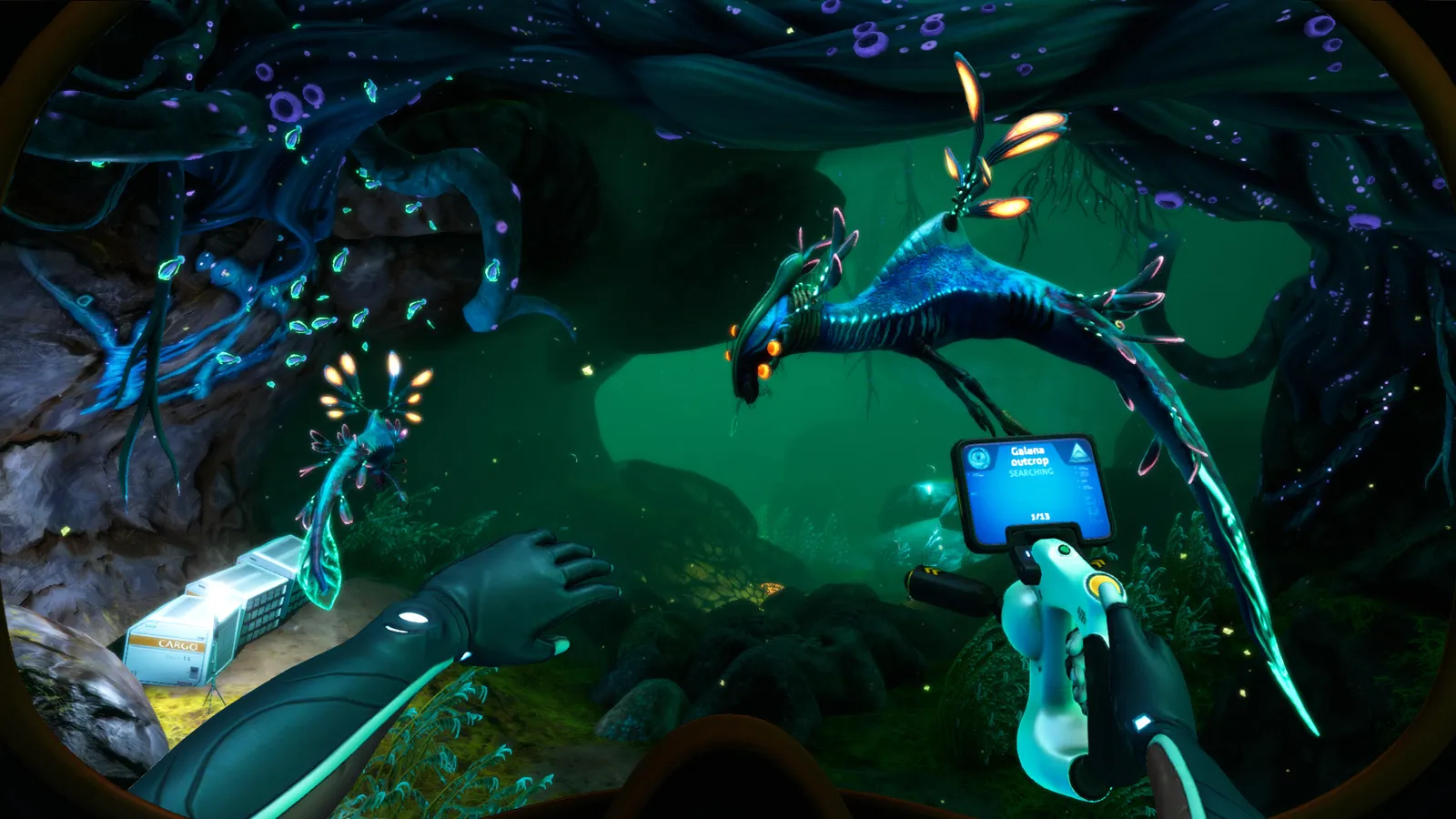
The Lost River biome guide: all entrances, sub-biomes, nickel ore and crystalline sulfur locations, and key coordinates for the endgame.
Subnautica Lost River — Entrances, Sub-Biomes and Resources
The Lost River is Subnautica's endgame gate: a frigid cave system spanning 525 to 1,065 meters that every late-game player has to pass through on the way to the lava zones, the Disease Research Facility and the ending. It's also the only source of nickel ore and one of two homes of crystalline sulfur, plus a graveyard of Gargantuan fossils, Ghost Leviathan juveniles, and the green acidic brine that makes the whole place look like a horror movie. This guide covers all four entrances, the seven sub-biomes, every resource location that matters, and the coordinates that keep you from spending an hour lost in the dark.
Here's what you'll learn:
- All four Lost River entrances, ranked by safety
- How deep it goes and what vehicle you need
- Where to find nickel ore and crystalline sulfur (with exact locations)
- Every sub-biome and key POI with coordinates
- The hazards: brine, Ghost Leviathans, Crabsquids — and how to handle them
Official resources: Steam store page · Official Subnautica Wiki — Lost River · Official Subnautica Wiki — Nickel Ore · Wikipedia — Subnautica
How Deep Is the Lost River?
The official wiki gives the biome a depth range of 525–1,065 meters, with temperatures of just 3.3–4.5°C. What that means for vehicles:
- Seamoth: cannot explore the full river even with Depth Module MK3 (900 m) — it can reach parts of the upper river but the wiki is explicit that some sections are too deep for it. Take the Cyclops or Prawn Suit.
- Cyclops: fully capable end-to-end, including the Inactive Lava Zone beyond — but you want the Depth Module MK1 (900 m) minimum, MK2 (1,300 m) for the deeper corridors.
- Prawn Suit: the biome's real workhorse; immune to the brine's damage and can drill the Large Resource Deposits.
Per the official Lost River wiki entry: "While the Cyclops and Prawn Suit are fully capable of exploring the entirety of the Lost River and the Inactive Lava Zone beyond it, there are some sections that are too deep for the Seamoth to explore, even with its strongest depth module."
All Four Lost River Entrances
The wiki lists four entrances; here they are ranked by how likely you are to survive them:
| Entrance | Route | Danger |
|---|---|---|
| Northern Blood Kelp Zone (Ghost Forest) | The classic: swim into the Blood Kelp Zone, find the cavern opening, drop into the Ghost Forest | Medium — Ghost Leviathan juvenile patrols the upper cavern |
| Deep Grand Reef (Ghost Canyon) | Drop through the Deep Grand Reef cave system into the Ghost Canyon | Medium — Crabsquids + a Ghost Leviathan juvenile; great if you're already farming the Degasi base |
| Blood Kelp Trench (Corridor) | From the southern trench, follow the Lost River Corridor past the brine falls | Low-Medium — Crabsquids in the corridor, but the straightest approach for a first visit |
| Mountains / Bulb Zone border (Mountains Corridor) | The northern tunnel from the Mountains | High — Reaper Leviathans in the Mountains and Bulb Zone en route |
For a first trip, the Blood Kelp Trench or Northern Blood Kelp routes are the community favorites — the Trench is a tight, obvious canyon that funnels you into the river with the least wandering. The Deep Grand Reef route is best if you've already cleared the Degasi base (see our Grand Reef guide).
The Seven Sub-Biomes and Key Coordinates
The Lost River splits into seven sub-biomes (official wiki). The ones you need to know by name:
| Sub-biome | What's there |
|---|---|
| Ghost Forest | Northern entrance; brine falls, Ghost Trees, the Ghost Forest Arch Cache (portal to the endgame), one Ghost Leviathan juvenile |
| Lost River Corridor | Connects the Blood Kelp Trench to the Bone Fields; brine rivers, Crabsquids, gel sacks everywhere |
| Bone Fields | The Gargantuan Fossil (402 m of skeleton), hydrothermal vents with rubies/lithium/magnetite; a Ghost Leviathan juvenile watches the canyon |
| Ghost Canyon | The Deep Grand Reef connection; holds the Lost River Laboratory Cache |
| Tree Cove | The safe room: harmless blue brine, the Giant Cove Tree, Ghostrays; leads down to the Inactive Lava Zone corridor |
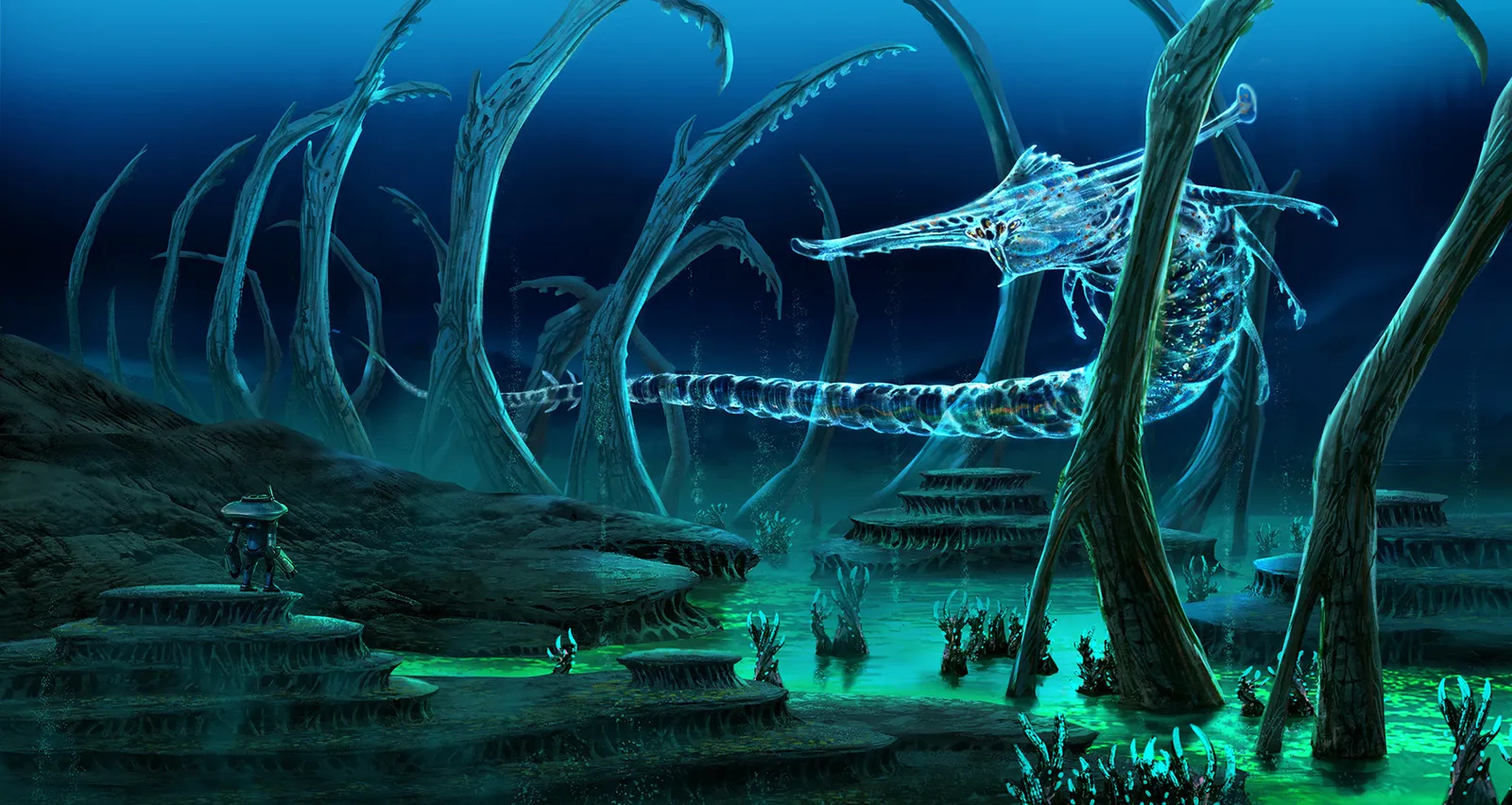
| Junction | Plateau with thermal vents, the Sea Dragon Leviathan skeleton, and the Disease Research Facility at -252 -814 316 |
| Mountains Corridor | Tunnel toward the Mountains/Bulb Zone with the Inactive Lava Zone drop; one Ghost Leviathan juvenile |
Key coordinates, verified against the wiki and subnauticamap.io:
| POI | Coordinates |
|---|---|
| Disease Research Facility | -252 -814 316 |
| Lost River Laboratory Cache | Ghost Canyon (near the Ancient Skeleton) |
| Inactive Lava Zone entrance #1 | -1280 -970 400 |
| Inactive Lava Zone entrance #2 | 270 -909 688 |
The Tree Cove's blue brine is completely harmless (unlike the green brine everywhere else), holds only passive Ghostrays, and sits right above the path to the Lava Zones. It's the standard spot for a Lost River forward base — geothermal vents nearby for a Thermal Plant, and the Nuclear Reactor guide covers the power options that work this deep.
Where to Find Nickel Ore
Nickel Ore is found exclusively in the Lost River and parts of the Inactive Lava Zone — per the official wiki, it appears "as a Large Resource Deposit and as loose chunks of ore on the seabed." Practical spots:
- Bone Fields — loose nickel chunks scattered on the seafloor around the Gargantuan Fossil; the most forgiving farm.
- Brine beds across the river — nickel sits in and around the brine lakes; a Prawn Suit collects it safely, a swimming player takes brine damage.
- Large Nickel Deposits — drillable with the Prawn Suit's Drill Arm in the Bone Fields and Tree Cove areas.
- Inactive Lava Zone — more deposits, but you need the depth gear already.
What it's for: nickel is the gate material for the Cyclops Depth Module MK2 and Prawn Suit Depth Module MK2 — you literally cannot reach the Lava Zones without a few chunks. Budget for roughly 3–5 nickel for the depth modules and Prawn upgrades on a normal run.
Where to Find Crystalline Sulfur
Crystalline Sulfur spawns in the Lost River under the green brine, plus the Inactive Lava Zone and Lava Lakes (official wiki). The classic farm:
- Junction-to-Bone Fields connection — the wiki specifically notes the small section connecting the Junction with the Bone Fields "contains only Crystalline Sulfur under the brine." Best known spot.
- Brine pools throughout the river — the glowing yellow crystals sit on the floor under the green liquid.
- Lava zones — scattered on the floor of the Inactive Lava Zone and Lava Lakes for late-game farming.
The green brine deals damage to players (and to the Seamoth) on contact. In the early river visits you'll usually swim down into a brine pool, grab sulfur, and take a chunk of health. The Prawn Suit is immune and can wade through brine freely — after your first Prawn, sulfur farming becomes trivial.
Crystalline sulfur is needed for the Thermal Reactor modules (Cyclops and Prawn), which is the classic "why do I need this weird crystal" answer.
The Brine and Other Hazards
- Green brine — highly acidic; damages players and the Seamoth, but not the Prawn Suit, Cyclops, or native fauna.
- Three Ghost Leviathan Juveniles — one each in the Ghost Forest, Bone Fields and Mountains Corridor. They patrol; learn the routes or use the Cyclops's Silent Running.
- Crabsquids — Corridor and Ghost Canyon; EMP blasts disable your electronics (monsters guide).
- River Prowlers and Blood Crawlers — smaller predators that swarm in the Bone Fields and Ghost Forest; they chip at the Cyclops but mainly annoy swimmers.
- Cold — 3.3–4.5°C means thermal reactor modules barely work away from vents; bring spare power cells.
One more resource note: the Lost River has enough lead to build a Nuclear Reactor and its rods on site, plus rubies, lithium, magnetite, gel sacks and shale outcrops on the walls and ceilings — it's a full resource biome, not just a corridor. If you're planning the endgame, the Tree Cove forward base plus a Nuclear Reactor is the standard late-game loadout.
Deep Shrooms, Mesmers and the Synthetic Fibers Chain
Two Lost River resources and one infamous creature get their own searches, so here they are together:
Deep Shrooms — the glowing blue-green mushrooms that grow in clusters around the brine pools, tree roots and cave floors. They're the only source of Benzene: refine one Deep Shroom at a Fabricator and you get 1 Benzene. That matters because Benzene + 1 Fiber Mesh = Synthetic Fibers, the material behind the Reinforced Dive Suit and the Prawn Suit's thermal reactor and depth upgrades. And Fiber Mesh itself is 2 Creepvine Seed Clusters from the Kelp Forest's Creepvines. So the full chain is: Creepvine Seed Cluster → Fiber Mesh → (+ Deep Shroom → Benzene) → Synthetic Fibers. Stock a locker of Deep Shrooms on every Lost River trip and you'll never farm this chain twice.
The Deep Shroom clusters sit right next to the nickel node fields in the Bone Fields. One Prawn run can haul both: drill the nickel deposits, then knife-gather a dozen Deep Shrooms from the same walls. Back at the Fabricator that's 12 Benzene = 12 Synthetic Fibers ready for the Reinforced Dive Suit and every Prawn/Cyclops upgrade in the back half of the game.
Mesmer — the small hypnotic fish that lurks in the Lost River and Blood Kelp zones. It sings a lure; if you stare at it, the screen shows an illusion and you swim toward its mouth, taking real damage. It's fragile — one or two knife hits kills it — and the counter is simply to look away or kill it before the hypnosis completes. The 'mesmer subnautica' searches exist because it's the game's most unsettling death animation, not because it's a serious threat.
FAQ
Where is the Lost River entrance in Subnautica?
There are four: the Northern Blood Kelp Zone (Ghost Forest), the Blood Kelp Trench (Corridor), the Deep Grand Reef (Ghost Canyon), and the Mountains/Bulb Zone border (Mountains Corridor). The Blood Kelp routes are the most forgiving for a first visit.
How deep is the Lost River?
525–1,065 meters, at 3.3–4.5°C. The Seamoth can't explore all of it even with the MK3 module — bring the Cyclops or Prawn Suit with depth modules.
Where do you find nickel ore in Subnautica?
Only in the Lost River and parts of the Inactive Lava Zone: loose chunks and Large Deposits in the Bone Fields and around the brine beds. It's required for the Cyclops/Prawn Depth Module MK2.
Where do you find crystalline sulfur in Subnautica?
Under the green brine in the Lost River — especially the Junction-to-Bone Fields stretch — plus the Inactive Lava Zone and Lava Lakes. Use the Prawn Suit to avoid brine damage.
What is in the Lost River?
Seven sub-biomes, the Disease Research Facility (story), the Lost River Laboratory Cache, the Gargantuan Fossil, three Ghost Leviathan juveniles, Crabsquids, and the only nickel/crystalline sulfur farms in the game.
How do I make Synthetic Fibers?
Gather Deep Shrooms in the Lost River, refine each into Benzene at a Fabricator, then combine 1 Benzene + 1 Fiber Mesh (2 Creepvine Seed Clusters) into Synthetic Fibers. It's used for the Reinforced Dive Suit and Prawn Suit modules.
What are Deep Shrooms used for in Subnautica?
They're the only source of Benzene, which combines with Fiber Mesh to make Synthetic Fibers. They grow in clusters around the Lost River's brine pools and tree roots, and each one refines into 1 Benzene.
Related Guides
- Subnautica Grand Reef — Biomes, Resources & Map Spots
- Subnautica Nuclear Reactor — Power Guide & Charging
- Subnautica Monsters — Every Creature & Leviathan Explained
- Subnautica Cyclops Guide — Fragments, Upgrades and Pilot Tips
Last updated: August 13, 2026.
More Subnautica Guides
Every leviathan in Subnautica and Below Zero: sizes, aggression, spawn biomes, health and how to deal with each — plus the extinct giants.
How to enter the Aurora in Subnautica: every door code (1454, 1869, 6483, 2679), the radiation suit requirement, what tools you need and all the loot inside.
All Subnautica Aurora door codes: 1454, 1869, 2679 and 6483, where each code is found, and exactly what's worth looting behind every door.
Subnautica Below Zero map explained: how big Sector Zero is, every biome with depth ranges, key coordinates, navigation tips and the best map mods.
Is Subnautica Below Zero multiplayer? No official co-op — but a full story-synced mod exists for Windows. Plus Nitrox and Subnautica 2's official co-op.
Subnautica Below Zero Picture Frame guide: the 16:9 aspect ratio you need for photos, where to get the blueprint, and how to load custom images.
Official Subnautica Below Zero pictures and 16:9 wallpapers: where to download store screenshots, wiki art and community shots in full HD.
The Subnautica map explained: all 18 aquatic biomes with depth ranges, resources and dangers, plus how to navigate without an in-game map.