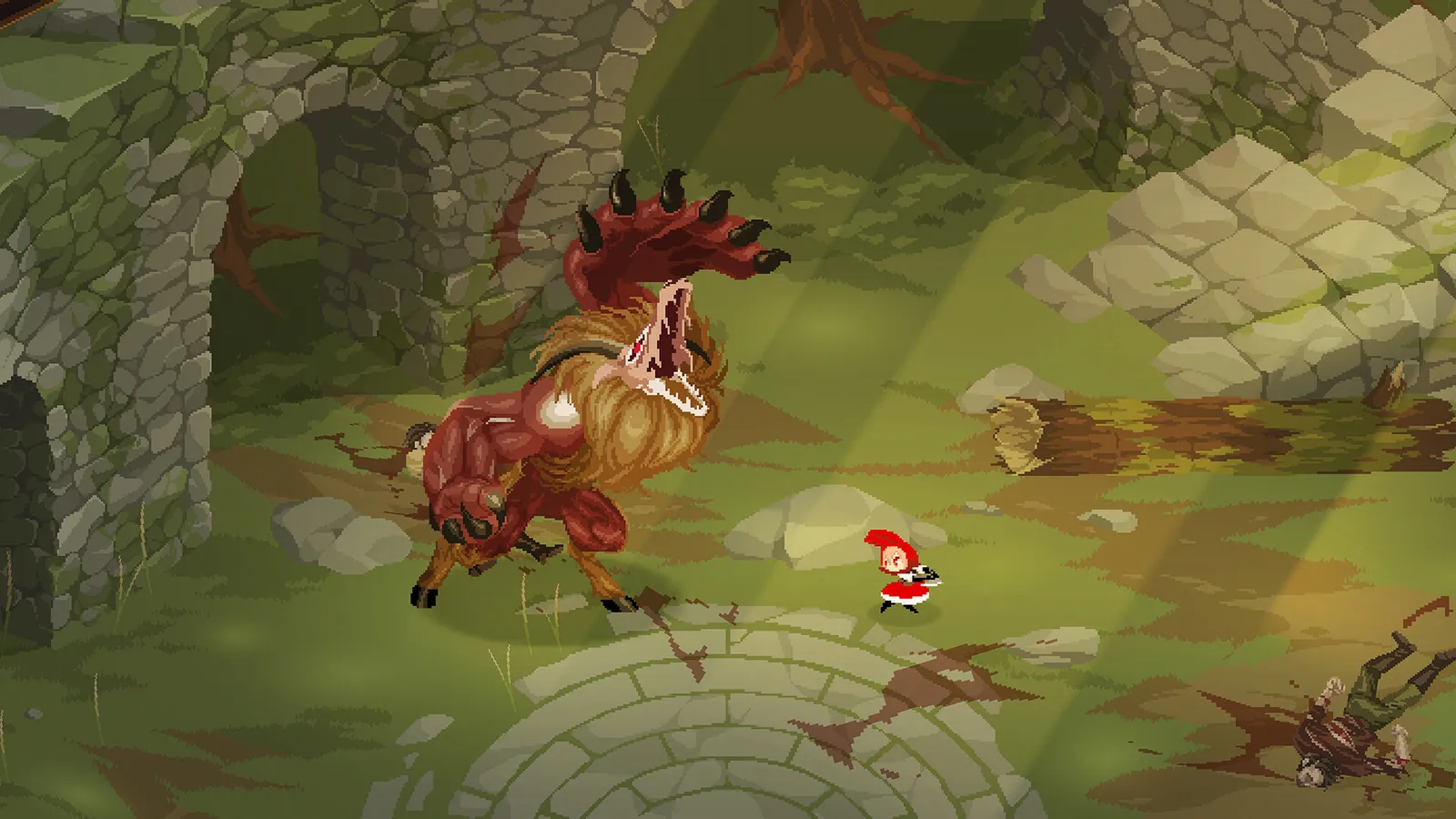
Rubinite builds guide: the four archetypes — Safe Focus, Perfect Dodge Greed, Mark Banker, Hybrid — and what to unlock first in the skill tree.
Rubinite Builds — Talismans, Mark Economy & Archetypes (2026)
Rubinite has no classes, no levels, and no gear drops. Your "build" is Talismans crafted by Wichiwi plus skill-tree choices, and it's a reaction to your death cause, not a loadout you copy once and forget. The best build in the game is the one that fixes whichever habit is currently ending your attempts — usually an early roll or a Focus hold through a grab.

Here's what you'll learn:
- How builds actually work (talismans, slots, skill tree, no classes)
- The four archetypes: Safe Focus, Perfect Dodge Greed, Mark Banker, Hybrid
- Which archetype matches your current problem
- What to unlock first in the skill tree
- How to tune your pouch boss-by-boss (poison, grabs, slams)
- The anti-builds to avoid
Official resources: Steam store page · Official site — Cup Dog Games · IGN game page
How Builds Work in Rubinite
Two systems spend the same currency — Blood Dust:
- Talismans — crafted by Wichiwi at the Cathedral Hub. Each one is a boon with a real trade-off (a defensive craft that slows your Focus, a greed craft that reduces survivability, and so on). You start with one slot and unlock more as you progress; the Talisman Satchel comes from Wichiwi after the tutorial.
- Skill tree — new techniques and passives. It unlocks after The Beast when you talk to Roy. This is where you buy the counter skills (Darts, Sunder Slash), Focus follow-up strikes (which extend your Thrust windows), and alternate strikes like Blood Blade Strike.
A second currency, Impure Crystals (boss defeats only), also feeds Wichiwi's shop. The Talismans guide has the full crafting priorities and slot rules; the Blood Dust guide covers the economy.
Per the official Steam description: "Every Bloodstained you kill surrenders its power. Absorb it to grow stronger for the fight ahead, craft a wide range of Talismans, and build a combat style that's entirely your own."
The Four Build Archetypes
| Archetype | Core idea | Best when |
|---|---|---|
| Safe Focus | Talismans that make Focus holds or dodges more forgiving; conservative pouch | You die mid-read, early-roll constantly, or are learning a new boss |
| Perfect Dodge Greed | Convert impact-frame dodges into Marks as your primary bank; Focus only on obvious recoveries | Your dodge timing is clean but clears feel slow |
| Mark Banker / Critical Payoff | Reach 3 Marks more often and make Thrust windows hurt (pair with Focus follow-up skill nodes) | You die with a full 3-Mark bank unspent |
| Hybrid | One safety piece + one payoff piece | Most players, most of the game — especially full-game bosses after the demo |
Two payoff Talismans on a player who still early-rolls is self-sabotage. Earn the dodge timing first — gear cannot fix early rolls. That's why the Perfect Dodge guide comes before any greed craft.
Which Build Should You Run?
Match the archetype to the death cause, not to a tier list:
| If you... | Run... |
|---|---|
| Early-roll constantly / die mid-read | Safe Focus |
| Dodge well but clears are slow | Mark Banker |
| Clear fine, chasing faster times | Perfect Dodge Greed + payoff |
| New full-game boss | Hybrid learning pouch |
| Dies with 3 Marks unspent | Thrust follow-up skills + spend discipline |
Any "universal best build" list that ignores your dodge timing is marketing. Verify crafts in the Hub, test one boss, then adjust one piece at a time.
Skill Tree: What to Unlock First
- Explosive Strike — the community-favorite early unlock: heavy damage, useful from the first boss to the endgame.
- Darts — unlocks the Focus-dart counter for red aerial attacks. Required by Gravekeeper onward.
- Sunder Slash — the grab counter (focus + attack as the grab connects). Grants a Mark and stuns the boss.
- Focus follow-up strikes — extend your Critical Thrust windows; arguably a better first spend than a second Talisman.
- Blood Blade Strike — an alternate strike that swaps in for the default slash. Community notes peg it around 300 Blood Dust (approximate — confirm in-game).
A Focus follow-up node from the tree can outperform a mediocre Talisman. Check nodes before emptying the wallet on a duplicate-feeling craft.
Talisman Priorities and Trade-Offs
Exact talisman names and numbers shift with patches, and neither the community wiki nor this guide invents fake stats — the priority ladder is what matters:
- Consistency craft — whatever reduces deaths while you learn (safer Focus, friendlier dodge windows).
- Skill-tree Focus follow-ups — extends spend windows.
- Damage / Mark-greed crafts — for clean repeats once you're consistent.
- Niche boss-specific swaps — poison resistance before Plaguebearer, grab answers for second Faye, and so on.
Rules of thumb: read the trade-off twice (a greed craft is a clear-attempt piece, not a learning piece); change one Talisman per session so you can attribute results; keep a baseline learning pouch even after you unlock flashier greeds. On the true route, Mira's Shadow (from Mira's event chain) blocks one incoming hit — keep it equipped while learning a new phase; it does not refresh when a revival talisman activates.
Demo Loadout Path (Beast → Faye)
The free demo is the build sandbox:
- Pre-Beast — no crafts. Learn Focus naked.
- Post-Beast — spend Blood Dust immediately on a consistency Talisman that makes Perfect Dodge or Focus holds more forgiving.
- Faye learning — keep safety; avoid double-greed crafts.
- Faye repeats / challenge — add Mark-greed once Perfect Dodge is stable.
The first craft should make Faye less punishing — not make Beast look cooler on replay.
Boss-by-Boss Tuning
Full-game Blood Recipients will ask for swaps; build skill is knowing when to swap:
- Gravekeeper — the first aerial-counter check; bring a Fast Strike that recovers quickly, or the jump attack punishes you under the drop.
- Plaguebearer — poison resistance is real value here; the fight also wants stronger base Slash damage and Talisman capacity. This is why you farm the other Mana Sources first (see boss order).
- Faye rematch — grab answers and defensive spacing; a grab-heavy fight.
- True difficulty — Mira's Shadow for one protected mistake; swap to aggression only after you can reach the hard phase consistently.
- Alcina — a hybrid pouch you already trust on two prior bosses, not three brand-new crafts installed in the Hub doorway.
When a new boss introduces grabs or slam answers, change the safety slot first, never the whole pouch. Keep one baseline hybrid you trust on Beast and Faye, and branch experiments from it — if an experiment fails, revert in one Hub visit.
(1) Double greed before Perfect Dodge exists. (2) Copying a streamer's pouch cold — their pattern memory is the real loadout. (3) Never swapping after a new boss. (4) Ignoring the skill tree — Talisman-only builds leave free power on the table.
FAQ
What is the best build in Rubinite?
The one that fixes your current death cause. Start Safe Focus if you die mid-read; Perfect Dodge Greed only after impact timing is clean; Mark Banker if you die with a full bank unspent.
How do builds work in Rubinite?
No classes. Talismans (crafted by Wichiwi with Blood Dust, each with a trade-off) plus skill-tree choices. Equip slots unlock as you progress.
Should I spend Blood Dust on talismans or skill tree nodes?
Both, but skill-tree Focus follow-ups often beat a mediocre Talisman. Check nodes before crafting duplicates; craft consistency pieces first while learning.
Do I need talismans for the demo?
You can learn The Beast without them, but craft something before serious Guardian Faye attempts — consistency beats greed for the rhythm exam.
What should I upgrade first in Rubinite?
Base Slash damage, the counter skills (Darts, Sunder Slash), Talisman slots, and one Strike that fits the next fight. Explosive Strike is the community-favorite early pick.
Related Guides
- Rubinite Beginners Guide — Focus, Marks & Your First Bosses
- Rubinite Focus System — Marks, Critical Thrust & Perfect Dodge
- Rubinite Talismans — Wichiwi Crafting & Priorities
- Rubinite Blood Dust — Earn, Spend & the Death-Friendly Economy
- Rubinite Boss Order — Full Boss List & Recommended Sequence
- Rubinite Wiki — Mechanics & Progression Hub
Last updated: August 14, 2026.
More Rubinite Guides
Rubinite demo: free on Steam, the 40-minute two-boss slice, which mechanics it teaches, and save carryover to the full game.
Rubinite Focus explained: the observation gauge, close-range charge speed, the 3-Mark cap, Critical Thrust timing, and Perfect Dodge synergy.
Rubinite how long to beat: 4-6 hours for a first clear, ~9-10 hours for the story plus true difficulty route, and 10+ hours for 100% — with real player data.
Is Rubinite worth it? The $19.99 boss-rush verdict: polish, difficulty, demo value and how it stacks against rivals.
Rubinite perfect dodge: hit the impact frame (not the wind-up) for an instant Pure Blood Mark, faster Focus fill, and which attacks you can't dodge.
Rubinite price explained: $19.99 base price, the 10% launch discount, the $4.99 soundtrack DLC, bundles, the free demo, and whether it's worth it.
Rubinite release date: launched July 22-23, 2026 on Steam for PC and macOS, plus the dev history — 2025 demo, Steam Next Fest, and launch.
Rubinite system requirements: minimum and recommended PC specs, macOS 10.13+ support, storage size, Steam Deck status, and testing with the free demo.