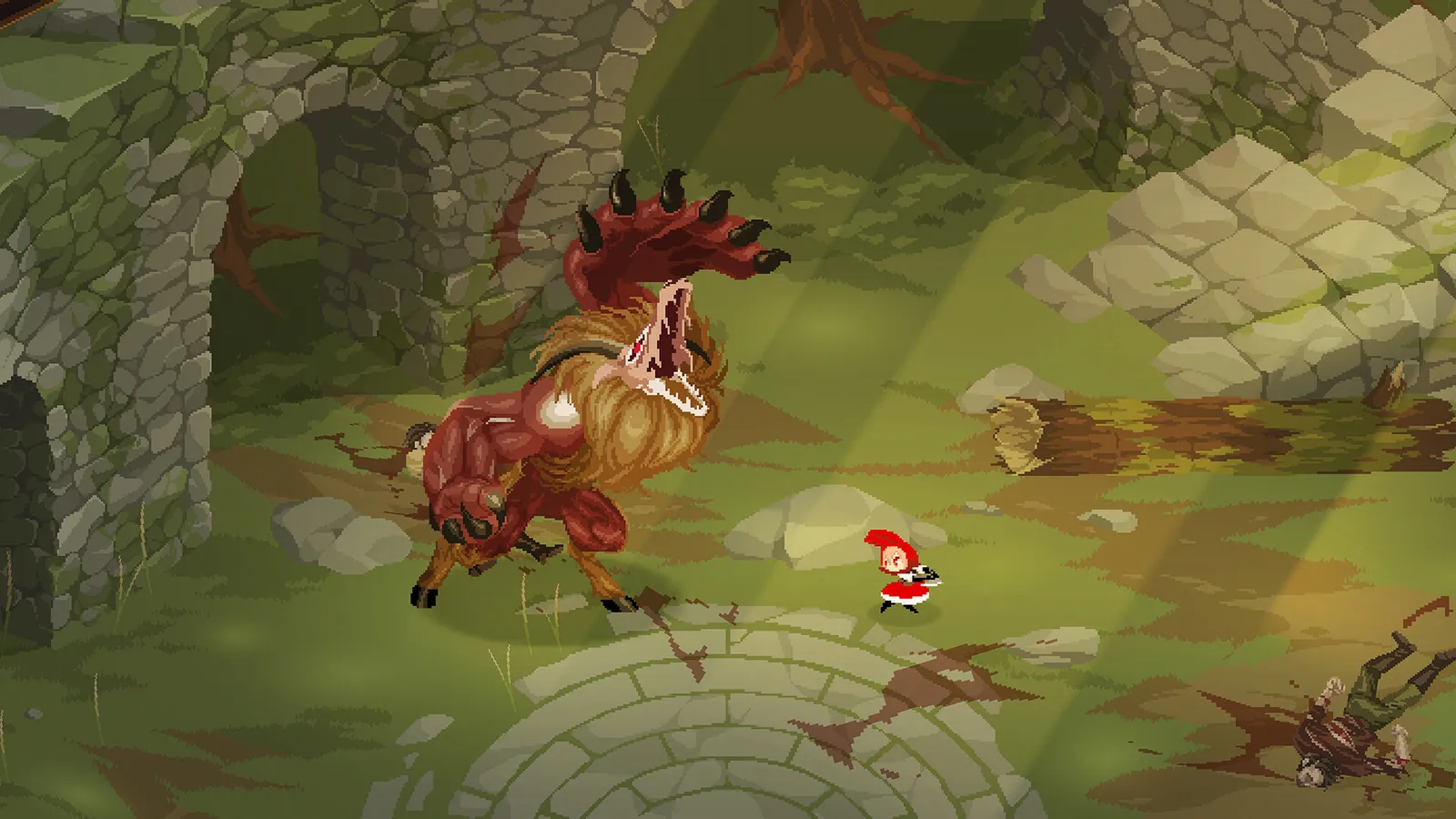
Rubinite Focus explained: the observation gauge, close-range charge speed, the 3-Mark cap, Critical Thrust timing, and Perfect Dodge synergy.
Rubinite Focus System — Marks, Critical Thrust & Perfect Dodge
Focus is the mechanic every Blood Recipient fight in Rubinite is built around. It is an observation tool, not a heavy attack: holding Focus makes Ruby read the enemy instead of swinging, and that read is the only reliable way to see the Pure Blood Crystal — the glowing weak point that decides the fight. Everything else (Perfect Dodge, darts, grabs) exists to feed or protect that read.
Here's what you'll learn:
- What Focus actually is and why light attacks can't win fights
- How the observation gauge fills (and the distance rule)
- The Pure Blood Marks cap of 3 and how stacking works
- When to spend Marks on Critical Thrust — the decision table
- Perfect Dodge synergy: instant Marks and meter acceleration
- The four Focus mistakes that feel like bugs
- A practice order on the demo bosses
Official resources: Steam store page · Official site — Cup Dog Games · IGN game page
What Is Focus in Rubinite?
Focus is Ruby's Crimson Eyes made mechanical. Every Blood Recipient hides a Pure Blood Crystal that is invisible without Focus — the game's framing is explicit that Ruby's blade alone "can barely scratch them." Hold Focus while facing the boss and a narrow observation cone tracks your aim direction; when the read lands on the enemy, a numeric counter climbs above its head. That counter is your Focus charge.
The official store copy is the shortest summary: "Use Focus to read an enemy, expose its weak point, and land a lethal strike."
How Focus Charge Works: Distance, Reset, and the Meter
Three rules govern the gauge:
- Close range fills faster. Stand right next to the boss and the observation gauge climbs quickly; hang at max range and every Mark takes noticeably longer. The winning habit: earn a short safe pocket after a dodge or boss recovery, step in, Focus hard, then decide whether to release or keep stacking.
- A hit mid-read resets the charge. Contact cancels your accumulation — and Marks you already banked can be wiped depending on the hit. Treat any contact as a full loop reset and rebuild cleanly instead of panic-thrusting from zero.
- The in-progress meter drains when you stop focusing. Banked Marks persist until you take damage or spend them, but the charge you are actively building decays if you let go of the hold. That is why "pocket discipline" matters: only start a read you can finish.
Players who hold Focus through an incoming hit are volunteering a full charge wipe. Dodge first, Focus second. Focus is a commitment, not a free aim-bot.
Pure Blood Marks: Stacking to the Cap of 3
Each completed read applies a Pure Blood Mark to the crystal. Marks stack to a hard cap of three — confirmed by the tutorial, the community wiki and reviews. More Marks held when the Critical Thrust connects means a harder hit, which creates the game's constant decision: release now for a guaranteed chunk, or greed one more Mark for a bigger spike.
Marks stay attached to the boss until you spend them with a Thrust or get hit. The UI counter above the boss is effectively your DPS schedule — check it, don't guess.
Critical Thrust: When to Spend Your Marks
A Critical Thrust is the finisher that consumes Marks for real damage. You have to be near the marked target to fire it, and the Thrust clears the Marks you were holding. Releasing on a single Mark is usually inefficient — unless the boss is a hit from death, or you are about to eat a grab that would wipe the stack anyway.
| Situation | Spend now? | Why |
|---|---|---|
| Boss in a named recovery, you're close | Hold toward 2–3 | Safe pocket — greed is paid |
| Grab or slam you can't answer next | Spend early (even 1–2) | Donating the stack hurts more than a small Thrust |
| Boss nearly dead | Spend at 1+ | Finish the phase; don't farm a third |
| Perfect Dodged into 3 Marks | Thrust immediately | Cap is full — sitting on 3 is free damage left on the table |
| Unknown next pattern | Spend at 2 | Guaranteed chunk beats a wiped 3 |
On bosses you're still learning, spend at two Marks unless you can name the next safe second. Greed is only smart when you can predict the recovery — otherwise every full bank is a donation to the next grab.
Perfect Dodge: the Focus Shortcut
A Perfect Dodge — dodging on the impact frame — banks a Mark instantly, no long hold required. It counts toward the same 3-Mark Critical Thrust bank, and it has one extra property: Perfect Dodging while already holding Focus accelerates the observation meter. That is the advanced loop — start a Focus hold in a safe pocket, Perfect Dodge the next hit, and ride the accelerated gauge into another Mark.
Use Focus when the boss is recovering and you have space; use Perfect Dodge when attacks are chaining with no gap; use both when you can start a hold, answer the next swing with a Perfect Dodge, then finish the Mark without resetting. Full timing detail is in the Perfect Dodge guide.
Focus Mistakes That Feel Like Bugs
These four habits make Focus feel broken. They are execution problems, not mechanic problems:
- Holding Focus at max range forever. Observation fill slows dramatically at long distance. If Marks feel impossible, you're reading from the wrong spacing band — step in on recovery.
- Treating Focus like a block button. It gives no invulnerability. You are volunteering a full charge wipe every time you hold through a hit.
- Critical Thrust from zero Marks. Firing a weak payoff with no bank wastes the punish window. Confirm the counter before committing the Thrust animation.
- Ignoring darts entirely. Focus darts exist for a reason — some slam patterns and spacing problems want a dart answer, not a roll or a hold. A Focus-only identity is incomplete.
A recurring community complaint on the Steam forums is charges built but the Thrust not firing. The usual causes: you are out of melee range of the marked target, or you are trying to Thrust mid-animation. Close the distance, confirm Marks, then commit.
Practice Order on the Demo Bosses
Abstract rules stick better when tied to arenas you know. Run this order in the free demo:
- The Beast — dash recovery Focus. Dodge or clear the dash, step in, Focus immediately (close range fills fast), bank two Marks, Thrust, reset spacing before the next projectile or homing swing.
- The Beast — homing + Focus layer. Start a Focus hold in a safe pocket, Perfect Dodge the homing attack to accelerate the meter, finish the Mark, then decide if a second is free. Unknown pattern? Spend at two.
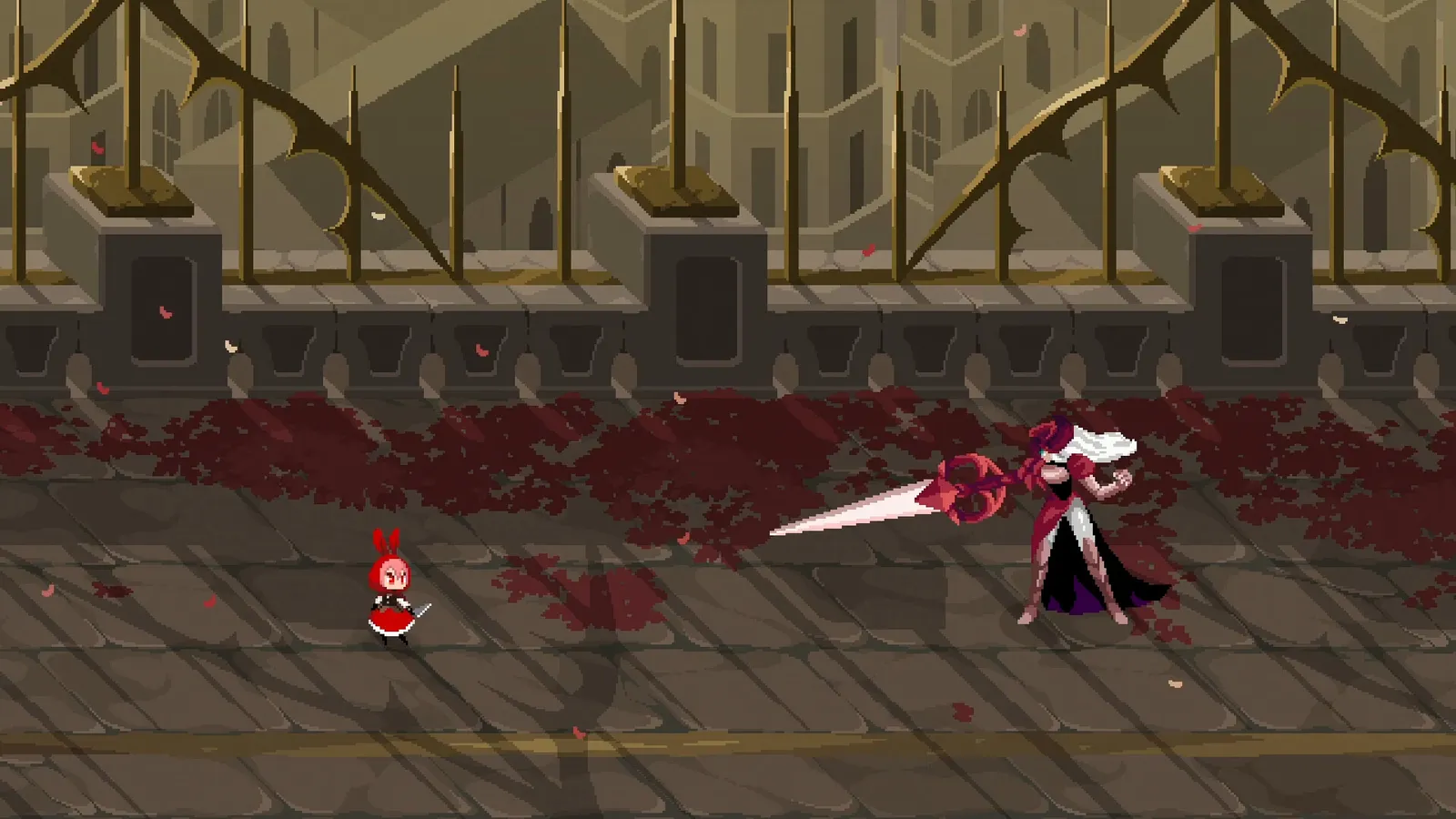
- Guardian Faye — string pressure. During her sword strings, stop forcing observation holds. Perfect Dodge for Marks, then Focus only on the recovery you can name. The Focus system does not require holding through chaos.
- Grab and slam exceptions. If a grab deletes you "while Focusing correctly," the issue is answer type — break Focus, Sunder Slash the grab, rebuild Marks. Focus mastery includes knowing when not to Focus.
After these four drills, your Mark economy will feel automatic — and the builds guide explains which Talismans and skill-tree nodes support which Focus style.
FAQ
What is Focus in Rubinite?
The observation mechanic that exposes a Blood Recipient's Pure Blood Crystal so you can stack Marks and land a Critical Thrust. Only Ruby's Crimson Eyes can see the crystal through Focus.
How many Pure Blood Marks can I stack?
Up to three. More Marks held when the Critical Thrust connects means a stronger hit, so you trade guaranteed chunks (1–2) against greedier spikes (3).
Does getting hit cancel Focus?
Yes — a hit cancels Focus charge accumulation, and banked Marks can be wiped depending on the hit. Rebuild cleanly instead of forcing a weak Thrust.
When should I use Critical Thrust?
Spend at 2 Marks by default. Spend at 1 only to finish a boss or before an unavoidable grab. Thrust immediately when you hit 3 (the cap), and never Thrust from an empty bank.
Is Perfect Dodge better than Focus?
Neither — they feed the same Mark bank. Focus is the safe way to build during recoveries; Perfect Dodge is the instant way to build mid-string, and Perfect Dodging during a Focus hold accelerates the meter.
Related Guides
- Rubinite Beginners Guide — Focus, Marks & Your First Bosses
- Rubinite Perfect Dodge — Instant Mark Timing Explained
- Rubinite Critical Thrust — When to Spend Marks
- Rubinite Boss Order — Full Boss List & Recommended Sequence
- Rubinite Builds — Talismans, Mark Economy & Archetypes
- Rubinite Wiki — Mechanics & Progression Hub
Last updated: August 14, 2026.
More Rubinite Guides
Rubinite Critical Thrust explained: how spending Pure Blood Marks powers the finisher, 1- vs 3-Mark damage trade-offs, weak-point targeting, and combo timing.
Rubinite demo: free on Steam, the 40-minute two-boss slice, which mechanics it teaches, and save carryover to the full game.
Rubinite how long to beat: 4-6 hours for a first clear, ~9-10 hours for the story plus true difficulty route, and 10+ hours for 100% — with real player data.
Is Rubinite worth it? The $19.99 boss-rush verdict: polish, difficulty, demo value and how it stacks against rivals.
Rubinite perfect dodge: hit the impact frame (not the wind-up) for an instant Pure Blood Mark, faster Focus fill, and which attacks you can't dodge.
Rubinite price explained: $19.99 base price, the 10% launch discount, the $4.99 soundtrack DLC, bundles, the free demo, and whether it's worth it.
Rubinite release date: launched July 22-23, 2026 on Steam for PC and macOS, plus the dev history — 2025 demo, Steam Next Fest, and launch.
Rubinite system requirements: minimum and recommended PC specs, macOS 10.13+ support, storage size, Steam Deck status, and testing with the free demo.