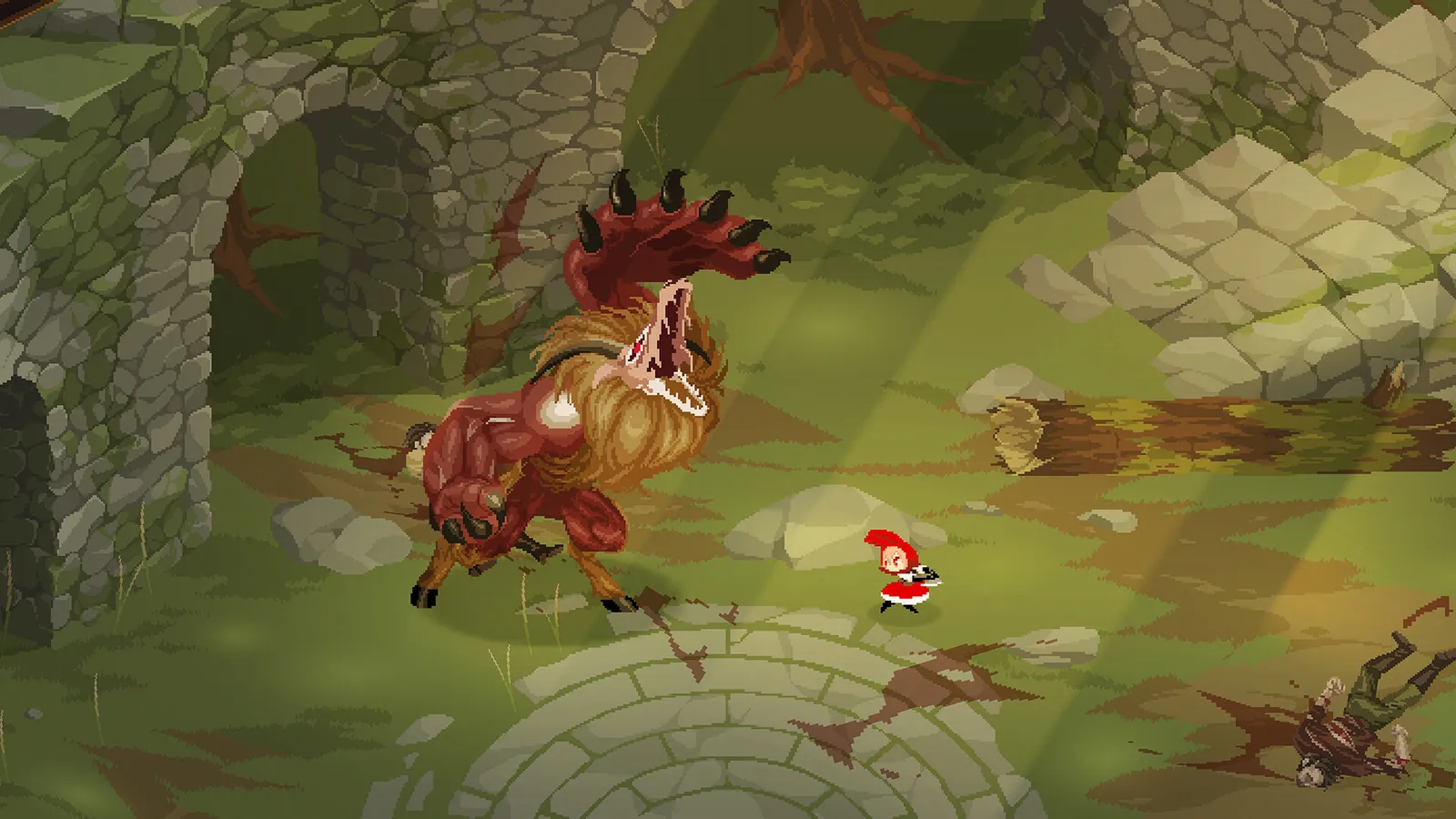
Rubinite Critical Thrust explained: how spending Pure Blood Marks powers the finisher, 1- vs 3-Mark damage trade-offs, weak-point targeting, and combo timing.
Rubinite Critical Thrust — The Mark-Powered Finisher Explained (2026)
Critical Thrust is Rubinite's damage finisher: you spend your stacked Pure Blood Marks to lunge into a Blood Recipient's exposed weak point and deal the only damage that matters. Ruby's regular slashes "barely scratch" bosses — the game's own store description says so — so Critical Thrust is not an optional combo; it's the core damage loop. One-Mark thrusts are fast and safe; two- and three-Mark thrusts hit much harder but leave you committed longer. Learning when to spend, and when to greed, is half the skill ceiling.
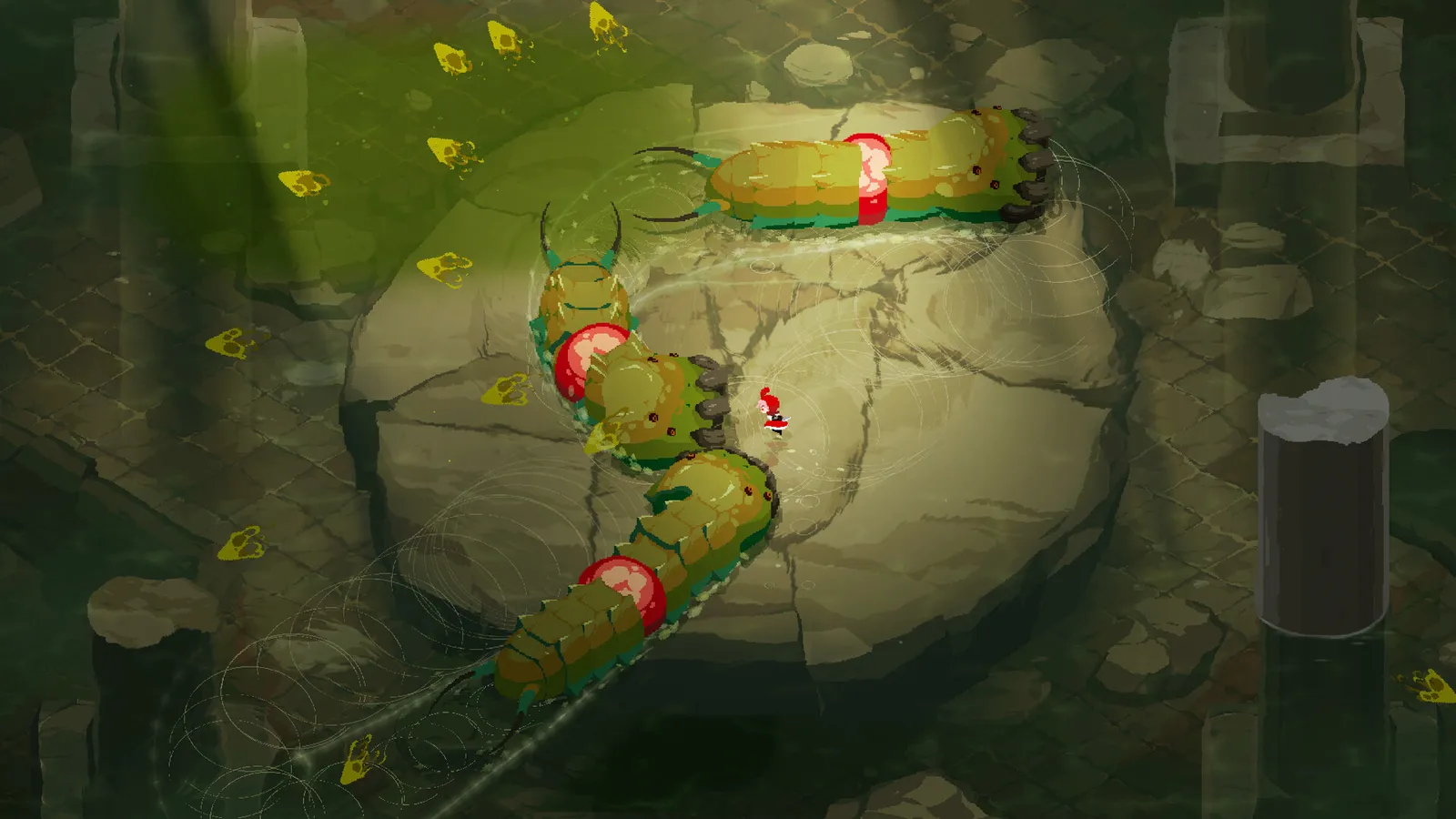
Here's what you'll learn:
- What Critical Thrust is and why it's the only real damage in the game
- How Marks feed the thrust and what the 3-Mark cap means
- The 1-vs-2-vs-3-Mark decision, with a mid-fight cheat sheet
- How to combo Focus, Perfect Dodge and Thrust into one rhythm
- The common mistakes that cost you the finisher
Official resources: Steam store page · IGN game page · Official site · Official X / Twitter
What Is Critical Thrust in Rubinite?
Critical Thrust is Ruby's finisher move, fired on its own input once at least one Pure Blood Mark is active. When it connects, it drives the thrust into the marked Pure Blood Crystal — the weak point inside a Blood Recipient that only Ruby's crimson eyes (via Focus) can see.
Why it matters: the Steam store description is blunt — "Ruby's blade alone will barely wound them." Normal slashes exist to close distance, poke after a Mark, and stay mobile; Critical Thrust is the primary way you actually shatter a Blood Recipient's weak point. The whole combat loop — Focus, Marks, Perfect Dodges — exists to feed this finisher.
The Pure Blood Crystal is invisible without Focus — that's the lore layer of the crimson-eye ability. Marks you apply via Focus or Perfect Dodge are the visible sigils on the enemy that tell you where the weak point is. No Marks, no visible weak point, no meaningful damage.
How Critical Thrust Works: Marks to Damage
The pipeline is simple:
- Build Marks — hold Focus near the boss (fills faster up close), or land Perfect Dodges for instant Marks. You can hold up to 3 Marks at once (the hard cap).
- Approach the marked target — the Thrust lunges toward the marked weak point.
- Press the Critical Thrust input — it consumes your Marks and deals the spike damage.
Damage scales with Marks consumed: one-Mark thrusts are fast and safe; two- and three-Mark thrusts hit harder but require longer windows. The exact multipliers aren't published anywhere official — treat "3-Mark = maximum burst" as confirmed and the specific percentages as unverified.
Getting hit while building Focus cancels the accumulation — and Marks you already banked can reset too if the hit lands during the charge. This is the game's core risk-reward: the longer you hold for a 3-Mark thrust, the more you expose yourself. When you see the UI counter reset, tie it to the exact boss animation you misread — that's how the fight teaches you.
1-Mark vs. 2-Mark vs. 3-Mark: When to Spend
This decision is the "spend now or greed" loop that decides most fights. The community consensus cheat sheet:
| Situation | Spend? | Why |
|---|---|---|
| Boss in a named recovery, you're close | Hold toward 2-3 | Safe pocket — greed pays |
| Grab or slam you can't answer next | Spend early (even at 1-2) | Donating the stack hurts more than a small Thrust |
| Boss nearly dead | Spend at 1+ | Finish the phase; don't farm a third Mark |
| You just Perfect-Dodged into 3 Marks | Thrust immediately | Cap is full — sitting on 3 is free damage left on the table |
| Unknown next pattern | Spend at 2 | Guaranteed chunk beats a wiped 3 |
The UI counter isn't decoration; it's your damage plan. Releasing at 2-3 Marks on a healthy boss is the default; releasing early is a defensive play, not a mistake — a guaranteed small Thrust always beats a wiped 3-Mark stack.
Critical Thrust Combos: Focus → Perfect Dodge → Thrust
The finisher rewards rhythm, not button-mashing. The standard loops:
- The safe loop: Focus a Mark in a recovery window → Perfect Dodge the next attack for a second Mark → Thrust at 2. Reliable, low-risk, the bread and butter.
- The greedy loop: Focus two Marks in a long recovery → Thrust at 3 for the burst → reset and rebuild. Only when you know the recovery is genuinely long.
- The pressure loop: Perfect Dodge into 3 Marks mid-string → Thrust immediately (the cap forces the spend) → create space, then Focus again.
The game's Focus system guide in coverage emphasizes the same reset habit: after a Thrust, create space and rebuild — don't chain into a panic Focus hold.
Just as mashing the third normal attack commits Ruby too long, holding for a 3-Mark Thrust in the wrong window gets you hit mid-lunge. The documented rule from experienced playthroughs: if the boss's next pattern is a grab or an aerial slam you can't answer, spend at 1-2 Marks and live. The finisher is a tool, not an obligation.
Critical Thrust in the True Difficulty Route
Two things change on the true route:
- The 3-Mark cap disappears at the finale. The legendary Rubinite talisman (earned via the Mark of Courage chain in the true ending) is a five-slot charm that removes the ordinary Mark cap — during the final sequence you can stack far beyond 3, making Thrust damage absurd. Plan your remaining talisman slot around the failure you still make, not the damage fantasy.
- Hidden health bars force commitment decisions. With boss HP invisible, you can't read "nearly dead" — so the "spend at 1+ to finish" rule gets harder. The documented answer: keep a consistent 2-3-Mark spend rhythm and trust the phase transitions; see the true ending guide for the full route.
Common Critical Thrust Mistakes
- Hoarding past the cap. Marks cap at 3 — sitting on a full stack while the boss recovers is free damage left on the table.
- Releasing at 1 Mark by default. One-Mark thrusts are for emergencies; the normal rhythm is 2-3.
- Thrusting into a grab. The lunge is committed — using it as the boss starts a grab means donating the stack and eating the counter. Spend before the grab telegraph, not during it.
- Forgetting darts and Sunder Slash feed the same loop. Darts keep pressure on from range and counter red-flash aerials; Sunder Slash counters grabs and grants a Mark + stun. Both are Mark-generation tools, not side systems — see how to practice for the drills.
- Building Marks at max range. The observation gauge fills faster close up — hanging at max range stretches every Mark and starves your Thrust schedule.
Pressing dodge while charging Focus cancels the charge without losing your current Marks. Use it to bait: start charging, the boss prepares a punish, dodge-cancel, then re-engage during their recovery. It's the cleanest way to generate safe Thrust windows in the later fights (Puppet Master's phase 3 gauntlet and real Alcina punish greedy charges hardest).
Frequently Asked Questions
How do I use Critical Thrust in Rubinite?
Build at least one Pure Blood Mark (Focus hold or Perfect Dodge), approach the marked weak point, and press the Critical Thrust input. It consumes your Marks and deals the spike damage.
What is Critical Thrust in Rubinite?
Ruby's finisher that lunges into a Blood Recipient's exposed Pure Blood Crystal weak point. It's the primary source of real damage — normal slashes barely scratch bosses.
How many marks should I spend on a Critical Thrust?
2-3 Marks on healthy bosses for real burst; 1 Mark only in emergencies (boss nearly dead, or a grab about to wipe your stack). Sitting at the 3-Mark cap without spending is wasted damage.
Does Critical Thrust do more damage with more marks?
Yes — damage scales with Marks consumed, up to the 3-Mark cap (removed by the legendary Rubinite talisman in the true finale). Exact multipliers aren't officially published (unverified).
Can Critical Thrust miss in Rubinite?
The thrust lunges toward the marked target, so it connects if you're in range and facing the mark. Using it into a grab or aerial slam can still fail badly — the counter window matters as much as the damage.
What happens if I get hit while holding marks?
Getting hit during a Focus charge cancels the accumulation and can reset banked Marks — the core risk-reward of holding for big Thrusts. Spending early (1-2 Marks) protects your stack against punishing patterns.
Related Guides
- Rubinite True Ending Guide — the Mark-cap-removing Rubinite talisman
- Rubinite Talismans — Full List & Crafting Guide (2026)
- Rubinite Achievements — Full List & How to Unlock All 38
- Rubinite Boss Order — Full Boss List & Recommended Sequence
- Rubinite Characters — Ruby, Roy, Wichiwi & Alcina (2026)
Last updated: August 14, 2026.
More Rubinite Guides
Rubinite true ending: beat Alcina, reload the same save, choose to wake up in the White Space, survive True Difficulty, and save Roy via the Red-Eyed Tree.
Rubinite walkthrough: the full main-line route — Monastery hub loop, boss-by-boss strategy from The Beast to Witch Alcina, and the True Difficulty second route.