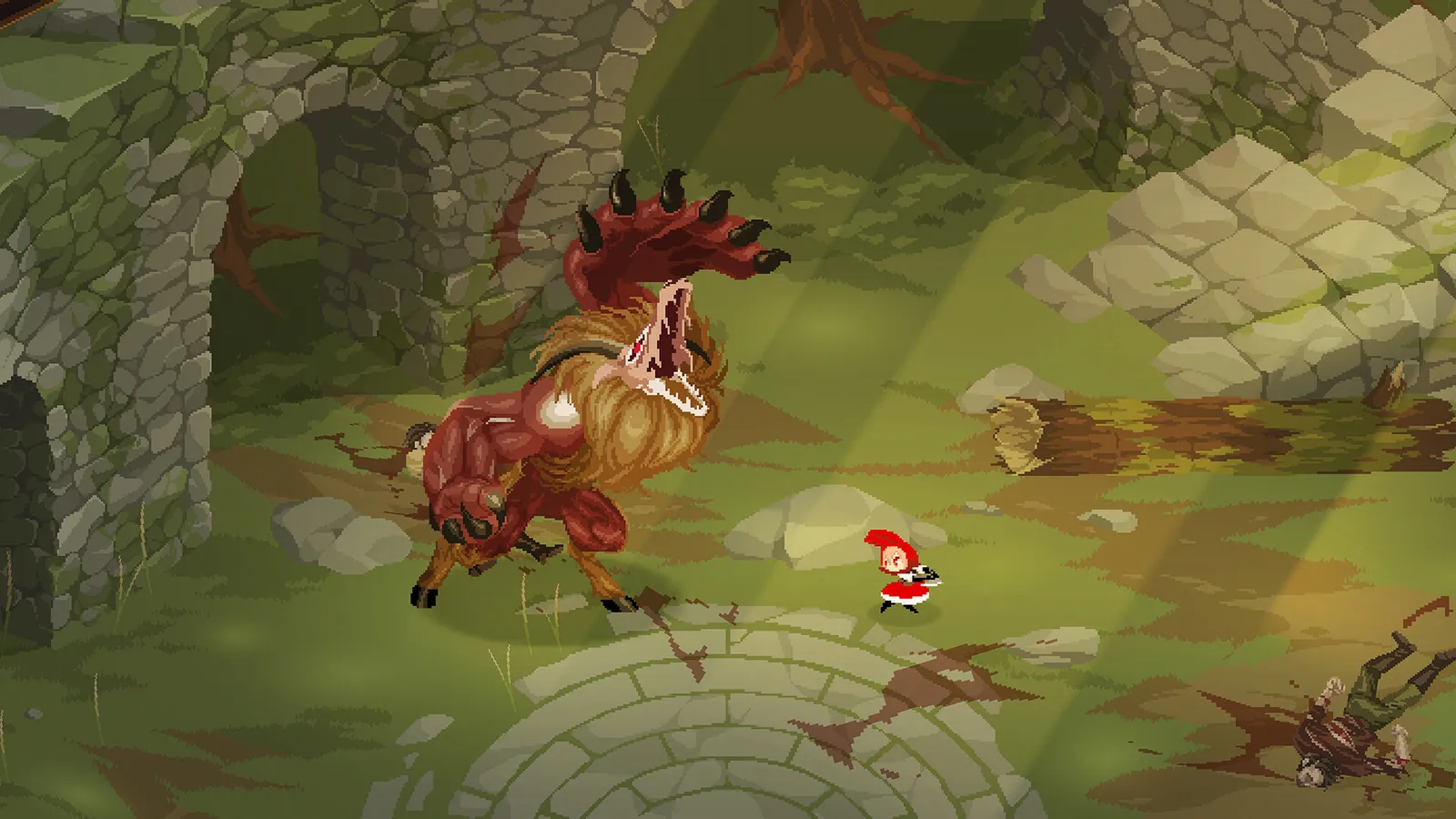
Rubinite talismans: how Wichiwi crafts them from Blood Dust, confirmed talismans (Broken White, Hatchiwi, Mira's Shadow) and crafting priorities.
Rubinite Talismans — Full List, Effects & Crafting Priorities (2026)
Talismans are Rubinite's build layer: equippable charms that bend Focus charging, Critical Thrust damage, dodge i-frames, movement, and healing — usually with a real trade-off attached. The lizardman merchant Wichiwi crafts them at the Monastery hub using Blood Dust, which you earn even when you lose a boss fight. There's no character class system in Rubinite — talismans are your build, and knowing what to craft first matters more than raw damage numbers.

Here's what you'll learn:
- How talisman crafting works (Wichiwi, Blood Dust, the Talisman Satchel)
- Every talisman confirmed in coverage so far — names, effects, trade-offs
- How perk slots and Damaged Talismans expand your options
- Crafting priorities for each stage of the campaign
- Why the best talisman is usually the one that fixes your current failure
Official resources: Steam store page · IGN game page · Official site · Official X / Twitter
What Are Talismans in Rubinite?
Talismans are equippable charms that modify Ruby's combat capabilities. Confirmed effect categories from coverage and store materials:
- Focus charge speed — shorter windows spent standing still
- Critical Thrust damage — bigger payoff per Mark spent
- Dodge invincibility frames / escape distance — more forgiveness in pressure phases
- Movement speed — positioning freedom (often the cost of other bonuses)
- Healing / flask efficiency — survival tools for learning players
- Resistance — poison and hazard protection for specific fights
- Passive damage effects — the Hatchiwi talisman deals constant damage over time
The key design rule: talismans carry trade-offs. Coverage describes them as "boons that often cost something elsewhere" — more Focus greed might mean less safety, or a defense boost might cost you movement speed. There is no free lunch, and that's what makes loadout choices meaningful per boss.
Every guide source is explicit on this: a talisman makes Focus or dodge more forgiving, but it never deletes the need to learn a boss's patterns. Craft for the fight in front of you; if a fight feels impossible, fix your Focus/dodge habits first, then retune talismans — not the other way around.
How to Get Talismans: Wichiwi & Blood Dust
The pipeline is simple:
- Meet Wichiwi at the Monastery hub. Early on he gives Ruby the Talisman Satchel, which lets you equip a talisman.
- Earn Blood Dust from boss attempts — including failed ones, thanks to half-health payouts (full loop in our blood dust guide).
- Spend Dust at Wichiwi's bench to unlock talisman recipes and expand perk slots. He also crafts/researches talismans for you — the shop is the source of most charms.
- Equip before the arena, not mid-fight — Ruby cannot respec during a boss battle.
The documented trap: saving Blood Dust until you're sure of the meta usually means fighting Guardian Faye with zero upgrades. A single defensive or Focus-comfort talisman is worth more than an unspent pile. Craft a learning charm early; specialize later (see builds for the archetypes).
Every Confirmed Talisman in Rubinite
The full in-game list is still being consolidated (the game is three weeks old), but these are the talismans confirmed by multiple independent walkthroughs and community sources:
| Talisman | Effect | Where it comes from |
|---|---|---|
| Broken White Talisman (also reported as Damaged White Talisman) | Trades movement speed for a defense boost — the textbook trade-off charm | Found early: a chest near the Goddess statue in the Monastery; giving it to Wichiwi unlocks new shop options |
| Hatchiwi | Constant damage over time; Ruby's name for it ("it is quite powerful") | Gifted by Wichiwi after the Ghost fight, before Roy; strong in the Alcina fight |
| Mira's Shadow | Blocks one incoming hit — a one-hit buffer; does not refresh if a revival talisman activates | True difficulty route, early proof the Mira event chain is progressing |
| Mark of Courage → Legendary Rubinite | Five-slot talisman that removes the ordinary 3-Mark cap — infinite Mark stacking during the final sequence | True difficulty finale, after rejecting the illusion-family scenes |
Unverified: the mid-game talisman pool (recipes unlocked by specific boss kills) and exact stat percentages are not yet documented in any verified source. When a community-maintained table publishes exact numbers, this page will expand.
The shop runs on two currencies: Blood Dust (from boss attempts and memory battles) and a second currency obtained by defeating bosses — walkthrough coverage calls it Impure Crystals, while the Steam store describes the same boss power as Pure Blood absorption. Impure Crystals tie into advanced/legendary recipes; Dust funds the day-to-day research.
How Talisman Slots & Damaged Talismans Work
Two systems control how many talismans you can use:
- Perk slots — Ruby starts with limited equipment capacity (the Talisman Satchel enables the first). Spending Blood Dust at Wichiwi's bench expands perk slots; an empty slot is wasted power, and slot pressure increases as the pool grows. If a craft is greyed out, you may need Hub progress or slot expansion rather than more Dust.
- Damaged Talismans — broken charms found in chests and hidden rooms across the world (the Broken White Talisman is the confirmed early example). Giving Damaged Talismans to Wichiwi introduces new talismans to his shop — so the Monastery chest-checking habit after every boss isn't optional; it literally expands the crafting menu.
Blood Dust also fills Ruby's skill tree (new techniques like Focus follow-up strikes, passives, Darts, Sunder Slash). Sometimes a skill-tree node is a better first spend than a second talisman — the Focus follow-up skills that extend Thrust windows are routinely recommended before niche damage talismans.
Best Talisman Priorities: What to Craft First
Community consensus across demo and launch coverage is consistent — the priority ladder:
- Survival/learning first: a craft that reduces deaths — Focus charge stability, dodge i-frames, or defense. Before Guardian Faye, one of these is basically mandatory.
- Focus follow-ups from the skill tree (not talismans) when Thrust windows feel too short.
- Damage / Mark-greed talismans only after clears are consistent — once you stop eating random hits, damage beats survival.
- Niche boss-specific swaps last: poison resistance before Plaguebearer, defensive charms for learning unfamiliar phases, etc.
Per-boss guidance:
- For The Beast — Focus charge enhancements top the list (they shorten the windows where Beast interrupts your charge); dodge talismans second for players who panic-roll into homing projectiles.
- For Guardian Faye — dodge i-frame talismans are MVP for phase two's overlapping attacks; Focus charge stays strong for squeezing one-Mark thrusts into tighter windows. If you must pick one before Faye, match it to your failure mode: dying mid-charge → Focus help; dying to unexpected hits → dodge help.
- Before Plaguebearer — poison/negative-effect resistance has real value; swap back to damage afterward.
- True difficulty — Mira's Shadow (one blocked hit) is the learning insurance while you're memorizing hidden-health-bar phases. Keep it until you can reach the difficult phase consistently; a revival talisman does not refresh it.
A talisman that helps The Beast's homing-dodge rhythm can feel awful on Faye's longer strings. The documented habit: keep a "learning" loadout and a "clear" loadout mentally, and swap intentionally between attempts. Running one "forever" loadout from day one is the single most common talisman mistake in Rubinite.
Do Talismans Carry Over? Demo, True Ending & Death
- On death: equipped talismans are kept — only boss progress resets. Talismans are permanent equipment, not consumables (the healing flask is the consumable system).
- Demo → retail: demo documentation states demo Blood Dust and talismans do not transfer to the full game — the demo is a taste, not a head start (official confirmation pending).
- First clear → true difficulty: on the true route, Wichiwi gives you the Talisman Satchel again and every talisman you acquired is present — your collection persists into the second campaign.
Frequently Asked Questions
How do I get talismans in Rubinite?
Wichiwi at the Monastery hub crafts and researches talismans using Blood Dust (earned from boss attempts, kept on death). He gives you the Talisman Satchel early so you can equip your first charm; giving him Damaged Talismans found in chests unlocks new shop options.
What does the Broken White Talisman do?
It trades movement speed for a defense boost — the game's showcase trade-off talisman. It's found early in a chest near the Monastery's Goddess statue.
What is the best talisman in Rubinite?
Situational: Focus charge or dodge enhancement before Guardian Faye, poison resistance before Plaguebearer, Mira's Shadow (one-hit buffer) while learning true difficulty phases, and the Legendary Rubinite (removes the Mark cap) in the final sequence. Damage talismans only pay off after your clears are consistent.
How many talismans can Ruby equip?
Depends on unlocked perk slots, which you expand with Blood Dust at Wichiwi's bench. Slots start limited and grow through the campaign.
What is the Legendary Rubinite talisman?
A five-slot talisman earned in the true ending route (via the Mark of Courage chain) that removes the ordinary three-Mark cap — during the final sequence you can stack Marks without the usual limit.
Do talismans carry over to the true ending?
Yes — on the true route Wichiwi returns the Talisman Satchel and all previously acquired talismans are present. Demo progress, however, does not carry into the retail game.
Related Guides
- Rubinite True Ending Guide — Mira's Shadow and the Legendary Rubinite
- Rubinite Achievements — Full List & How to Unlock All 38
- Rubinite Boss Order — Full Boss List & Recommended Sequence
- Rubinite Characters — Ruby, Roy, Wichiwi & Alcina (2026)
- Rubinite Critical Thrust — Marks & When to Spend (2026)
Last updated: August 14, 2026.
More Rubinite Guides
Rubinite true ending: beat Alcina, reload the same save, choose to wake up in the White Space, survive True Difficulty, and save Roy via the Red-Eyed Tree.
Rubinite walkthrough: the full main-line route — Monastery hub loop, boss-by-boss strategy from The Beast to Witch Alcina, and the True Difficulty second route.