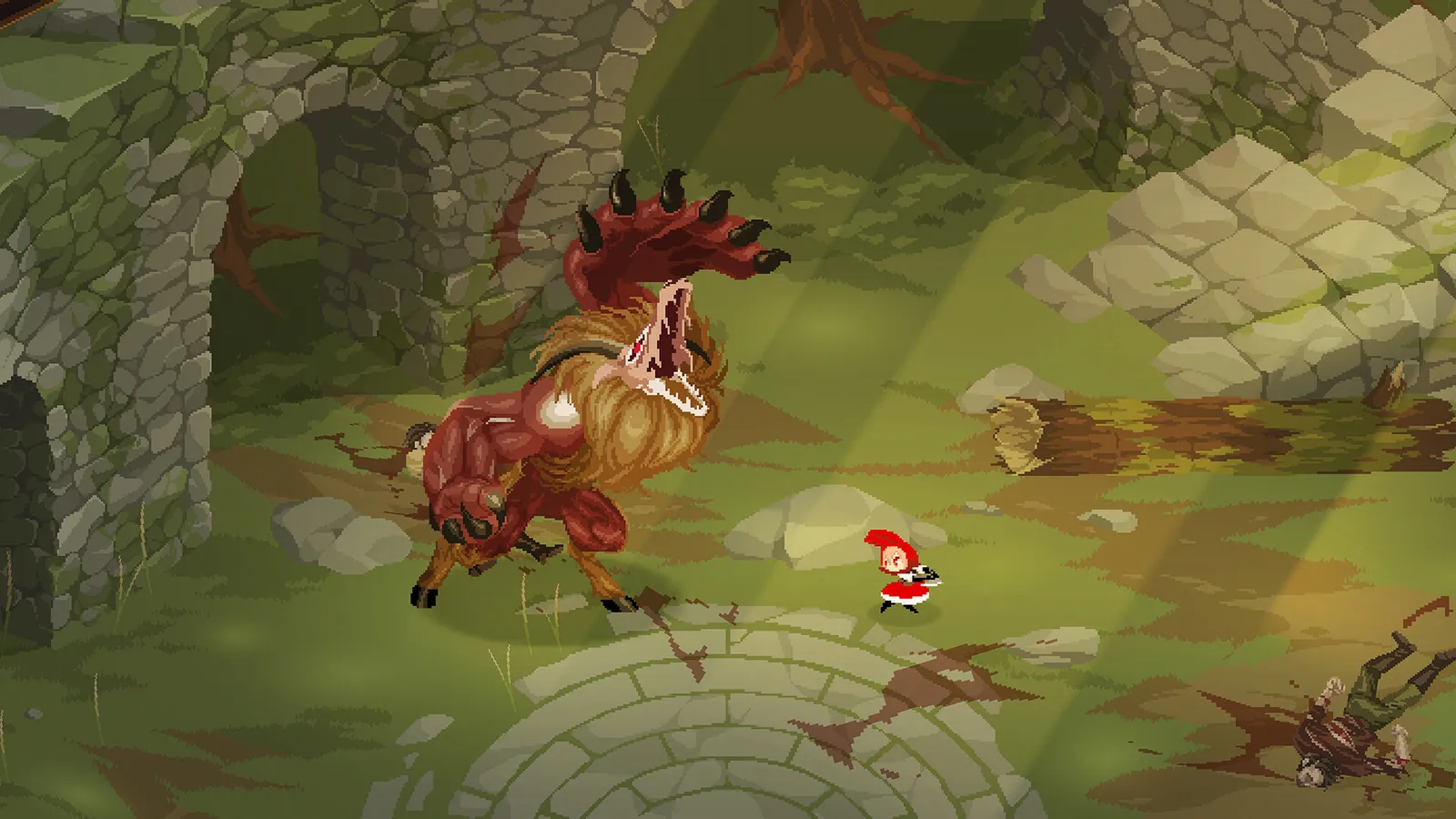
Rubinite Blood Dust: how to earn it (half-health payouts, object breaks), the death-retention rule, and where to spend it at Wichiwi's shop.
Rubinite Blood Dust — Earn, Keep & Spend It Right (2026)
Blood Dust is Rubinite's persistent currency — the one that survives death. You earn it from boss attempts, object destruction, and progress milestones, and — unlike a Souls-style wallet — you keep everything you've collected when you die. The system's headline rule: reduce a boss to roughly half health and you bank a large payout even if the fight ends in your death a minute later. That single rule is why "one more attempt" is rational in Rubinite.
Here's what you'll learn:
- The three confirmed ways to earn Blood Dust
- Exactly how the half-health payout and death rules work
- What to spend it on (Wichiwi, the skill tree, perk slots)
- How Blood Dust differs from the boss-kill currency (Impure Crystals / Pure Blood)
- Farming and spending habits that speed up the campaign
Official resources: Steam store page · IGN game page · Official site · Official X / Twitter
What Is Blood Dust in Rubinite?
Blood Dust is the currency Ruby earns inside Blood Recipient fights and spends at the Monastery hub. Lore-wise, the Steam description frames the fantasy as absorbing Pureblood to grow stronger and forge talismans; mechanically, that growth is expressed through the Dust wallet you can see in the hub UI.
Two currencies run the economy, and confusing them causes bad spending decisions:
| Currency | How you get it | What it pays for |
|---|---|---|
| Blood Dust | Boss attempts (progress payouts), breaking arena objects, memory boss battles | Wichiwi's talisman research, skill tree, perk slot unlocks — the day-to-day progression |
| Impure Crystals (walkthrough name; the store calls the same boss power Pure Blood) | Only by defeating bosses | Advanced/legendary talisman recipes and boss-specific unlocks |
The lore word "absorb Pureblood" sounds like a separate resource, but in hub terms it's the Dust economy you can see. Play the loop you can verify in the UI; treat Impure Crystals as the end-of-boss bonus, not a parallel grind (exact naming unverified).
How to Get Blood Dust: The Three Confirmed Sources
Community documentation and walkthrough coverage agree on three earning channels:
- Mid-fight breakthroughs and boss progress. The headline rule: push a boss to roughly half health and you bank a large Dust reward — even if you die right after. Reviews and guides describe this as "half-health checkpoint thinking": opening minutes learn the pattern, mid-fight secure the ~50% threshold, and only then greed for the kill.
- Destroying arena objects. Breakable objects in boss arenas can pay Dust. When a pattern gives you a safe second, smashing destructibles between Focus windows is free wallet growth.
- Memory boss battles. Replaying past fights through the hub (Meditation/memories) also pays Dust — the documented loop for farming after you've cleared a boss.
If you tilt-quit an attempt at 20% boss HP, you leave the half-health payout on the table. The habit that maximizes Dust: aim to cross ~50% before you give up on an attempt. Practically, that means playing the first half of a boss fight defensively even on a bad day — the payout makes the attempt worth it.
Do You Keep Blood Dust When You Die?
Yes — Blood Dust survives death. This is the design pillar that separates Rubinite from Souls-style currency wipes:
- Dying to a boss resets the fight, not your wallet. Your Focus mistakes cost time and pride, not the entire economy.
- Every serious attempt funds the next craft, so practice is never wasted — the game explicitly rewards learning with partial progress.
- The half-health rule guarantees most attempts end richer than they began, which is the psychological engine behind "one more run."
Official source: the Steam store page's description and Cup Dog Games' materials frame boss attempts as steady progression ("Absorb Pureblood, Forge Talismans"); walkthrough coverage confirms Dust persists on death while only the fight resets.
What to Spend Blood Dust On
Dust only becomes power at the hub. The confirmed sinks, in the order community guides recommend:
- Wichiwi's talisman research — unlock recipes and craft charms. The bread-and-butter sink; see the talismans guide for priorities.
- The skill tree — new techniques (Darts, Sunder Slash, Focus follow-up strikes) and passives. A skill-tree node can beat a second talisman when Thrust windows feel too short.
- Perk / talisman slot expansion — some crafts are gated behind slots; if a craft is greyed out, you may need slot unlocks rather than more Dust.
The spending trap, repeated across every guide source: hoarding Dust "until you know the best talisman" means fighting Guardian Faye naked for an hour. Dust is renewable through practice — fear of spending is the real scarcity mindset.
The documented best practice: after a Dust spike (three half-health payouts or a clear), return to the hub and spend before the next push. Dying with unspent upgrades forever is the one way to actually waste the system. "Exit attempts on payout thresholds when tilting, convert Dust, then stop" is the exact routine from community guides.
Blood Dust Farming Tips
- Farm The Beast. The demo boss is the community's designated Dust ATM: safe patterns, readable tells, fast attempts. Three to five half-health runs fund one meaningful craft.
- Break everything safe. Object destruction is free money between Focus windows.
- Time your hub trips around payouts. Cash out after every half-health milestone or boss clear, not whenever you happen to die.
- Before Guardian Faye, spend it all. The Faye wall is the classic "fighting naked" failure point — arrive with at least one defensive or Focus-comfort craft.
- In the full campaign, tie each spend to the next boss. Poison resistance before Plaguebearer, dodge help before Faye's rematch, Mira's Shadow for true difficulty phases — spend for the fight in front of you.
Frequently Asked Questions
How do I get Blood Dust in Rubinite?
From boss attempts (progress payouts), breaking destructible arena objects, and memory boss battles. Pushing a boss to half health triggers a large payout even on a failed attempt.
Do you keep Blood Dust when you die in Rubinite?
Yes — Blood Dust persists through death, unlike Souls-style wallets. Only the boss fight resets; your currency and purchased upgrades are kept.
What is Blood Dust used for in Rubinite?
Wichiwi's talisman research and crafts, the skill tree (new techniques and passives), and perk/talisman slot expansion at the Monastery hub.
What is the half-health Blood Dust bonus?
Reduce a boss to roughly 50% HP and you bank a large Blood Dust reward even if you die afterward. It's the game's core "practice pays" mechanic.
What is the difference between Blood Dust and Impure Crystals?
Blood Dust comes from attempts and pays for day-to-day progression. Impure Crystals (the store frames the same boss power as Pure Blood) are only earned by defeating bosses and fund advanced talisman recipes.
Should I save Blood Dust in Rubinite?
No — hoarding is the documented trap. Spend after every Dust spike on learning talismans, skill nodes, and slot unlocks. Dust is renewable; unspent power helps nobody.
Related Guides
Last updated: August 14, 2026.
More Rubinite Guides
Rubinite demo: free on Steam, the 40-minute two-boss slice, which mechanics it teaches, and save carryover to the full game.
Rubinite Focus explained: the observation gauge, close-range charge speed, the 3-Mark cap, Critical Thrust timing, and Perfect Dodge synergy.
Rubinite how long to beat: 4-6 hours for a first clear, ~9-10 hours for the story plus true difficulty route, and 10+ hours for 100% — with real player data.
Is Rubinite worth it? The $19.99 boss-rush verdict: polish, difficulty, demo value and how it stacks against rivals.
Rubinite perfect dodge: hit the impact frame (not the wind-up) for an instant Pure Blood Mark, faster Focus fill, and which attacks you can't dodge.
Rubinite price explained: $19.99 base price, the 10% launch discount, the $4.99 soundtrack DLC, bundles, the free demo, and whether it's worth it.
Rubinite release date: launched July 22-23, 2026 on Steam for PC and macOS, plus the dev history — 2025 demo, Steam Next Fest, and launch.
Rubinite system requirements: minimum and recommended PC specs, macOS 10.13+ support, storage size, Steam Deck status, and testing with the free demo.