Complete DragonSword: Awakening guide: how the no-gacha open-world RPG works, 19 heroes and unlock tickets, tag-team combat, and whether it's worth $29.99.
DragonSword Awakening Guide — Everything You Need to Know in 2026
DragonSword: Awakening is Hound13's UE5 open-world action RPG on Steam — the studio of former Dragon Nest leads — and the story behind it is as unusual as the game itself. It launched in January 2026 as DragonSword, a free-to-play gacha title published by Webzen in Korea. The partnership collapsed when Webzen missed its minimum guarantee payment, the courts let Hound13 keep the rights, and the studio rebuilt the whole thing as a $29.99 buy-to-play package with every gacha system ripped out. The result launched on July 22, 2026 to a 92% Very Positive rating and sold 300,000 copies in its first three weeks.
This guide is the complete onboarding: what the game actually is, how the combat works, how hero unlocks function, which systems deserve your time, and whether the $29.99 price tag holds up. It's written spoiler-free except where noted, and it points to deeper guides for each system.
What you'll learn here:
- What DragonSword: Awakening is (and the Webzen drama behind it)
- The core loop: story, mercenary ranks, and the level caps hiding inside them
- Tag-team combat: Status Ailments, Signal Skills, and endless switching
- How to unlock all 19 heroes without spending a cent
- Familiars, cooking, fast travel, and the rest of Orbis' systems
- Whether the co-op is worth planning around
- The honest verdict on price, reviews, and value
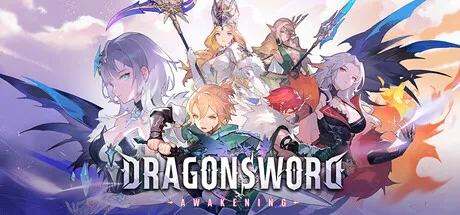
What Is DragonSword: Awakening?
DragonSword: Awakening is an anime-styled, single-player-first open-world action RPG set on the continent of Orbis. You play Lute, a golden-haired village boy who gets swept into the mercenary band of the loud-mouthed Johnny and the elven Castella on his way to the capital. Sixty years earlier, a dragon nearly destroyed the continent until six heroes stopped it — and now the same threat is stirring again. The story is classic fantasy with a lot of comedy, and it's delivered in fully voiced Korean (more on that below).
The quickest way to describe the gameplay is "Genshin Impact with the gacha removed, built by the people who made Dragon Nest." That's not a knock. Hound13 took the character-switching action DNA of its earlier game Hundred Soul and the open-world structure of Genshin — towers that reveal the map, elemental status stacking, a party of three that swaps mid-combo — and shipped it as a complete package with no banners, no stamina gates, and no battle pass. As Hound13 puts it on the official Steam page:
Explore the anime-style open world of the Continent of Orbis, brought to life with Unreal Engine 5! Recruit unique companions, unleash spectacular Status Ailment tag-team action, and embark on an epic journey to save the world from the threat of a Dragon reawakened after 60 years.
One important note on the game's history: the Webzen breakup is why the game exists in this form. After Webzen failed to pay the remaining minimum guarantee, Hound13 terminated the contract; Webzen's injunction attempt was dismissed by the Seoul Central District Court on July 22, the day before release. Korean players of the original got refunds, and Hound13 kept its promise to ship the demo for Steam Next Fest in June and launch a month later. It's a messy origin — but the game you buy today is a deliberately complete, offline-capable product, and the story matters mainly because it explains why a "gacha game" has no gacha.
The Core Loop: Story, Mercenary Ranks, and Level Caps
Every hour of DragonSword: Awakening follows one progression engine, and the earlier you understand it, the less frustration you'll feel:
- Push the main story. Each chapter unlocks new systems, new regions, and new hero unlocks. This is the game's real progression driver.
- Complete mercenary rank quests. Your party's rank rises as the story advances, and each rank raises the level cap for your heroes and gear. You will hit a soft cap roughly every chapter — that's the game's way of pacing you.
- Feed your heroes books. Enemies drop no experience. Heroes grow by consuming experience books the game hands out constantly, so your bottleneck is never "kill more stuff" — it's "unlock the next cap."
- Do the two daily activities. Regional Missions reward Skill Scrolls (for upgrading abilities) and Forging Molds (for customizing endgame gear stats). World Bosses drop Basic Karma, the material that upgrades your hero's signature weapon. Both reset daily, and skipping them compounds fast.
You'll max your starting team at the first cap within an hour or two. Don't treat it as a wall — push the next main quest and the cap lifts. The game wants you to alternate story and side content instead of grinding one region flat.
Two things reviewers consistently flag as leftover mobile design: heroes level only through books (no combat EXP), and gear does not change your character's appearance (cosmetics live in separate costume DLC). Neither is a dealbreaker — the books flow generously — but it's honest to know the skeleton is a mobile RPG's.
Combat: Status Ailments, Signal Skills, and Tag-Team Switching
Combat is the reason people stay. You field a party of three heroes and swap between them in real time, and the whole system is built around Status Ailments:
- Every hero specializes in statuses drawn from nine families — Bleed, Burn, Shock, Frost, Poison, Airborne, Knockdown, and others.
- You stack statuses with Active Skills to build a gauge on the enemy.
- When the gauge fills, Signal Skills light up — quick-time prompts that trigger powerful follow-ups.
- Crucially, Signal Skills light up for your benched characters too, so a well-built team can chain reactive skills back and forth indefinitely. This is the "Switching Signals" loop that defines the game.
- There are no ultimate abilities. The payoff is chaining, not nukes.
Dodge invincibility frames are razor-thin and there is no parry or perfect-evade reward. The intended defense is offense — keep the enemy stunlocked by rotating your team's statuses so they never get a clean turn. Players who try to play this like a Soulslike get punished.
The combat also has a signature spectacle: against giant bosses, certain Signal Skills become mounting moves — you climb onto the stunned monster and stab it repeatedly while it thrashes. It's the game's most memorable mechanic and worth triggering at least once per boss.
For the full breakdown of how statuses interact, the best combos, and the mounting system, see our combat guide.
Unlocking Heroes: Fate's Invitation and the 19-Hero Roster
There are 19 playable heroes at launch, and every single one is obtainable without paying. No banners, no pity, no RNG. Instead, two systems:
Eight heroes join through story quests (some are effectively mandatory party members):
| Hero | Unlock |
|---|---|
| Lute | Starting protagonist |
| Castella | Chapter 1 — "To the Orbis Kingdom" |
| Aria | "Mercenary Starting Today" |
| Johnny | Main quest #10 — "A Temporary Alliance" |
| Ornette | Main quest #20 — "The Hero's Quest" |
| Cerese | Main quest #30 — "Those Left Behind" |
| Kalsion | Main quest #40 — "Looming Crisis" |
| Othello | Main quest #50 — "Individual Preparations" |
Eleven heroes unlock via Fate's Invitation, a ticket currency spent in the Exchange menu. You pick exactly who you want — there is no random pool. Eileen, Reina, Astria, Roxy, Alex, Kalien, Dana, Theresia, Tarte, Sion, and Charlotte are all available the moment you reach the Exchange, regardless of story progress.
Tickets come from four reliable sources: one for finishing the Prologue (about 15 minutes in), one per main story chapter, one per Hero Quest (character-specific side stories), and one per 10 numbered mainline quests. Destructoid's unlock guide confirms the Exchange flow, and our character unlock guide has the full routing.
Every ticket spent is a ticket gone. Don't unlock heroes "because they look cool" — wait until you've tested your story heroes, then spend on a hero that fits the team you actually want. The community consensus is that the first ticket is best saved for Theresia, Dana, or Charlotte depending on your preferred carry.
For the full roster breakdown — every hero's element, role, and how they play — see our characters guide and tier list.
First Hours: What to Do in the Opening Chapters
The game opens as a tutorial disguised as a road trip: you meet Johnny and Castella, reach the kingdom of Orbis, join the mercenary guild, and clear a goblin cave. The first real systems unlock in order, and there's a correct order to touch them:
- Do the Prologue and grab your first Fate's Invitation. Don't spend it yet (see above).
- Unlock cooking early. Anne, the quest-giver you meet in Orbis, sends you on "In Search of Ascension Mushroom" — a short errand that unlocks cooking at campfires. Cooking is the only real healing source in the early game, so this is not optional.
- Get your first Familiar. Familiars are the mount system — they boost ground speed, let you glide, and each carries a unique ability. You'll receive one through the story quickly; the launch window also gives every player the Abyssal Direwolf familiar for free until the end of August.
- Unlock fast travel via main quest #8, "A Mystery From Antiquity." This quest introduces the Eona's Legacy towers — the windmill-like structures that reveal the map's fog, become teleport waypoints, and launch you across the region with a speed boost.
- Start the daily habit early. Regional Missions and World Bosses reset daily. Even a few minutes a day keeps your skill scrolls and Karma flowing.
For a step-by-step run through the first 10 hours, priorities, and the mistakes new players make, see our beginner's guide.
Exploring Orbis: Towers, Underwater Ruins, and Goddess Statues
The open world is the game's showcase. Orbis is a warm, Genshin-styled continent with meadows, mountains, seas, ruins, and an underwater layer most games skip entirely. The exploration verbs are generous: climb almost anything, swim and dive, glide off heights with a Familiar, and ride wind current launchers between landmarks.
The landmark system works like this:
- Eona's Legacy towers — solve a small puzzle (usually finding and returning a cog, or activating sigil stands), and the tower rises, clears the region's fog, becomes a fast-travel point, and turns into a launcher you can ride across the zone.
- Goddess statues — find the broken pieces scattered nearby and the statue restores, typically rewarding progression materials or buffs.
- Dungeons — once discovered they become fast-travel destinations and the best source of money and upgrade materials (more in the farming section).
- Treasure chests — often puzzle-locked, and some sit at the bottom of the ocean, reachable only with stamina-restoring food and a diving-capable Familiar.
GameRant's fast travel guide walks the full tower list, and our map guide covers every named region, the underwater secrets, and the 200-pin map limit the 1.0.7 update introduced.
Familiars, Cooking, and the Comfort Systems
Familiars are part mount, part pet, part traversal tool. All of them boost movement speed and can glide; beyond that each has a unique perk — faster climbing, an in-air dash, or underwater diving. Hound13 has said roughly 30 Familiars are planned, about two-thirds earnable in-game and the rest as cosmetic-only DLC, and that paid Familiars never affect gameplay. The Brave Baby Dragon comes with the Deluxe Edition.
Cooking is your healing backbone. At any campfire you can combine ingredients — meat, fish, seafood, eggs, vegetables, mushrooms, grains, herbs, and more — and recipes unlock by mixing, not by finding recipe books. Effects range from instant heals (Grilled Meat restores ~950 HP) to regeneration dishes, team heals, revive meals, attack buffs, and stamina-reduction dishes like the Assorted Rice Bowl, which is essential for deep dives. The important gameplay consequence: you cannot heal in a dungeon if you didn't cook before entering. Preparation is a real skill.
Higher-tier ingredients produce higher-tier meals with stronger effects. Grab everything you pass while questing — the "collect it later" trap is real, and the best dishes need the good stuff.
Our cooking guide has the full recipe table and the Familiars guide breaks down every mount and its ability.
Co-op, Subjugation, and Raids
DragonSword: Awakening is a single-player game with online co-op layered on top — the Steam page lists Single-player and Online Co-op, and the game runs fully offline. When you do group up:
- The host opens a room and shares an invite code — no region-locked matchmaking on launch, though 1.0.7 added configurable matchmaking search range.
- Subjugation content supports 2 players; Raids support 3. Each player brings their own three-hero party, so a full raid can have nine characters on screen.
- Guests keep their own progression and, since 1.0.7, correctly earn multiplayer achievements (earlier patches only granted them to the host).
Crossplay is a non-answer for now: the game is PC-only, and console ports are in development but unreleased (details below). For the full breakdown of party sizes, modes, and how to join friends, see our co-op guide.
Progression Depth: Gear, Karma Weapons, Runes, and Awakening
Underneath the exploration is a surprisingly deep upgrade stack, all of it free:
- Gear levels with materials and eventually accepts Forging Molds to customize main stats.
- Karma weapons are each hero's signature weapon, upgraded with Basic Karma from World Bosses; some heroes get exclusive Karma from their Hero Quests.
- Runes are stat cards you slot for bonuses — the 1.0.7 patch raised the carry cap from 200 to 500 and made duplicates visible in inventory.
- Awakening is the late-game power spike: six levels per hero, each adding bonuses, using Stigma Awakened Stones purchased for 200 Fragment of Sacred Light each. It's a long-term investment — focus your main DPS first.
- Titles are free stat boosts earned from achievements and activities; a few are trivially easy to grab early.
Our gear guide walks the whole stack, including the Karma weapon upgrade path.
Is DragonSword: Awakening Worth It? Reviews, Sales, and the Verdict
The numbers are unusually strong for a mid-budget buy-to-play launch:
- Steam rating: 92% Very Positive across 2,730 English reviews as of mid-August.
- Sales: 200,000 copies in week one (announced July 30), then 300,000 copies and 1 million wishlists confirmed by Hound13 on August 11.
- Concurrency: peaked at 23,030 simultaneous players, still pulling ~10,000+ daily averages a month in.
- Press: GamingTrend scored it 80/100; INVEN gave 85; HardZone 70; Rectify Gaming 7.5/10 — see the Metacritic page for the full set.
What reviewers agree on: the combat is genuinely great, the world is gorgeous (UE5 doing real work), and removing the gacha made the whole experience feel respectful. What they ding: the mobile-progression skeleton (book-fed levels, soft caps), the lack of an English dub, and a story that ends on a thematic climax rather than a finished resolution — Hound13 has confirmed the ending is intentionally open-ended, with new Hero Quests and story content coming post-launch. Our review has the full breakdown and the story guide covers the ending without pulling punches.
At $29.99 (or $44.98 for the Deluxe Edition with artbook, soundtrack, and the Brave Baby Dragon), it's the rare case where the internet's "no gacha = good" instinct is actually backed by the game itself. If you like anime action RPGs and want one that respects your time, this is one of the easiest recommendations of 2026.
The Practical Questions, Answered Fast
Is DragonSword: Awakening open world? Yes — a full UE5 open world on the continent of Orbis with climbing, swimming, diving, gliding, and tower-based fast travel.
Is it co-op? Yes — online co-op via invite codes; Subjugation is 2-player and Raids are 3-player. The full game is also playable entirely offline.
Is there an English dub? No — the game ships with Korean voice acting only, with 11 subtitle languages including English, Japanese, Simplified and Traditional Chinese. Hound13 has stated AI was used only for translating dialogue and announcements, never for in-game content.
How long does it take? Roughly 27 hours for the main story, ~54 hours with side content, and over 100 hours for completionists — see the how long to beat guide for the data.
Will it run on my PC? Minimum is an i5-9400F, 8GB RAM, and a GTX 1660 with DirectX 12 and 25GB on an SSD — an SSD is strongly required, per the Steam system requirements. Our system requirements guide covers performance tips.
Is it on PS5? Not yet — but Hound13 confirmed on July 30 that PlayStation and Nintendo versions are in development, with no release window. Full details in the PS5 guide.
Is there a demo? Yes — the Steam Next Fest demo ran about 1-2 hours and remains available via the Demo app on Steam.
What's Coming: Roadmap and Updates
Hound13 has been aggressive with post-launch support. The announced roadmap includes four free new heroes — Ryza (a spear-throwing shock specialist), Jerome (a greatsword knockdown specialist with a three-stage grab), Veronica (bare-knuckle brawler plus a gun), and Logan (a shield tank) — plus a new Rift System of dimensional portals, new Hero Quests starting with Othello's, a photo mode, and a long QoL list: snappier combat feel, instant sprint, auto-run, a camera overhaul, and improved lock-on. Patch 1.0.7 already delivered matchmaking and a retry feature. Follow the updates guide and roadmap guide to stay current.
Official source: Update Notes 1.0.3 — Steam News — Hound13's patch cadence began the day after launch and has continued weekly since, fixing World Boss resets, quest-blocking bugs, and adding matchmaking in 1.0.7.
Related Guides
- Beginner's Guide — First 10 Hours, Unlock Order, Common Mistakes
- Character Unlock Guide — Fate's Invitation and Every Ticket Source
- Tier List — The Current S-to-C Consensus
- Best Teams & Comps — Synergy-First Team Building
- Co-op, Subjugation & Raids — Invite Codes and Party Sizes
- Map & Fast Travel Guide — Eona's Legacy Towers and Underwater Secrets
- Review — Is It Worth It? Scores and Sales Data
Official resources: Steam store page · Steam News hub · Metacritic · HowLongToBeat
Last updated August 12, 2026. Patch and price information verified against the Steam store page; sales figures from Hound13's official announcements.
More DragonSword: Awakening Guides
The DragonSword: Awakening gear and progression systems — Karma weapons, runes, the six-level Awakening, titles, level caps, and what to upgrade first.
The DragonSword: Awakening map explained — Orbis regions, Eona's Legacy fast-travel towers, underwater secrets, goddess statues, and how the 200-pin map works.
Is DragonSword: Awakening on PS5? Not yet — Hound13 confirmed PlayStation and Nintendo versions are in development. Everything known about the console ports.
How DragonSword: Awakening runs on Steam Deck — tested settings (Effects Low + TSR/FSR High Quality + 30fps lock), battery tips, and big-fight performance.
DragonSword: Awakening system requirements — the minimum (i5-9400F / GTX 1660) and recommended (i7-9700F / RTX 3060) specs, plus performance tips.
All 59 DragonSword: Awakening Steam achievements — the categories, hidden achievements like Who Cast the Frenzy?, earning tips, and the 100% time commitment.
The best DragonSword: Awakening teams and comps — the documented Theresia + Roxy + Lute trio, beginner teams, and the synergy rules for building your own.
How to unlock every character in DragonSword: Awakening — every Fate's Invitation ticket source, the 8 story unlocks, and who to spend tickets on first.