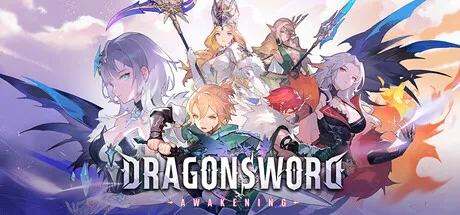
Master DragonSword: Awakening combat: the tag-team switching loop, all nine Status Ailment families, how Signal Skills chain, and the defensive tradeoffs.
DragonSword Awakening Combat Guide — Status Ailments, Signal Skills & Tag-Team Switching
Combat is the reason DragonSword: Awakening reviews well — a three-hero tag-team system where statuses stack, signals chain, and benched characters join the combo from the sidelines. It's also a system with one important quirk: the defense is offense. Here's how the whole loop works, from the first tutorial to mounting a stunned raid boss.
Here's what you'll learn:
- The combat loop: statuses → gauge → Signal Skills → switching
- All nine Status Ailment families and how they interact
- Why dodge i-frames are thin and what to do about it
- The mounting mechanic against giant bosses
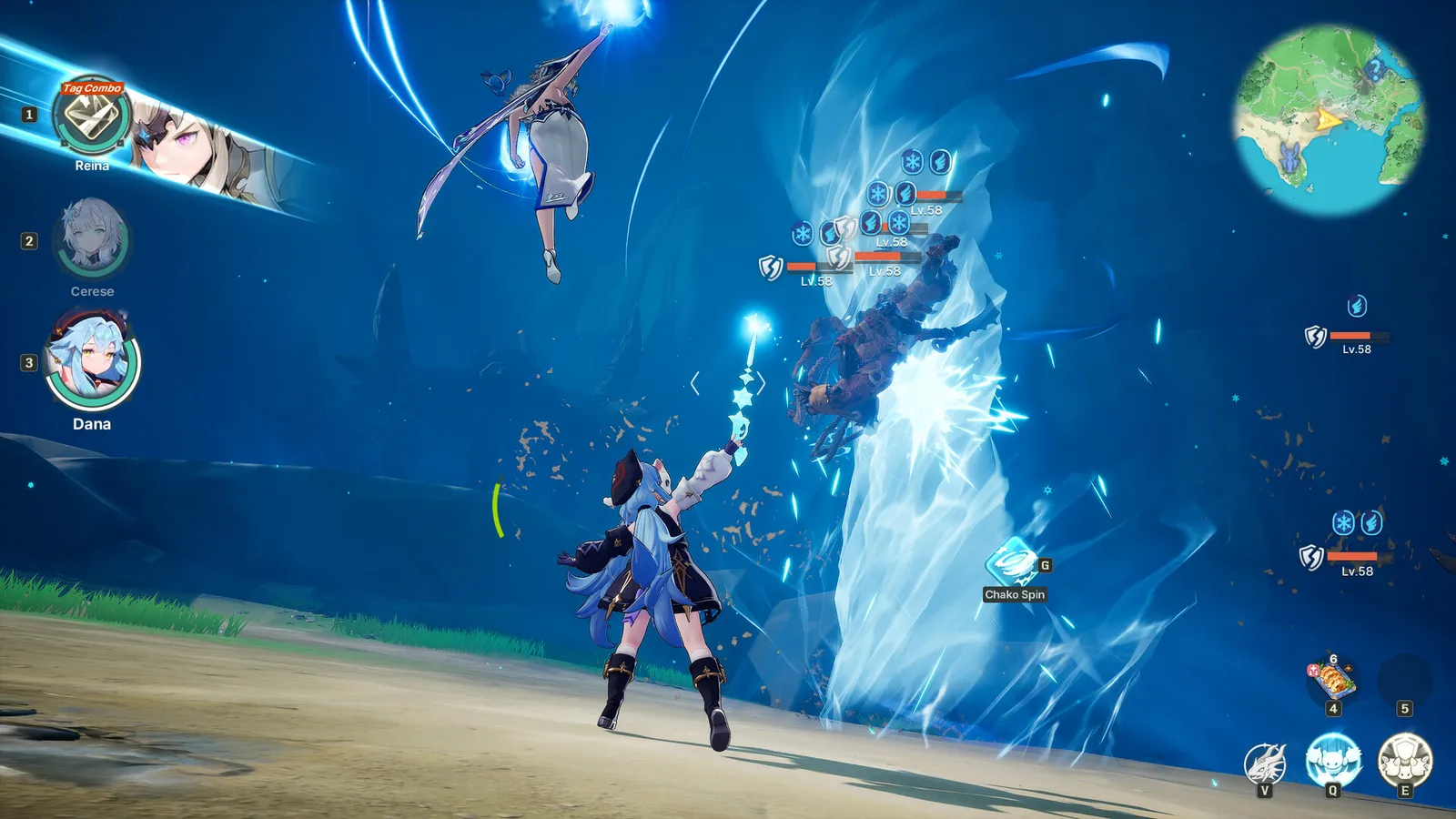
The Core Loop: Stack, Trigger, Switch, Repeat
Every fight follows the same rhythm:
- Stack Status Ailments with Active Skills. Each hero specializes in one of nine families, and status buildup persists across hero swaps.
- Fill the enemy's status gauge to light up Signal Skills — quick-time prompts for powerful follow-ups.
- Trigger Signal Skills — including for benched characters. This is the game's signature: your off-field heroes light up too, so a well-built team can chain reactive skills back and forth indefinitely ("Endless Signal Switching").
- Switch characters to keep the chain alive — the Tag Combo prompt appears when a dodge-and-skill trigger condition is met, letting you swap mid-combo and continue.
There are no ultimate abilities anywhere in the roster. The payoff structure is chaining, not nuking — which is exactly why the team comps guide matters more here than in most RPGs.
The Nine Status Families
Statuses are the grammar of the system. Every hero maps to one family (see the characters guide for the full roster mapping):
- Hemorrhage (Bleed) — damage over time (Roxy)
- Prominence (Burn) — fire DOT with stun potential (Kalien, Kalsion, Aria)
- Turbidity — poison-style pressure (Johnny, Charlotte)
- Chills (Frost) — freeze and crowd control (Dana, Cerese, Othello)
- Thunderstroke (Shock) — stun/knockdown chains (Ornette, Sion, Tarte)
- Gust — airborne juggling (Reina, Eileen)
- Destruction — armor/breaking power (Castella, Astria)
- Amplitude — burst amplifiers (Lute, Theresia)
- Crushing — knockdown and guarding (Alex)
Teams that cover three different families chain longer than teams of three same-family heroes — the statuses interact, the signals light up for each other, and the combo never dies.
Defense: The Price of All That Offense
The game's one structural weakness is defensive depth. Dodge invincibility frames are razor-thin, and there is no parry or perfect-evade reward. The intended answer is control: keep enemies status-locked so they never get a clean turn. The developer stream (May 21 gameplay preview) noted the team deliberately removed the dodge cooldown from the original — you can roll continuously — but the i-frames stay tight.
If you try to dodge-everything, the game will punish you. The correct defensive loop is aggressive: keep stacks up, keep signals chaining, and use crowd control to freeze the enemy out of its own turn. The world bosses and raids check your offense, not your dodging.
Mounting Giant Bosses
The signature spectacle: against giant bosses, certain Signal Skills morph into mounting moves. When you trigger one on a stunned or status-broken colossus, your hero climbs onto the monster and stabs away while it thrashes — a period of huge, safe damage that rewards building up to the trigger. It's the payoff moment the whole status-stacking system is designed to produce, and it's worth deliberately working toward on every giant encounter.
Controls, Lock-on, and the 1.0.7 Touch-ups
Hound13 shipped a camera and lock-on overhaul plan in the QoL roadmap, and the 1.0.7 update delivered combat-feel improvements (more responsive combat, stronger hit feedback, less floaty jumping, instant sprint, auto-run). If the combat ever feels mushy, check our updates guide — the team has been patching feel issues weekly since launch.
Official source: DragonSword: Awakening Steam page — "Stack Status Ailments with Active Skills, then chain devastating combos with powerful Signal Skills for an exhilarating combat experience."
Frequently Asked Questions
How does combat work? Three heroes swap in real time; stack statuses, trigger Signal Skills, and switch to keep the chain alive.
What are Signal Skills? Powerful follow-up skills that light up when status gauges fill — including for heroes on the bench.
How do you mount bosses? Land the triggering Signal Skill on a giant boss and the hero climbs on for a safe damage window.
Is there a parry? No — no parry and no perfect-evade reward. Control via statuses is the intended defense.
Related Guides
- Co-op, Subjugation & Raids Guide
- Gear Guide — Karma Weapons, Runes and Awakening
- DragonSword Awakening Farming Guide — Gold & Materials
- DragonSword Awakening Character Unlocks — Fate's Invitation
- DragonSword Awakening Side Quests — Hero & Bond Quests
Official resources: Steam store page · Hound13 developer stream (JYJ gameplay preview) · Rectify Gaming review — combat breakdown Last updated August 12, 2026. Mechanics verified against the Steam description, the May 21 developer stream, and Rectify Gaming's combat write-up; exact i-frame and gauge values are community-tested and subject to patch changes.
More DragonSword: Awakening Guides
How DragonSword: Awakening runs on Steam Deck — tested settings (Effects Low + TSR/FSR High Quality + 30fps lock), battery tips, and big-fight performance.
DragonSword: Awakening system requirements — the minimum (i5-9400F / GTX 1660) and recommended (i7-9700F / RTX 3060) specs, plus performance tips.