The complete Pass the Fear wiki and guide: how the roguelite bullet-hell works, every hunter, the build system, difficulties, co-op, and whether it's worth it.
Pass the Fear Wiki & Complete Guide
Pass the Fear (out July 22, 2026 on Steam, Windows only) is a roguelite bullet-hell top-down shooter from PlayMud Studio, published by Hong Kong indie label Paras Games. The pitch is simple and the hook is deeper than it looks: a squad of demon hunters is trapped on an island wrapped in a magical storm wall, has 12 in-game hours before dawn to escape, and fights its way out by building weapons that should not legally exist. The community shorthand — "Enter the Gungeon meets Brotato" — undersells how much of the game lives in its build-crafting layer: every run is an experiment in stacking projectiles, affixes, relics, and tarot cards until something absurd happens.
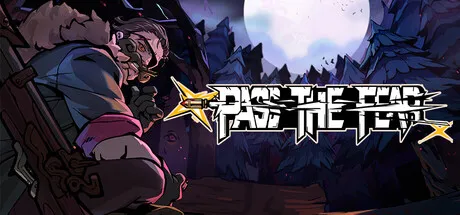
This wiki guide collects everything currently known about the game — core systems, the hunter roster, the build math, difficulty unlocks, co-op rules, and the launch-week reception — with anything the public sources don't confirm flagged as unverified rather than invented.
What Is Pass the Fear?
A roguelite bullet-hell shooter where you carry two weapons, weave through dense enemy fire, and assemble a build from five overlapping loot systems: weapon parts, relics, tarot cards, affixes, and elemental status effects. The official Steam store page describes the fantasy directly:
Scraped together mid-escape, this motley crew consists of the Iron Bucket Knight, the Explosive Cutie, the One-Eyed Codger, the Money Whiz, and a mysterious nun picked up by the roadside... Your mission is to flee the island within 12 hours. But as you reach the coastline, a despair-inducing Storm Wall blocks your path.
The game launched at $18.99 (intro offer $17.09, ended August 5) and currently sits at Mostly Positive (77% of roughly 2,400 reviews) with a 22,901 concurrent-player peak in launch week — strong numbers for an indie bullet-hell, and the reason the "pass the fear wiki" search term exploded in the weeks after release.
"Pass the fear wiki" is the fastest-rising search term for the game right now (Google Trends Breakout), because players are hunting for exactly what this page provides: a consolidated reference for systems the in-game UI explains poorly.
The Story: Witch's Disaster, Storm Wall, and the 12-Hour Clock
The backstory: a Witch's Disaster strikes without warning, and chaotic magic forms the ancient Wall of Storms around the island. Nothing gets in; nothing gets out. Inside, corruption spreads to every living creature, turning them into monsters. You play one of several demon hunters trapped in this hellscape with a simple mission — escape before dawn.
Key story beats (from the store page, official launch announcement, and community documentation):
- The 12-hour countdown is the narrative spine: the longer you take, the more the corruption spreads, and the harder the island fights back.
- The demo (Steam Next Fest, February 2026) ended at Air Harbor with the boss Scholar Raven; the full release added roughly 2.5 new chapters (five total) plus hidden stages and new bosses.
- Story fragments — collectible lore pieces scattered through chapters — are the main way the "dark conspiracy" behind the Witch's Disaster unravels. Community reading of the fragments points at a time-loop element, but that interpretation is player speculation, not developer-confirmed canon (verified as of August 2026).
- One Regular Ending is currently documented; whether hidden ending conditions exist beyond it is unverified.
See the story, ending, and 12-hour escape deep dive for the full breakdown once it's live — this guide focuses on systems.
The Core Loop: How a Run Works
Every run follows the same skeleton, whether solo or with friends:
- Hunter select — pick from the roster (7-8 hunters; more details below). Most are locked behind early-game progress.
- Camp preparation — the pre-run hub: buy/equip, spend Squad Points, tweak your hunter's skill tree, set difficulty. In co-op, everyone must be in the lobby here — nobody can join after the run starts.
- Chapters — fight through chapter by chapter. Each chapter ends in a boss; clearing it awards meta currency and unlocks the next.
- Pickups and experiments — between fights you collect weapons, weapon parts, relics, and tarot cards. Dismantle what you don't want, fuse what you do, and watch the synergies snowball.
- Death and reset — die and the run ends, but meta progress (Squad Points, skill tree levels, team talents) carries over. Higher difficulties pay out more and permanently change the loot pool.
The through-line is build cohesion over twitch dodging. TheBigBois' launch review nails the loop: "it's not about stacking power on top of power... it's a bullet hell that's far more focused on build cohesion than on twitch movement." You still dodge — this is a bullet hell — but the run lives or dies on whether your weapon, affixes, and relic pile agree with each other.
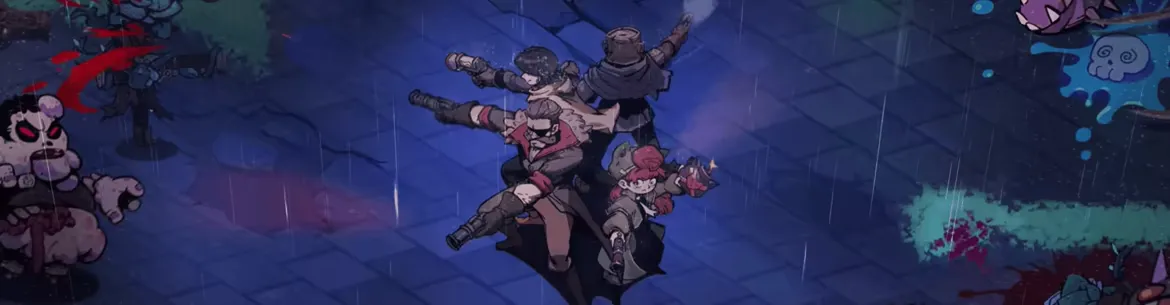
The Build System: "Build Your Own Bullet Hell"
This is the heart of the game and the reason "pass the fear builds" searches exploded. Five systems stack into one build:
1. Weapons and Weapon Parts
You carry two weapons and switch between them mid-run. Weapons have part slots; parts change fire rate, projectile count, spread, element, and special behavior. The demo-era press material listed 30 weapons and parts; the full release added "dozens" more plus reworks of demo classics — some weapons summon allies, some fire shots that curve back at you.
The economy trick: dismantling parts feeds the system. Jenny's talent (below) literally pays you a random new part every 7 dismantles, which over a long run turns into a free-flowing part pipeline.
2. Affixes (the "grammar" of builds)
The store page names five core affixes: [Shatter], [Embarkation], [Growth], [Final Shot], [Disruption]. Community guides describe them as the build grammar — not flat stat sticks but trigger conditions that chain. Examples of what players report:
- Growth — a scaling trigger that compounds with each proc, the backbone of "exponential damage" builds.
- Final Shot — a finisher payoff that rewards emptying the magazine at the right moment.
- Shatter / Disruption — interaction-based effects that pair with elemental statuses.
The in-game UI tells you what each affix does in isolation; it does not explain long-chain synergies. The build system guide breaks down how affixes chain into Transmutation chains, endless Ultimates, and looping triggers — worth reading before your third or fourth run, when the loot pool starts throwing real combos at you.
3. Relics and the Forge
Relics are passive build pieces (demo-era: 170+, expanded at launch). The Forge system lets you fuse and upgrade them; the launch revamp added dual-element relics (fire and frost on one relic instead of choosing) and Charge Weapon relics. The endgame layer is Mythic Relics and Red-rarity items — the launch patch notes confirm Red-rarity items as the new power tier.
4. Tarot Cards
Tarot cards are a second passive slot type with their own rules (22+ cards in the demo era). They read as run-defining modifiers rather than stat bumps — the kind of pickup that makes you re-plan the rest of the run around it. Patch 7.27 relaxed some tarot slot restrictions, so keep the list fresh via the updates page.
5. Elemental Status Effects (Transmutations)
Elemental buildup triggers five statuses — Hemorrhage, Freeze, Disruption, Corrosion, Ignition — and different weapons/elements stack them at different rates. Community guides treat status application as a team role in co-op: one player stacks Corrosion, another detonates with Ignition. The weapons guide covers which weapon families carry which elements.
Per the official Pass the Fear store description: "Stack up Projectiles and become a 'Fireworks Master', or pour everything into a single shot and melt an entire health bar — your weapons, your rules."
The two headline archetypes:
- Fireworks Master — stack projectile count, multishot, and on-hit procs until the screen is your bullet storm. Most accessible god-build fantasy.
- One-Shot Melt — funnel everything into a single devastating hit (Final Shot family) and delete health bars, especially effective on bosses.
The Hunters: Who You Actually Play
The roster is 7 confirmed playable hunters, with one source (TheBigBois) listing 8 — likely an unlockable or launch-added character; the eighth is unverified. The demo shipped 4; Long Tong and Stella joined at full release.
| Hunter | Role | Playstyle |
|---|---|---|
| Marcus | Weapon expert | Straightforward gunplay, extra bullets on crit. Best for beginners. |
| Jenny | Bomb tactician | Wildcat Bombs inherit your weapon's element; clears crowds. Every 7 dismantles → random new part. |
| Elena | Anomaly hunter | Dodge to fire Demon Hunting Silver Arrow (100% weapon damage) at the nearest enemy. High skill ceiling. |
| Long Tong | Dragon companion | Dragon Amber fights beside you, breathes 80% of your main weapon's elemental damage, applies dragon-flame DoT. |
| Stella | Tarot caster | Tarot-focused kit (launch addition). |
| Jester | Luck support | Free at start; Novice's Luck (dodge the next hit) + Justice Heart is a deadly combo. |
| Lanny | Treasure specialist | Coin/treasure scaling; rewards full-room exploration. |
Destructoid's launch hunter tier list puts Long Tong and Jenny in S-tier (Jenny's ultimate is "1,000% current weapon damage to every enemy within 1,000 range" — widely considered the strongest in the game), Elena/Marcus/Jester in A-tier, and the rest in B. Tier lists shift with patches; treat them as starting points, not gospel.
Each hunter has a character skill tree (15 upgrades per hunter per one guide source) that you can respec for free between runs — more on that in the progression section. See the full characters guide for each kit's starting skills and upgrade priorities.
Jester looks simple but Novice's Luck + Justice Heart is a legitimate A-tier combo that trivializes boss patterns. The free starter is not a trap.
Difficulties: Six Tiers, Boons, and Curses
The game ships six difficulty levels: Journey, Common, Hard, Nightmare, Hell, Reality. Each higher tier trades tougher enemies (and more bullets) for better loot quality and higher drop rates.
| Difficulty | Boon | Curse |
|---|---|---|
| Journey | Take 50% less damage | Earn 50% fewer Soul Gems and Squad EXP |
| Common | None | None |
| Hard | Better loot odds | One Chaos Battle Scar active; next-chapter enemies may appear |
| Nightmare | Better loot than Hard | Two Chaos Battle Scars; enemies two chapters ahead may appear |
| Hell | Even better loot | Three Chaos Battle Scars at start |
| Reality | Best loot in the game | Three scars at start + one more per chapter; enemies four chapters ahead |
Unlock rule (post-patch 7.26): you no longer need to clear every tier in order — clearing Hard unlocks Nightmare, Hell, and Reality all at once.
Chaos Battle Scars are the difficulty's signature mechanic: each scar is a boon and a curse rolled together ("high risk, high reward"). Pearls are a related difficulty-select modifier (per the June 2026 launch announcement: "Unlock higher difficulties, which allows you to choose a number of Pearls. Pearls grant immense power, also come with harsh drawbacks") — exact Pearl/Scar interactions are still being documented by the community, so treat specifics as unverified until a second source agrees.
For a first-time player, Journey is the intended tutorial band — the 50% damage cut is huge, and the Soul Gem/EXP penalty only matters once you're farming. Most players should run Common for the first clear, then push Hard for the triple unlock.
Progression: What Carries Between Runs
Roguelite progression is split across three systems, and using all three together is the difference between a Nightmare clear and a Reality wipe (per community progression guides):
- Squad Points (global) — spend Soul Shards/Gems (earned from bosses and elite kills) at the hub on permanent account-wide upgrades: health, armor, move speed. You cannot respec these, so the community consensus is health → armor → speed first; higher difficulties make the extra bullet-tolerance mandatory.
- Character skill trees (per hunter) — 15-upgrade trees that change how the hunter's kit works with weapons. Free to respec at any time, so before a Hard/Nightmare push, re-spec toward boss damage. This is also where the "skills fit the weapons you plan to use" advice comes in — rapid-fire skills for multishot weapons, cooldown skills for explosives.
- Team Talents (meta) — the squad-wide talent layer added at full release, letting upgrades benefit the whole roster rather than one hunter.
Higher difficulties also expand the loot pool (Red-rarity items, Mythic relics) — which is a progression system in disguise: the best builds are only possible on difficulties where the drops exist. The progression guide covers spend order and respec strategy in detail.
Co-op and Multiplayer: How Team Runs Work
Co-op is up to 4 players over Steam lobbies or LAN, and it meaningfully changes the game:
- Lobby rules — Multiplayer (Beta) from the main menu; pick Steam or LAN, set difficulty and player cap, choose Public (open join) or Private (shareable code). Everyone must join during camp preparation — the session is closed once the run launches.
- Item sharing — drop weapons/relics/parts on the ground (E), teammates pick up (F). This is the entire economy of co-op: passing a traded Growth relic to the player whose build needs it can complete a breakpoint that changes the run.
- Reviving — a downed player crawls and calls for help; a teammate revives with a hold. The run only ends when the whole squad is down — the biggest shift from solo, where one death ends the run instantly.
- Damage panel — a live graph tracks total and single-stage damage per player, with the top DPS highlighted in gold. It's half ego meter, half actual information: you can see whose build popped off mid-chapter.
There is no crossplay and no console version — the game is Windows-only, so "cross-platform" questions resolve to "no" (it's also not on Mac, Linux, or Game Pass). Solo is fully supported and every system works single-player; the revive rule is the only mechanical difference.
See the co-op & multiplayer guide for lobby setup, item-share etiquette, and role division (damage / crowd control / status stacking / resource collection).
The most common co-op failure is trying to join a run already in progress — joining is locked after the camp preparation phase. Get everyone into the lobby before the host starts the run.
Chapters, Bosses, and the Run Flow
The full release has five chapters (the demo's 2.5 plus 2.5 new), hidden stages, and a fresh boss roster. Documented bosses include:
- Scholar Raven — the demo's Air Harbor closer; the full game continues past this fight into the Upper Residences.
- Cardinal and Celebration — launch bosses covered by the early community wiki pages.
- Little Potted Plant and Master Magician — boss encounters mentioned in demo-era patch notes (patch 2.27 fixed a plant knockback issue and a Magician barrel that could fly out of the map).
- Blood Moon — a difficulty/event added in patch 7.26, rebalanced in 7.27.
Boss drops are the primary Soul Shard source, and defeating the final boss on Hard is the trigger for the three top difficulties. The bosses guide will carry pattern-by-pattern breakdowns as community documentation firms up.
Performance, Platform, and Steam Deck
- Platforms: Windows only (Steam). No Mac, no Linux, no consoles.
- Minimum specs (official): Windows 10, Intel i5-12600KF, 4 GB RAM, NVIDIA GTX 1060.
- Recommended (official): Windows 11, Intel i5-14400, 8 GB RAM, NVIDIA RTX 3060.
- Real-world performance: one launch review on an i5-14400 / RTX 3060 / 8 GB rig reported 60 FPS at 1080p high with occasional dips during four-player storm peaks; a GTX 1060 runs acceptably with particles trimmed. This is a 2D engine stressed by projectile count, not a GPU showcase.
- Steam Deck: the deck is playable — a launch-week community post confirms "fixed some compatibility issues on Steam Deck" — and Reddit players report playing it on Deck-only. Official Verified status is not confirmed as of mid-August 2026.
- Controller: full controller support is listed on Steam; patches added mouse side-button and stick-press remapping.
- Languages: 7 — English and Simplified Chinese have full audio; Traditional Chinese, Russian, Japanese, Spanish (LA), and Korean are subtitled.
One of the most-liked launch threads on the Steam Community hub is "No autofire, NO THANKS!!" — the game uses hold-to-fire or click-to-fire and some players find the clicking fatiguing. Check the controller/keybind page for current input options before deciding it's a dealbreaker; rebinding and hold behavior have changed across patches.
Reception: Reviews, Scores, and What Players Actually Say
- Steam: Mostly Positive, 77% of ~2,400 reviews (mid-August 2026). Review-language breakdowns skew positive; the common praise is build variety and co-op; the common complaints are English localization quality and limited enemy variety.
- TheSixthAxis (launch-day review): positive but guarded — "tough-as-nails bullet hell that feels really rewarding when you get a god build going early in the run," but it flags enemy and boss variety as the replayability ceiling. Co-op was still in beta during their review window.
- Tech-Gaming: praise for the "this is clicking" moment — "Pass the Fear... nails that feeling better than most of its peers."
- TheBigBois: the most enthusiastic launch take — "one of the most satisfying build-crafting roguelikes we've played this year," with a caveat about real, specific problems (translation, balance volatility).
- Metacritic: one critic score so far (70 from the TheSixthAxis-derived listing); no user score yet — too early for aggregates.
The honest summary: build crafting and 4-player co-op are the product; variety and polish are the friction. If you want a twin-stick shooter, other games do that cleaner; if you want "crazy builds and cool boss fights with friends," Reddit's r/roguelites thread comparing it to Pathogenic lands firmly on Pass the Fear. Our full review keeps score.
FAQ
What is Pass the Fear?
A roguelite bullet-hell top-down shooter from PlayMud Studio (published by Paras Games), released July 22, 2026 on Steam (Windows). Demon hunters trapped on a storm-walled island have 12 in-game hours to escape before dawn, building increasingly absurd weapon synergies across five loot systems.
Is Pass the Fear multiplayer?
Yes — online co-op for up to 4 players via Steam lobbies or LAN, plus full solo play. There's no crossplay (Windows-only), no split-screen, and no Game Pass version.
How many characters are in Pass the Fear?
Seven confirmed playable hunters — Marcus, Jenny, Elena, Long Tong, Stella, Jester, Lanny — with one source reporting an eighth unlockable. The demo shipped four; Long Tong and Stella were added at launch.
How do difficulties unlock in Pass the Fear?
Six difficulties exist (Journey, Common, Hard, Nightmare, Hell, Reality). Since patch 7.26, clearing Hard unlocks Nightmare, Hell, and Reality together — no need to climb the ladder one tier at a time.
Is Pass the Fear worth it?
At $18.99, yes for build-crafting fans and co-op groups; the caveats are limited enemy/boss variety and rough English localization. Steam's 77% Mostly Positive rating and 22,901-player peak suggest most buyers disagree with the critics' reservations.
Related Guides
- Pass the Fear Beginner's Guide
- Pass the Fear Best Builds
- Pass the Fear Characters & Hunters
- Pass the Fear Build System Explained
- Pass the Fear Co-op & Multiplayer Guide
- Pass the Fear Review
Official resources: Steam store page · Steam Community hub · Paras Games official site · TheSixthAxis review
Last updated: August 13, 2026 — patch info through Update 8.1 (V1.0.479, July 31, 2026).
More Pass the Fear Guides
The Pass the Fear co-op guide: how to set up Steam and LAN lobbies, join rules, item sharing, revives, the DPS panel, and the best co-op team roles.
The Pass the Fear community guide: r/roguelites discussions, Steam Community hub debates, the official Discord and X account, and where to find builds.
Pass the Fear controller support and keybinds: the default controls table, how to remap with mouse side buttons and stick-press, and keyboard vs pad verdict.
Every Pass the Fear difficulty explained: Journey, Common, Hard, Nightmare, Hell and Reality, with boons, curses, Chaos Battle Scars, Pearls and unlock rules.
How long is Pass the Fear? Estimated single-run length, time to beat the main game, 100 percent time, and what affects your playtime, with honest sourcing.
How to play Pass the Fear: controls and keybinds, the camp hub, the full run structure, how the 12-hour clock works, and what you lose when you die.
Pass the Fear mods: the honest state of mod support, no official tools or Workshop, player-made mods status, and the workarounds that actually exist.
Pass the Fear price analysis: the $18.99 cost, launch discount history, all five bundles including Brotato and Lost Castle 2, and the value verdict.