The Pass the Fear weapons guide: how the two-weapon slot works, weapon parts and the recycle loop, elemental weapon families, and what makes a good weapon.
Pass the Fear Weapons Guide — Two Slots, Infinite Configurations
Weapons are the chassis of every Pass the Fear build. You carry two weapons and switch between them mid-run; each weapon takes parts that change its fire rate, projectile count, spread, element, and special behavior. The demo shipped roughly 30 weapons and parts; the full release added "dozens" more plus reworks of demo classics. This guide covers the slot system, the part economy, the elemental families, and how to judge whether a weapon belongs in your build — because in this game, the right affix family beats a shinier number every time.
The Two-Weapon System
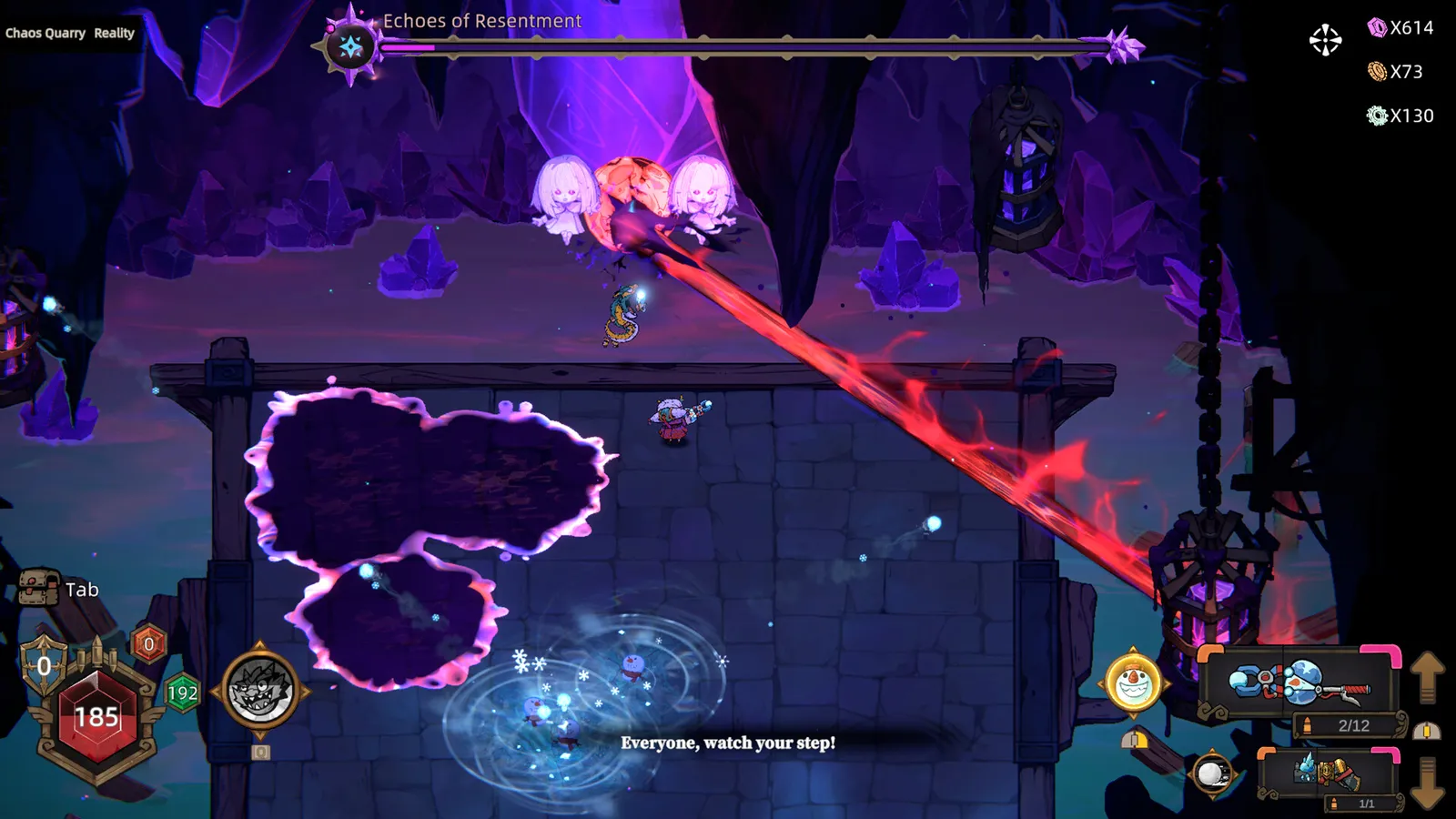
Every run gives you two weapon slots, and the game is designed for both to earn their keep:
- Primary — your raw damage and build core.
- Secondary — not a backup gun. Player guides at launch converged on using the secondary as a status-applier or passive effect package: tarot cards and relics can make the secondary fire automatically while you shoot the primary, or inherit effects from the loadout. A status-applying secondary (corrosion, freeze, stun) with a damage primary is one of the strongest patterns in the game.
The demo-era Demon Hunter Handbook series and the launch-week advanced-tips breakdowns all make the same point: the secondary slot that "does nothing" is a wasted slot.
Weapon Parts: The Recycle Loop
Weapons have part slots; parts change behavior — fire rate, projectiles, element, reload behavior (the "reload enters Overload" family), and special effects. The economy is built around recycling:
- Dismantle anything that does not fit your build. Parts become tokens/Ember.
- Feed the Forge — upgrade the weapon that does fit, pushing it up in rarity.
- Relics and tarot cards that grant extra Ember on dismantle or spawn a new item when dismantling turn the loop into a value engine.
- Jenny's passive pays a new random part every 7 dismantles — the loop, personified.
The part economy rewards ruthlessness. Every part you keep "just in case" is upgrade material you are not spending. Community guides call this the single biggest skill gap between players who "get" the game and those who stall.
Weapon Elements and Families
Weapons carry elements that feed the five status effects — Hemorrhage, Freeze, Disruption, Corrosion, Ignition (full details in the build system guide). Known families and how they behave, from player guides and showcases:
- Ice launchers / frost weapons — every third shot on the same enemy applies Freeze in some families; strong crowd control and transmutation fuel.
- Fire weapons — Ignition buildup; scales with Ember stacks (2.5% damage and AoE per stack on the Molten Core Orb relic).
- Electric / lightning weapons — Disruption buildup; damage-cap scaling; the "Overload" state family (reload into Overload for bonus damage windows).
- Acid weapons — Corrosion buildup; shreds enemy resistances.
- Bleed weapons — Hemorrhage; damage-over-time and resistance reduction.
- Charge weapons — slower rhythm with big payoffs; need Charge Weapon relics to shine. Don't judge them by one encounter.
- Summon weapons — launch additions that summon allies to fight alongside you.
- Returning-shot weapons — shots that curve back at you; part of the "weapons that should not exist" fantasy.
Judging a Weapon: Affixes Before Rarity
The most repeated launch-week advice, from the 10 Broken Build Secrets breakdown and the advanced-tips videos: the color of the card is the least important part. A lower-rarity weapon with the right affix family (Growth, Final Shot, Shatter, Embarkation, Disruption) outperforms a "better" orange replacement that breaks your trigger chain.
Two more rules:
- Remove the penalty, then scale the multiplier. Extra projectiles multiply every on-hit trigger — but only if you fix spread first. Projectile count without spread control is noise.
- The Forge rewards commitment. An early high-roll weapon with the right firing pattern, element and affix direction can be the chassis for the whole run. Feed the Forge everything that does not belong.
Per the official Pass the Fear store description: "Fancy weapons, special Weapon Parts, Relic fusion, Tarot Cards, elemental effects, random events... Every pickup is another experiment in weapon customization."
Best Weapons for Beginners
The launch community guides' consensus picks for learning the game:
- Rapid-fire families — forgiving, trigger proc effects constantly, and teach the "hold fire and weave" rhythm.
- Ice launchers — the freeze on third shot is a beginner-friendly crowd-control crutch that also teaches transmutation.
- Any weapon with the Growth affix — scaling triggers teach you to read affix text, the skill that actually matters.
Avoid for now: charge weapons (need support relics), high-spread multishot guns (need spread control), and anything that breaks your current chain for a bigger number. The best builds guide has full build templates for each archetype.
FAQ
How many weapons can you carry in Pass the Fear?
Two weapon slots per run, with parts modifying each weapon. The secondary slot is designed to be active — status application or passive effects — not just an emergency backup.
How do weapon parts work?
Parts fit into weapon slots and change fire rate, projectile count, element, spread and special behavior. Dismantle parts that do not fit your build — they fund Forge upgrades and, with the right relics and tarot cards, generate new parts.
What is the best weapon in Pass the Fear?
There is no universal best — the correct weapon is the one whose affix family and element complete your build's trigger chain. Rarity is secondary; a lower-rarity weapon with the right affixes outperforms a shinier replacement.
What are the best weapons for beginners?
Rapid-fire families, ice launchers with the freeze-on-third-shot behavior, and anything with a Growth affix. They are forgiving, teach trigger mechanics, and slot into beginner builds without demanding support relics.
How do elemental weapons work?
Each element feeds one of the five status effects (Hemorrhage, Freeze, Disruption, Corrosion, Ignition). Complementary elements on your two weapons trigger Transmutation chains — the game's main exponential-scaling mechanic.
Related Guides
- Pass the Fear Build System Explained
- Pass the Fear Best Builds
- Pass the Fear Bosses Guide
- Pass the Fear Characters & Hunters
- Pass the Fear Beginner's Guide
- Pass the Fear Difficulty Levels Explained
Official resources: Steam store page · Steam Community hub · Official patch notes
Last updated: August 13, 2026 — weapon details through Update 8.7 (V1.0.491, August 7, 2026).
More Pass the Fear Guides
The Pass the Fear co-op guide: how to set up Steam and LAN lobbies, join rules, item sharing, revives, the DPS panel, and the best co-op team roles.
The Pass the Fear community guide: r/roguelites discussions, Steam Community hub debates, the official Discord and X account, and where to find builds.
Pass the Fear controller support and keybinds: the default controls table, how to remap with mouse side buttons and stick-press, and keyboard vs pad verdict.
Every Pass the Fear difficulty explained: Journey, Common, Hard, Nightmare, Hell and Reality, with boons, curses, Chaos Battle Scars, Pearls and unlock rules.
The complete Pass the Fear wiki and guide: how the roguelite bullet-hell works, every hunter, the build system, difficulties, co-op, and whether it's worth it.
How long is Pass the Fear? Estimated single-run length, time to beat the main game, 100 percent time, and what affects your playtime, with honest sourcing.
How to play Pass the Fear: controls and keybinds, the camp hub, the full run structure, how the 12-hour clock works, and what you lose when you die.
Pass the Fear mods: the honest state of mod support, no official tools or Workshop, player-made mods status, and the workarounds that actually exist.