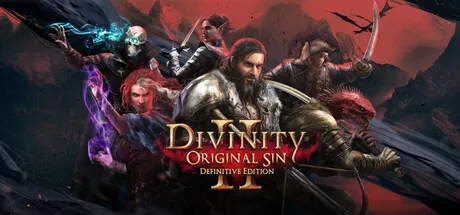
What kind of RPG is Divinity Original Sin 2? Genre, turn-based tactical gameplay, the classless custom ruleset (not D&D) and how it compares to Baldur's Gate 3.
Divinity Original Sin 2 RPG Guide — Genre, Gameplay and What Makes It Tick
Divinity Original Sin 2 is a classless, turn-based tactical CRPG with an isometric camera, an action-point combat system, and a fully interactive elemental world — it is not a D&D game, uses none of the D&D ruleset, and was built on Larian Studios' own custom Divinity Engine. You command a party of up to four Godwoken across a reactive fantasy world where nearly every NPC can die, every quest has multiple solutions, and the environment (fire, water, oil, electricity, high ground) is a weapon. This guide explains exactly what kind of RPG it is, how the gameplay loop works, and whether it's the right RPG for you.
Official resources: Steam store page · Larian — DOS2 on current-gen consoles FAQ · Wikipedia — Divinity: Original Sin II · dos2.wiki — Attributes · IGN — DOS2 review (9.6)
What Kind of RPG Is DOS2?
The honest one-line answer: it's a tactical turn-based CRPG in the tradition of the 1990s isometric classics, played from an isometric camera with a party of four characters you control one turn at a time. The genre terms that actually apply:
- CRPG / computer role-playing game — deep character building, dialogue trees, quests with branching solutions, and a world that reacts to your choices. USgamer's review called it the "pinnacle" of the genre.
- Tactical RPG — combat is turn-based on a gridless battlefield where position, elevation, action points and environmental surfaces decide fights. Steam's own tags list it as Tactical RPG, Turn-Based Strategy and Story Rich.
- Party-based — you control a full party of four, each with their own build, either solo or with up to three other human players in co-op.
- Not an action RPG and not a D&D game — combat is not real-time, and the rules are Larian's own, not the d20 system.
It's the direct sequel to Divinity: Original Sin (2014) and the fifth main entry in the Divinity series that started with Divine Divinity (2002) — but it's a standalone story set centuries later, so you can absolutely start here (Larian's own FAQ says exactly that).
It Is Not a D&D Game — the DOS2 Ruleset Explained
This is the single most common genre question, and the answer is unambiguous: no. DOS2 does not use Dungeons & Dragons rules, classes, dice or ability scores. It uses Larian's in-house system built for the Divinity Engine, and the differences are visible within the first fight:
- No classes. There are 14 presets, but they're just starting packages. Any character can learn any skill from any of the ten skill schools — the "class" is wherever you spend your points.
- No d20 rolls for attacks. Your chance to hit and your damage come from stats, positioning, height and gear, not a 20-sided die.
- An armour-gate system instead of D&D's hit points. Physical and magic armour block damage and crowd control until stripped — the central tactical loop that D&D doesn't have.
- Action points, not D&D's action economy. Every turn you get 4 AP (or 6 with Lone Wolf) and spend it on movement, attacks and skills.
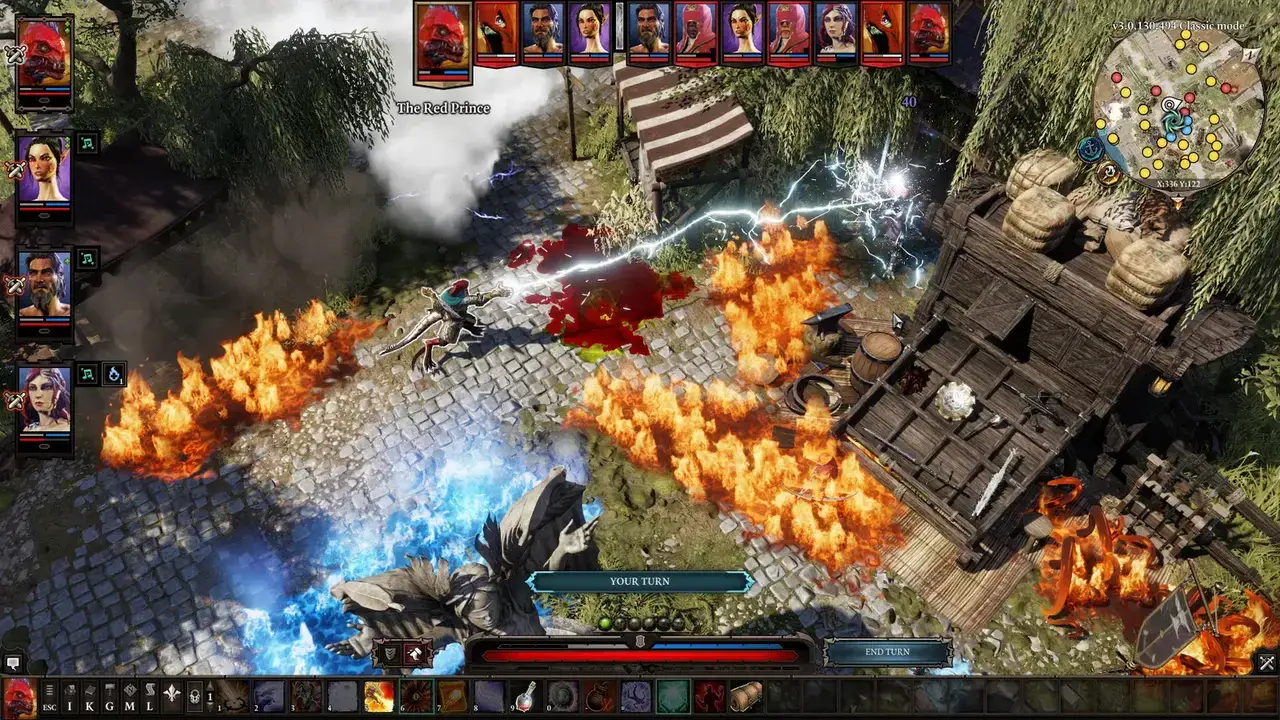
- Elemental surfaces and environmental physics. Water conducts electricity, oil ignites, blood can be frozen — you can teleport enemies into lava or stack explosive barrels. None of that exists in the D&D ruleset.
The connection people feel is thematic: DOS2 and Baldur's Gate 3 are both Larian turn-based fantasy RPGs with party banter and dense reactivity. But BG3 uses the D&D 5e ruleset; DOS2 uses its own. Larian's official FAQ for the current-gen release puts it plainly:
Official source: Larian Studios — Divinity: Original Sin 2 FAQ: "Does Divinity: Original Sin 2 use the same character creation and combat system as Baldur's Gate 3? No, DOS:2 uses its own classless character building and combat system. You will have the freedom to completely customise your character, creating your own class, as well as stats, abilities, talents, and skills."
How DOS2 Gameplay Actually Works
Strip away the genre labels and DOS2 is built on four interlocking loops:
1. The combat loop — armour, AP, position. Every fight starts with both sides at full armour. You spend action points to strip the enemy's physical or magic armour, and only then do your knockdowns, stuns and freezes land. Meanwhile the battlefield itself fights for you: high ground multiplies damage, oil + fire explodes, electrified water stuns everyone standing in it. The build guide explains the armour system and why it dictates party design in full detail.
2. The exploration loop — everything is interactive. Barrels are pickable and throwable, books are readable, animals are talkable-to (with the Pet Pal talent), and almost every object can be moved, stolen or used in a fight. The game's famous solution: when a door is locked, the "correct" answer might be lockpicking, teleporting inside, blowing the door up, or talking a guard into opening it.
3. The dialogue loop — no story armour. DOS2 was built with no protected NPCs: the writers had to make the story survive players killing quest-givers (PCGamesN's GDC report covers how hard that was). Kill the wrong person and quests branch, fail, or spawn alternative routes. Persuasion, tags (Mystic, Soldier, Scholar…) and race all open and close dialogue options.
4. The build loop — classless progression. Every level gives you attribute points, combat ability points, civil ability points and occasional talent points to spend however you want. Because of the respec mirror (free and unlimited from Act 2), this loop is also completely forgiving — you can rebuild any character at any time.
Is DOS2 a Good RPG for Beginners?
Yes, with the right difficulty setting — which is exactly what the difficulty modes are for. The Definitive Edition added Story Mode (double health/damage for you, half for enemies, plus out-of-combat resurrection) and there's a full ladder up to the brutal Honour Mode, so the same game scales from "pure story" to "ironman Tactician." Three things make DOS2 unusually friendly for genre newcomers:
- The classless system means no bad classes — just bad point spreads. And even those are fixable: the respec mirror is free and unlimited from Act 2 (or Act 1 with the Fort Joy Magic Mirror gift bag).
- Turn-based combat is forgiving of newcomers. No reaction-time pressure — you can read every tooltip, plan every turn, and reload if it goes wrong.
- The game explains itself. The Definitive Edition added a tutorial deck on the Merryweather that teaches the systems gradually, plus an in-game journal that tracks quests and hints.
The honest caveat: the difficulty curve is front-loaded. Fort Joy can punish under-leveled players, and the game expects you to learn the armour/CC loop quickly — our campaign guide has the level-by-level breakdown. If you're coming from action RPGs (Diablo, Elden Ring), expect to slow down — this is a game about planning, not reflexes. If you're coming from Baldur's Gate 3, the systems are different enough that PC Gamer's comparison is worth a read before you import your habits.
Play the first hour with one mental model: everything is armour. Health only matters after armour, status effects only land after the matching armour is gone, and the whole game rewards you for focusing one damage type. Internalise that and the difficulty curve flattens dramatically.
DOS2 vs Baldur's Gate 3 vs Divinity: Original Sin 1
| DOS2 (2017/2018 DE) | Baldur's Gate 3 (2023) | Divinity: Original Sin 1 (2014/2015 EE) | |
|---|---|---|---|
| Ruleset | Larian's own classless system | D&D 5e | Larian's own (prototype of DOS2's) |
| Classes | None — free point spending | 12 D&D classes | Presets with freedom |
| Party size | 4 | 4 | 2 (+ companions) |
| Combat | Turn-based, AP, armour gates | Turn-based, d20, action economy | Turn-based, AP, armour (simpler) |
| Co-op | 2–4 online, 2 split-screen | 1–4 online | 2-player co-op |
| Playable races | Human, Elf, Dwarf, Lizard, Undead | D&D's roster | Human, Elf, Dwarf, Lizard |
| Setting | Rivellon (original fantasy) | Faerûn (D&D) | Rivellon |
If you loved BG3, DOS2 is the obvious next step — same studio, same reactivity, same quality of writing, different combat rules. If you're choosing between DOS1 and DOS2, start with 2: it's the better game, the story is standalone, and it modernises everything DOS1 pioneered. The full verdict with review scores is in our is DOS2 good? guide.
The RPG Details New Players Actually Ask About
- Is it turn-based? Yes — fully turn-based, isometric, with an action-point system. No real-time combat anywhere.
- How long is it? Roughly 59 hours main story, 101 hours main + side, 158 hours completionist (Steam-aggregated) — full breakdown in the playtime guide.
- Can you play it solo? Yes — you control all four party members yourself, which is how most players play. Co-op is optional (see the multiplayer guide).
- What races can you play? Human, Elf, Dwarf, Lizard and Undead variants of each — five playable races per Larian's official FAQ, each with racial skills and dialogue.
- Is it on everything? PC, PS4, PS5, Xbox One, Xbox Series X|S, Switch, Switch 2, macOS and iPad — the December 15, 2025 current-gen releases are covered in the PS5 guide and the Switch guide.
Frequently Asked Questions
What kind of RPG is Divinity Original Sin 2?
A tactical turn-based CRPG: isometric camera, party of four, action-point combat, classless character building and a reactive world where quests have multiple solutions. It's frequently ranked among the greatest RPGs of all time — GameSpot gave it a rare 10/10 and Metacritic scores sit at 93–95.
Is Divinity Original Sin 2 based on Dungeons & Dragons?
No. It uses Larian's own classless ruleset with action points, armour gates and elemental surfaces — no D&D classes, dice or d20 mechanics. Baldur's Gate 3 is the D&D game; DOS2 is its own system. Larian's official FAQ confirms the two games use different systems.
Is DOS2 turn-based?
Yes, completely. Combat is turn-based with an action-point economy — each character gets AP per turn and spends it on movement, attacks, skills and items. There is no real-time combat mode.
Is Divinity Original Sin 2 good for beginners?
Yes, if you pick the right difficulty. Story and Explorer modes are forgiving, the classless system means no locked-in classes, the respec mirror is free from Act 2, and the Definitive Edition added a tutorial deck. The early game is still front-loaded, so follow the level recommendations in the campaign guide.
Is DOS2 like Baldur's Gate 3?
Thematically yes (Larian, turn-based, party banter, reactivity), mechanically no (different ruleset, no classes, armour-gate combat, elemental surfaces). BG3 fans almost always enjoy DOS2, but the tactics are different enough that habits don't transfer directly.
Related Guides
- Divinity Original Sin 2 Build Guide — Best Builds & Stats
- Divinity Original Sin 2 Characters Guide — All Origin Characters
- Divinity Original Sin 2 Guide — Acts, Walkthrough and Progression
- Is Divinity Original Sin 2 Good? — 2026 Verdict
- Baldur's Gate 3 Guide
Last updated: August 13, 2026.
More Divinity: Original Sin 2 Guides
The complete Divinity Original Sin 2 review: critic scores, the BAFTA-winning co-op, the Definitive Edition, every DLC and how the game holds up in 2026.
DOS2 on Steam Deck: Verified status, real performance, the best settings (40 FPS ~2h45m battery, 30 FPS ~3h30m), launcher fixes and mod support.
DOS2 on Switch: release date, Steam cross-saves, online co-op with no split-screen, performance, the free Switch 2 upgrade and whether it is worth buying.
The 2026 verdict on Divinity Original Sin 2: Metacritic and Steam scores, what critics and players say, who should buy it, and whether it still holds up.
DOS2 on Xbox: the 2018 Xbox One release, the free December 2025 Series X|S upgrade with 60 FPS, Smart Delivery, split-screen co-op and online issues.
How long to beat Divinity Original Sin 2: main story, side content and completionist hours, per-act breakdown, co-op factors and 100% achievement time.
Every Divinity Original Sin 2 origin character explained: Ifan, Lohse, Sebille, Red Prince, Beast, Fane — stories, gods, classes, voice actors and who to play.
Divinity Original Sin 2 on PS4 and Xbox One: the 2018 Definitive Edition, performance, split-screen and online co-op, and the free next-gen upgrade path.