The complete Divinity Original Sin 2 build guide: attributes, combat abilities, talents and the armor system, plus the best physical and magical builds.
Divinity Original Sin 2 Build Guide — Best Builds, Stats and Character Systems
Divinity Original Sin 2 is Larian Studios' turn-based tactical RPG (released September 14, 2017, with the Definitive Edition arriving August 31, 2018, and still sitting at roughly 95% Overwhelmingly Positive from over 94,000 Steam reviews). Every character in the game is built from the same six attributes, ten skill schools, a handful of weapon and defensive abilities, and a talent list — the class you pick at creation is only a starting preset, not a cage. This guide walks the whole system: what each stat actually does per point, how the armor system dictates your damage type, the builds the community has refined over years of Tactician and Honour runs, and the mistakes that kill more parties than any boss.

Official resources: Steam store page · dos2.wiki — Attributes · dos2.wiki — Combat Abilities · dos2.wiki — Talents · IGN review of the Definitive Edition (9.6) · Wikipedia
What a Build Actually Is in DOS2: The Classless System
The single biggest misunderstanding new players bring from other RPGs is that DOS2 has classes you commit to. It does not. The 14 class presets (Fighter, Knight, Ranger, Rogue, Wizard, Enchanter, Cleric, Witch, Conjurer, Metamorph, Shadowblade, Wayfarer, Battlemage, Inquisitor) are just pre-spent starting packages: two combat ability points, one civil ability point, a talent, and three skill books. The official wiki's Classes page states it plainly: "Classes are not a permanent choice."
What actually defines a build is where you spend four currencies on every level-up:
- Attribute points (Strength, Finesse, Intelligence, Constitution, Memory, Wits)
- Combat ability points (the 10 skill schools + weapon and defensive abilities)
- Civil ability points (Bartering, Loremaster, Lucky Charm, Persuasion, Sneaking, Telekinesis, Thievery)
- Talent points (passive perks, gained at levels 1, 3, 8, 13 and 18)
On top of that, your race (Human, Elf, Dwarf, Lizard, or Undead variants of each), your choice of one of the six origin characters (Ifan, Lohse, Sebille, the Red Prince, Beast, Fane) or a custom hero, and your tags (Mystic, Soldier, Scholar, Jester, Noble, Outlaw) all add dialogue options and racial skills — but none of them lock your combat role. An Elf Fane can absolutely be a two-handed knight; a Dwarf wizard works fine. The class system exists to get you into Fort Joy fast, not to define your endgame. And whether you are playing on PC, PlayStation, Xbox or the Switch port, the build rules below are identical — the Definitive Edition is the same game everywhere.
Pick the preset closest to what you want, then immediately edit attributes, abilities, talents and skills on the character creation screen. The game fully customises every preset before you start. Every single choice except your race and origin can be rebuilt later at the respec mirror, so do not agonize — the only expensive mistakes are the ones you repeat.
The Six Attributes and What Each Point Gives
Every character starts with 10 in each attribute. Points above 10 are where the math lives, and both the official dos2.wiki Attributes page and the long-standing community breakdowns agree on the numbers:
| Attribute | Effect per point above 10 | Who wants it |
|---|---|---|
| Strength | +5% damage with strength weapons/skills, +2% physical armour restored by skills and potions, more carry weight | Warriors, knights, shield users |
| Finesse | +5% damage with finesse weapons/skills (bows, crossbows, daggers, spears) | Rangers, rogues |
| Intelligence | +5% magic damage (all elemental schools, Necromancer, Summoning) | Mages, summoners |
| Constitution | +7% vitality (max health) | Only enough to wear shields / survive one round |
| Memory | +1 memory slot (you start with 4 slots at 10 Memory, and gain a free slot every 2 levels) | Exactly as many as your skill loadout needs |
| Wits | +1% critical chance, +1 initiative, better secret/trap detection | Anyone who wants to act first or crit |
The rule the whole community converges on: pick one of Strength / Finesse / Intelligence and pour almost everything into it. DOS2 rewards specialists brutally. A character with 40 Strength hits roughly 150% harder than one who spread 30 points across three damage attributes — and the combat ability bonuses multiply on top of that, so spreading makes both halves weak.
Constitution looks attractive to RPG veterans and is a trap: if enemies are hitting your vitality, your armour is already gone and you are about to be crowd-controlled regardless. Health does not save you from a knockdown chain. Memory is the same in reverse — take only what you need to slot your skills, then stop. Wits is the default endgame dump: crit chance and turn order are the two resources that never stop scaling.
Official source: dos2.wiki — Attributes — "Strength: +5% damage, +2% physical armour from skills and potions, +kg carry weight. Constitution: +7% vitality. Memory: +1 memory slot. Wits: +1% critical chance, +1 initiative."
Combat Abilities: The Ten Skill Schools
Combat ability points are the second half of every build. Each point unlocks higher-tier skills in that school and grants a passive bonus. From the official dos2.wiki Combat Abilities page:
| School | Passive effect per point |
|---|---|
| Warfare | +5% all physical damage |
| Huntsman | +5% damage when attacking from high ground |
| Scoundrel | +5% critical damage multiplier, +0.3 movement speed |
| Pyrokinetic | +5% fire damage |
| Hydrosophist | +5% water damage, +5% healing, +5% magic armour restored |
| Aerotheurge | +5% air damage |
| Geomancer | +5% earth/poison damage, +5% physical armour restored |
| Necromancer | heal 10% of all damage you deal directly to vitality |
| Summoning | +10% to all summon statistics (damage, vitality, both armours) |
| Polymorph | +1 free attribute point per point invested |
The two entries that break the pattern are the two most important for building well:
- Warfare is not a warrior skill — it is the physical damage multiplier. It boosts all physical damage: swords, bows, daggers, and also Necromancer spells, which deal physical damage. The classic "blood mage" puts points into Warfare precisely because +5% physical damage per point applies to every necromancy spell. This is the single most powerful damage scaling trick in the game, and it is why a Necromancer build is not a "mage" build in the usual sense.
- Polymorph is a stat tax that pays itself back. Every point in Polymorph refunds one attribute point, so dipping 3 points into Polymorph (for Skin Graft, Spread Your Wings and Medusa Head) effectively costs nothing while giving you the best utility skills in the game. Almost every serious build takes Polymorph 3 eventually.
The weapon abilities (Dual Wielding, Ranged, Single-Handed, Two-Handed) each add +5% damage with their weapon type plus a small secondary: Ranged adds +1% critical chance per point, Two-Handed adds +5% critical damage multiplier, Dual Wielding adds +1% dodge, Single-Handed adds +5% accuracy. The defensive abilities are Leadership (+2% dodge, +3% resistances for allies within 8m), Perseverance (+5% armour restored after recovering from hard crowd control) and Retribution (+5% damage reflected).
A generic rule that survives every difficulty: spend most of your combat points in exactly one damage school (Warfare for physical, your element for magic), then spend 1–3 points in the utility schools — Scoundrel 1 for Adrenaline, Huntsman 2 for Tactical Retreat, Polymorph 3 for the free-attribute package, Necromancer 1–2 for lifesteal on physical builds. The 1-point dips are where the game's best AP-efficiency skills live.
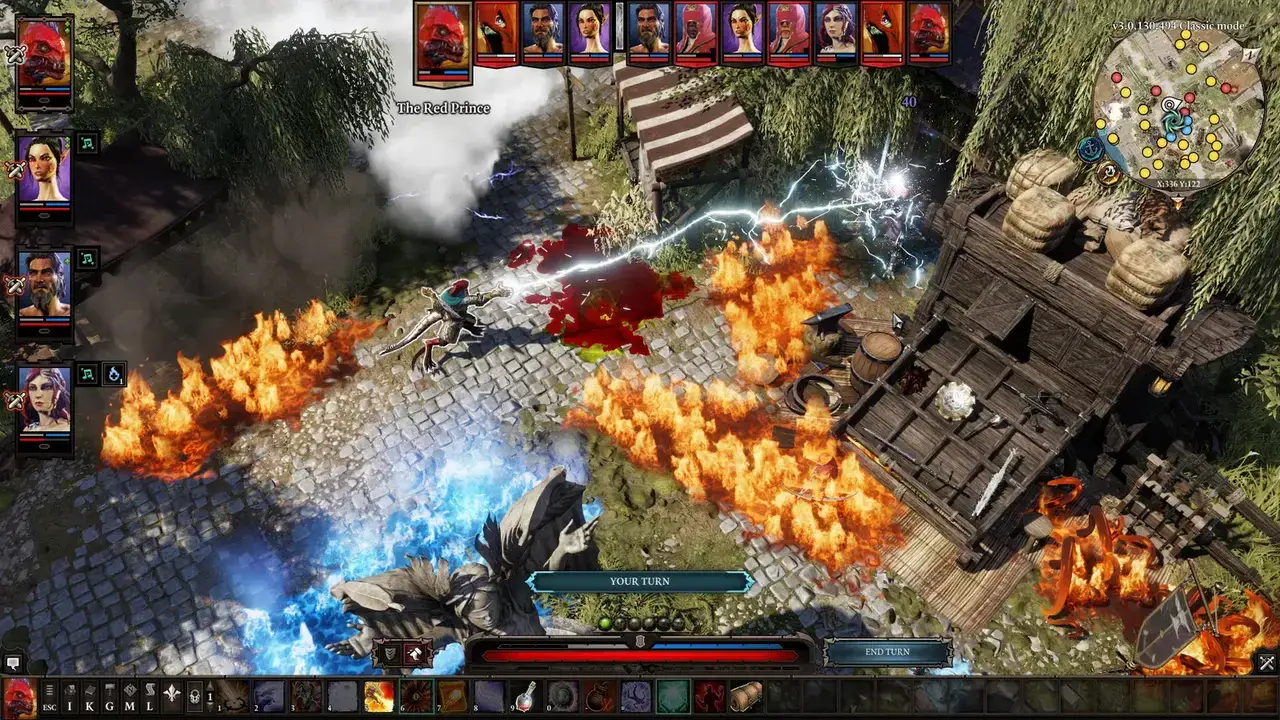
Talents That Carry Builds
Talents are passives chosen at character creation and at levels 3, 8, 13 and 18 (you get one at level 1, so five total by the endgame). The ones that actually define builds, with the exact numbers from the dos2.wiki Talents page:
- Lone Wolf — +2 max AP, +2 recovery AP, +30% vitality, +60% physical and magic armour, and doubles your invested attribute and combat ability points (capped at 40 attributes / 10 abilities). Only active with one companion or fewer. The famous two-man party talent.
- Glass Cannon — start every round at max AP, but armour no longer blocks status effects on you. Extremely strong on ranged damage dealers who kill before they get hit; suicidal on frontliners.
- Executioner — +2 AP on every killing blow (once per turn). The best AP economy talent for anyone who reliably finishes enemies.
- The Pawn — 1 AP worth of free movement per turn. Pairs with Executioner? No — they are mutually exclusive, so pick based on whether you reposition or kill more.
- Elemental Affinity — spells of a school cost 1 less AP while you stand on that element's surface (fire for Pyro, water for Hydro, blood for Necro, etc.). The backbone of every optimized mage.
- Savage Sortilege — lets magic spells crit with your crit chance. Combined with high Wits, this is how mages keep up with weapon crits.
- Hothead — +10% crit chance and +10% accuracy while at full vitality. Free stats for characters who rarely get hit.
- Torturer — burning, poisoned, bleeding and a few other statuses now bypass armour, and last one turn longer. Turns Worm Tremor (Geomancer 2) into an unblockable entangle — a famous cheese, and a legitimate build pillar.
- Bigger and Better (+2 attribute points), All Skilled Up (+1 combat, +1 civil ability point) and Mnemonic (+3 Memory) — the pure-stat talents, all fine filler.
- Living Armour (35% of healing converts to magic armour), Leech (heal on blood surfaces), Comeback Kid (survive a lethal hit at 20% health, once per combat) — the survival tier.
- Pet Pal — talk to animals. Not a combat talent, but it opens dozens of quests, secrets and vendor discounts across every act. Take it on exactly one character.
Civil Abilities and Who Should Own Them
Civil abilities never scale damage, but they scale your economy and options. The critical rule from the dos2.wiki Civil Abilities page: only the highest value in the party counts for Bartering and Lucky Charm, so exactly one character should invest in each. The sensible party layout:
- Bartering — one designated merchant character (your main character works, since you control every purchase).
- Lucky Charm — one character who loots containers (usually the same one who opens everything).
- Persuasion — the party leader, because dialogue checks are made by whoever talks.
- Thievery — one dedicated thief, since lockpicking and pickpocketing are per-character. Pickpocketing is how a disciplined party funds every skill book in the game — vendors reset their inventories and gold every level-up, so a thief with points in Thievery is a money printer.
- Loremaster — one character who identifies gear (or you pay for identify scrolls forever).
- Sneaking / Telekinesis — niche; Telekinesis has a famous barrel-throwing meme build, Sneaking enables the Guerrilla +40% sneak-attack damage playstyle.
The Armor System: Why Your Party's Damage Type Is a Build Decision
Before picking "the best build," you must understand why DOS2 parties are built around a single damage type. Every enemy and character has two defensive layers above vitality: physical armour and magic armour. Damage of a type only reaches vitality after the matching armour is gone — and, more importantly, crowd control statuses only apply once the armour of their type is stripped. Knockdown, bleeding and chicken form need physical armour at zero; stun, freeze, charm and sleep need magic armour at zero.
This creates the game's central party-building law: focus all four characters on one damage type. An all-physical party burns through physical armour with four attackers and then locks the enemy down with knockdowns; an all-magical party does the same with freeze/stun. A "balanced" split party must chew through both armour bars on every enemy, which is roughly twice the work — the classic beginner mistake that makes the game feel brutally hard around Act 2. If this armour-before-status loop appeals to you, it is the same design that makes Darkest Dungeon tick: strip the protection, then apply the crowd control, never the reverse.
The wiki's Classes page states the same advice directly: "Players are encouraged to focus primarily on one type of damage – physical or magical – in order to strip enemy armour as quickly as possible."
The Best Builds in Divinity Original Sin 2
These are the archetypes that have survived every difficulty since the Definitive Edition rebalance — the ones you will see recommended on the Steam forums, in Sin Tee's long-running guides, and in the GamesRadar builds round-up. Each includes the stat plan and the key skills; exact skill books are bought from vendors (higher-tier books unlock at higher levels) or found.
Two-Handed Knight (physical, Strength)
The simplest build that scales to the endgame. Strength to 40, then Wits; Warfare to 10 (max); 5 in Two-Handed for the crit multiplier; 3 in Polymorph for the free attribute points; 1 in Scoundrel for Adrenaline; optionally 2 in Necromancer for lifesteal.
- Core skills: Battle Stomp and Battering Ram (knockdowns that win fights), Whirlwind (AoE), Phoenix Dive (mobility), Enrage (100% crit for 2 turns), Tentacle Lash (long-range physical hit + slow), Skin Graft (reset cooldowns), Chicken Claw (turn a boss into poultry — yes, really).
- Talents: Opportunist, Executioner, Picture of Health, Living Armour.
- Why it works: Warfare's +5% physical damage multiplies every hit, the knockdowns lock enemies at zero armour, and Polymorph pays for itself.
Rogue / Assassin (physical, Finesse)
Daggers auto-crit from behind (backstab ignores the crit chance roll), which makes rogues the most reliable single-target damage in the game. Finesse to 40; Scoundrel and Dual Wielding maxed; 1 point in Polymorph for Chameleon Cloak.
- Core skills: Backlash (teleport behind the target), Adrenaline (+2 AP now, -2 next turn), Rupture Tendons (they take damage whenever they move — pair with Chameleon Cloak so the enemy can't chase you), Cloak and Dagger (teleport), Sawtooth Knife (pierces armour), Mortal Blow.
- Talents: The Pawn, Executioner, Parry Master, Duck Duck Goose.
- Why it works: backstab crits + Scoundrel's +5% crit multiplier per point = crits that one-shot armour bars. The Pawn's free movement lets you walk behind enemies at no AP cost.
Ranger (physical, Finesse)
The high-ground king. Finesse to 40; Huntsman and Ranged maxed; Tactical Retreat is mandatory. High ground damage is the strongest damage modifier in the game — every point of Huntsman adds +5% to it, and elevation multiplies your whole damage formula rather than adding to one part of it.
- Core skills: Tactical Retreat (teleport + Haste), Elemental Arrowheads, Ricochet, Sky Shot, Ballistic Shot, Arrow Storm (source skill), First Aid (cleanse + heal), Reactive Shot.
- Talents: Arrow Recovery, Executioner, Elemental Ranger, Hothead.
- Why it works: you spend the fight on a roof, out of melee, critting with Ranged's +1% crit per point while the high-ground bonus stacks on every shot.
Necromancer / Blood Mage (physical damage, Intelligence)
The counter-intuitive star build. Necromancy spells deal physical damage, so they scale with Intelligence and Warfare (which boosts all physical damage), and every point in Necromancer heals you for 10% of the damage you deal to vitality. The result is a self-sustaining AoE nuke machine.
- Attributes: Intelligence to 40, then Wits. Abilities: Necromancer to 3–5 (skill unlocks), Warfare to 10 (the damage multiplier), Polymorph 3, Scoundrel 1.
- Core skills: Mosquito Swarm (ranged, heals), Infect, Corpse Explosion (huge physical AoE from any corpse — barrels of corpses are a real tactic), Living on the Edge (you can't die for 2 turns), Death Wish, Blood Storm and Grasp of the Starved (source skills that end fights).
- Talents: Elemental Affinity (stand in blood — your own Flesh Sacrifice if you are an Elf — for -1 AP on every Necro spell), Savage Sortilege, Living Armour, Hothead.
- Why it works: Warfare-boosted physical spells + lifesteal + blood-surface AP discounts = a mage that out-damages warriors and cannot die.
Pyrokinetic / Geomancer Mage (magical, Intelligence)
The classic fire-and-earth nuker, and the easiest magic build to pilot. Intelligence to 40; Pyrokinetic and Geomancer both high; Polymorph 3; Scoundrel 1 for Adrenaline.
- Core skills: Fireball, Searing Daggers, Spontaneous Combustion, Fossil Strike, Impalement, Worm Tremor (with Torturer this entangles through armour), Pyroclastic Eruption (source, huge earth damage), Meteor Shower (source).
- Talents: Elemental Affinity (stand in your own fire for -1 AP), Torturer, Savage Sortilege, Far Out Man.
- Why it works: fire and earth surfaces feed Elemental Affinity, Torturer makes your DoTs bypass armour, and the two schools cover each other (oil + fire = explosions; poison + fire = explosions).
Hydrosophist / Aerotheurge Storm Mage (magical, Intelligence)
The control mage. Rain soaks the battlefield, then Chain Lightning and Global Cooling freeze and stun anything with broken magic armour. Intelligence to 40; Hydro and Aero both high; Polymorph 3.
- Core skills: Rain, Hail Strike, Global Cooling, Winter Blast, Electric Discharge, Dazing Bolt, Chain Lightning, Teleport and Nether Swap (the two best utility spells in the game — see below), Superconductor, Storm.
- Talents: Elemental Affinity (stand in water), Savage Sortilege, Hothead.
- Why it works: freeze/stun lockdown is the strongest crowd control in the game, and water+air is the only element pair with an infinite surface loop (wet → shock → stun).
Summoner (Intelligence / Summoning 10)
The build that needs no weapon. Summoning at 10 unlocks the Incarnate Champion, a second damage dealer whose stats get +10% per point of Summoning. You have no primary attribute pressure, so everything goes into Wits for first turn — the summoner acts first, summons, and the fight is 5v4 from round one.
- Core skills: Conjure Incarnate, Farsight / Power / Warp / Shadow Infusions (elemental or ranged variants), Elemental Totem, Supercharger, Dominate Mind, plus one utility school dip (usually Necromancer or Pyro).
- Talents: All Skilled Up (reach Summoning 10 a level early), Far Out Man, Mnemonic.
- Why it works: summons scale off Summoning alone, so you skip the whole weapon/armour stat fight and bring a fifth body that can be re-summoned every fight.
Lone Wolf (any archetype, two characters)
Lone Wolf doubles invested attribute and ability points (+2 max AP, +2 recovery AP, +30% vitality, +60% armours), which pushes two characters past what four normal characters can do. The famous pairings: two physical damage dealers (Knight + Rogue) or a physical + magical combo that covers both armour types. Because AP and crits scale so hard, the two-man party is stronger than the four-man party from about level 6 onward — it is the community's consensus answer to "what is the easiest way to beat Tactician." If you plan to run a two-man campaign with a friend, check which multiplayer modes your platform actually supports first — the Switch co-op breakdown is a good example of how the modes differ between PC and console.
It makes the early game (levels 1–5) noticeably harder because you have half the bodies and half the actions. It is also incompatible with Glass Cannon, and the doubling caps at 40 attributes / 10 combat abilities like everyone else. If you take it, commit to exactly two well-planned characters.
Teleport, Adrenaline and the Skills Every Build Should Steal
Whatever archetype you choose, these utility skills earn a slot on nearly every build:
- Teleport (Aerotheurge 2) — moves any character or enemy anywhere in range, deals damage, breaks armour off ledges and clusters enemies for your AoE. Community consensus ranks it the single most impactful skill in the game.
- Nether Swap (Aerotheurge 2) — swap positions with any creature. Teleport's cheaper, weirder cousin.
- Adrenaline (Scoundrel 1) — +2 AP now for -2 AP next turn. A one-point dip that wins fights by letting you finish a kill early.
- Tactical Retreat (Huntsman 2) — teleport + Haste, one AP net cost because you get the AP back from Haste next turn.
- Skin Graft (Polymorph 3) — reset all cooldowns and source points. Expensive, and worth it.
- Fortify / Armour of Frost / Restoration — one armour-restore skill per frontliner keeps your armour bars (and therefore your CC immunity) topped up between enemy turns.
Leveling: Points Per Level, Caps and the Respec Mirror
You earn 2 attribute points per level, 1 combat ability point per level, civil ability points at levels 1, 2, 6, 10, 14, 18 and 22, and talent points at levels 1, 3, 8, 13 and 18 (the Definitive Edition's max level is 22). The caps from level-up points: 30 points can be invested into any attribute (40 total with the starting 10), 10 into any combat ability, 5 into any civil ability. Lone Wolf doubles what you invest, not the caps.
The respec mirror on the Lady Vengeance (available from Act 2, or from Act 1 if you enable the Fort Joy Magic Mirror gift bag feature) lets you rebuild every attribute, ability, talent and skill for free, as many times as you want. The practical implication: your first playthrough build should never be a sunk-cost problem. Experiment through Acts 1–2, then respec into your final composition for the endgame.
Official source: dos2.wiki — Classes — "Every attribute, ability, talent, and skill can be changed freely on each level-up, and full respecification is available from Act Two onward via the magic mirror aboard the Lady Vengeance."
Common Build Mistakes (the ones that actually end runs)
- Splitting damage types in a four-man party. Two physical + two magical means every enemy needs both armour bars stripped. Go all-in on one type.
- Spreading attribute points across Strength, Finesse and Intelligence. Pick one damage attribute and commit. A jack-of-all-trades deals no damage and gets one-rounded.
- Ignoring Memory entirely. You need slots for your skills. Check how many slots your loadout needs and buy exactly that many Memory points; both under- and over-investing hurt.
- Ignoring Wits. Turn order decides who strips armour first. One or two Wits-heavy characters change entire fights.
- Buying every skill book you find. Skills cost gold and Memory slots; a focused loadout of 8–10 skills beats 15 situational ones.
- No movement skills. The ability to reposition (Tactical Retreat, Phoenix Dive, Cloak and Dagger, Spread Your Wings) is worth more than a second damage spell. Every character should have at least one.
- Skipping the respec mirror. The game literally gives you free rebuilds. Use them — respec before hard fights, fix wasted points, try the build you read about.
- Treating warfare as a weapon-only stat. It boosts all physical damage, including Necromancy. That misunderstanding costs blood mages their entire damage identity.
Frequently Asked Questions
What is the best build in Divinity Original Sin 2?
There is no single "best" — the meta is a one-damage-type party. For physical, the Two-Handed Knight, Rogue and Necromancer (Warfare-boosted blood mage) are the strongest. For magical, the Pyro/Geo nuker and the Hydro/Aero storm mage. Lone Wolf pairs any two of these into the strongest possible two-man party.
What attributes should I focus on in DOS2?
Pick exactly one damage attribute (Strength, Finesse or Intelligence) and max it, add Memory only for your skill slots, then pour the rest into Wits for crit and initiative. Constitution is a trap beyond shield requirements — armour, not health, is your defense.
Is Lone Wolf better than a four-man party in DOS2?
Past the early game, yes — two Lone Wolf characters with doubled attribute/ability points, +2 max AP and +60% armour out-damage a full party. It is harder at levels 1–5 and requires you to cover both armour types, but it is the community's standard Tactician/Honour tool.
Can you respec your build in Divinity Original Sin 2?
Yes, completely and for free. The magic mirror on the Lady Vengeance (Act 2 onward) rebuilds attributes, abilities, talents and skills; enabling the Fort Joy Magic Mirror gift bag gives you a mirror in Act 1. Only race and origin choice are permanent.
What is the max level in Divinity Original Sin 2?
The Definitive Edition caps at level 22 (the original release was 20). Most players finish around 20–22, and the last two levels require near-complete quest completion.
Related Guides
- Divinity Original Sin 2 on Switch — Co-Op, Cross-Saves, Performance
- Darkest Dungeon Beginner Guide — Party Composition and Turn-Based Tactics
- Darkest Dungeon Platforms Guide — Which Version to Play
- Valheim Crossplay Guide — Cross-Platform Multiplayer Explained
- RimWorld Colony Guide — Wealth, Defense and Base Design
Last updated: August 13, 2026.
More Divinity: Original Sin 2 Guides
What kind of RPG is Divinity Original Sin 2? Genre, turn-based tactical gameplay, the classless custom ruleset (not D&D) and how it compares to Baldur's Gate 3.
DOS2 on Steam Deck: Verified status, real performance, the best settings (40 FPS ~2h45m battery, 30 FPS ~3h30m), launcher fixes and mod support.
DOS2 on Switch: release date, Steam cross-saves, online co-op with no split-screen, performance, the free Switch 2 upgrade and whether it is worth buying.
The 2026 verdict on Divinity Original Sin 2: Metacritic and Steam scores, what critics and players say, who should buy it, and whether it still holds up.
DOS2 on Xbox: the 2018 Xbox One release, the free December 2025 Series X|S upgrade with 60 FPS, Smart Delivery, split-screen co-op and online issues.
How long to beat Divinity Original Sin 2: main story, side content and completionist hours, per-act breakdown, co-op factors and 100% achievement time.
Every Divinity Original Sin 2 origin character explained: Ifan, Lohse, Sebille, Red Prince, Beast, Fane — stories, gods, classes, voice actors and who to play.
Divinity Original Sin 2 on PS4 and Xbox One: the 2018 Definitive Edition, performance, split-screen and online co-op, and the free next-gen upgrade path.