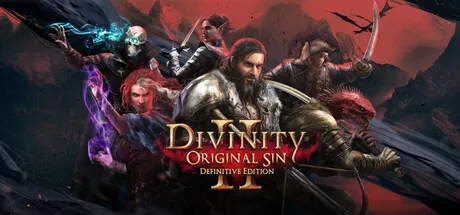
The complete Divinity Original Sin 2 guide hub: the four-act campaign walkthrough, levels per act, Fort Joy essentials and the best pages for every system.
Divinity Original Sin 2 Guide — Acts, Walkthrough Overview and Progression
Divinity Original Sin 2 (Larian Studios, September 14, 2017, Definitive Edition August 31, 2018) is a four-act campaign that runs roughly 60–100 hours for a full first playthrough: Act 1 on the prison island of Fort Joy (roughly levels 1–9), Act 2 across the huge map of Reaper's Coast (roughly 9–16), Act 3 on the Nameless Isle (roughly 15–18), and Act 4 in the city of Arx (roughly 17–22, the level cap). This guide is the hub for everything else on this site: it explains the campaign structure and what to expect in every act, then points you to the dedicated guides for builds, characters, respec, multiplayer and playtime.
Official resources: Steam store page · dos2.wiki — Guides · dos2.wiki — Fort Joy · Wikipedia — Divinity: Original Sin II · Polygon interactive maps
The Four Acts of the DOS2 Campaign
The Definitive Edition campaign is divided into four acts, each a separate large map with its own hub, quests and level curve. The level ranges below come from the community wiki's per-location recommendations and years of player reports — they are guides, not gates: DOS2 lets you wander into content several levels above you, and it will happily remind you why that was a mistake.
| Act | Location | Approx. level range | Main beats |
|---|---|---|---|
| Prologue | The Hold (Merryweather) | 1 | Kraken attack, tutorial deck, wake on the beach |
| Act 1 | Fort Joy and Hollow Marshes | 2–9 | Escape the prison, remove your Source Collar, defeat Bishop Alexandar, board the Lady Vengeance |
| Act 2 | Reaper's Coast (and Lady Vengeance) | 9–16 | Unlock Source powers, meet the Seekers, hunt down your God's instructions |
| Act 3 | Nameless Isle | 15–18 | Find the Well of Ascension, survive the Academy of the Seven, face the final choice of the act |
| Act 4 | Arx | 17–22 | Siege of the capital, Lucian's tomb, the four-way ending |
The act structure is identical across every platform — PC, PlayStation, Xbox and the Switch port all run the same Definitive Edition campaign. If you want the big-picture story beats spelled out (including the spoilers), the Wikipedia plot summary covers the whole arc from Godwoken to the final choice at the Well of Ascension.
Each act has a point of no return. Leaving Fort Joy is permanent — uncompleted Act 1 quests are archived and can never be finished. The same applies when the Nameless Isle's climax locks you out of Act 3 content. When the game warns you about a big departure, finish the loose ends you care about first.
Act 1: Escaping Fort Joy
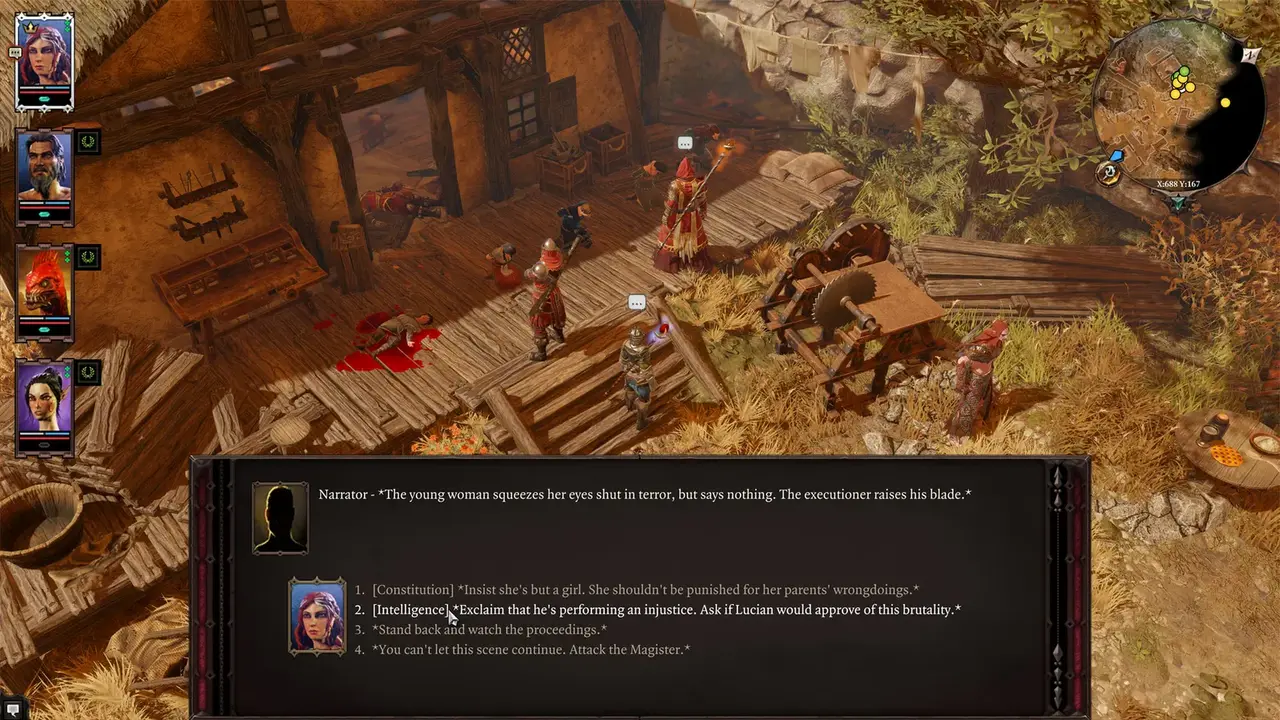
The game's opening act is a prison colony on the island of Reaper's Eye, where the Magisters of the Divine Order hold Sourcerers — people who can wield Source magic. Your two goals are simple to state and involved to achieve: get your Source Collar off (it prevents you from using Source skills) and get off the island.
The first hours are the hardest part of the game for most players, because you start with almost nothing. The community wiki's Fort Joy region page lists the recommended level per sub-area — the beach is level 1–2, the Ghetto 2–4, the Fort itself 4–5, and the Hollow Marshes (the southern half of the island) climb to 9. The practical takeaway: fight in level order, don't charge the magister knights at level 3, and treat the early fights (turtles, the card players, the crocodiles near the teleportation gloves, the frogs in the cave) as tutorials in how armour and crowd control actually work.
The other thing that defines Act 1 is recruiting. All six origin characters can be picked up on the island, and on the Lady Vengeance before you sail you get one last chance to recruit anyone you missed. Your party at the end of Act 1 is effectively your party for the rest of the game — companions you leave behind are killed and resurrected as undead sworn to the God King, and you face them at the Academy. Choose your four carefully.
The act ends with the fight against Bishop Alexandar (and optionally the Kraken), after which Malady sails you away on the stolen Lady Vengeance. The ship becomes your mobile base, and it is where the respec mirror lives — so from Act 2 onward, bad builds stop being permanent problems.
Official source: dos2.wiki — Fort Joy — "Fort Joy is the very first Region the player will find after completing the Tutorial. It is Act 1 of the game. While in this area, the main objective is to escape Fort Joy, remove your Source Collar, and eventually get onto the Lady Vengeance ship."
Act 2: Reaper's Coast — The Biggest Map in the Game
Reaper's Coast is the largest single map in DOS2 and the act where most players spend the most time. The landing point is Driftwood (level 9), a port town stacked with quests, merchants and the Driftwood Arena. From there the map opens up: Stonegarden and its graveyard (level 11), the Blackpits (13+), the Wrecker's Cave (12), the Ancient Temple (14), and Bloodmoon Island (15) in the far north.
The standard advice from the community is to work outwards from Driftwood in rough level order, and to treat the map like a clock: clear the areas closest to town first, then branch west and south before attempting the far north and the southeast. Two quest lines dominate this act — the hunt for your Source powers (the "Powerful Awakening" main quest) and the four Relics of Rivellon — and both are packed with the fights players remember years later, including the Mordus fight in Wrecker's Cave.
This is also the act where your party composition stops being theoretical. If you built an all-physical or all-magical party using our build guide, Act 2 is where the one-damage-type strategy pays off; if you split damage types, the armour system punishes you across the whole map.
Act 3: The Nameless Isle
The Nameless Isle is the shortest act and, structurally, the strangest: a smaller map dense with tough encounters, the Academy of the Seven, and the main plot's biggest revelations. Here you learn the truth about the Seven, the Eternals, and what the Voidwoken actually are — and the act ends with the Well of Ascension, where your own God turns on you when your ascension fails.
Community reports consistently put the act at levels 15–18. It is also where the difficulty curve tightens: encounters assume you have source points unlocked, a full party of purpose-built characters, and movement skills. If Act 2 was where you could still out-level problems, Act 3 stops being forgiving about it.
If you never unlocked your second and third Source Point slots, the Nameless Isle will feel brutal. Source skills (Blood Storm, Grasp of the Starved, Meteor Shower, Arrow Storm) are a huge share of your damage ceiling in the back half of the game. The build guide's skill lists show which source skills each archetype wants.
Act 4: Arx and the Endgame
The final act takes place in Arx, the capital under siege by the Voidwoken, and it is the least forgiving act in the game. Player reports put the recommended entry level at 17–18, and the wiki's own difficulty curve agrees that "levels matter a lot less in Act 4 than in previous acts" — build optimisation and fight discipline matter more. The bridge fight outside the city, the cathedral's secrets, and the final confrontation in Lucian's tomb are all famous difficulty spikes.
The act ends with four possible endings, each tied to a different philosophy about Source and Divinity — become the Divine yourself, purge all Source to seal the Void forever, release Divinity to everyone, or hand the world to the God King. There is no "canon" choice, and the game gives you no reload-friendly moral hand-holding about it. If you want to see more than one ending, keep a save from before the final stretch, or simply plan a second playthrough with a different origin character — the game is explicitly built for it.
The Systems You Need Before You Start
Every guide on this site assumes you understand DOS2's core combat loop, so here is the compressed version. Every character has two armour bars — physical and magic — that sit on top of vitality. Damage of a type only reaches health once the matching armour is gone, and crowd control (knockdown, stun, freeze, charm) only applies once the matching armour is at zero. That single rule dictates party building, skill choice and fight tactics across all 100 hours. Add the two other pillars — high ground (a flat damage multiplier for anyone above the target) and elemental surfaces (fire + oil = explosion, water + electricity = stun) — and you have the whole tactical language the game speaks.
For the full picture — attributes, combat abilities, talents, and the eight archetypes the community has refined — read the DOS2 build guide before you spend your first level-up points. It is the same systems guide this article links to throughout, written in full detail with the exact numbers.
Difficulty Modes and Gift Bags
Before you start, the game asks you to pick a difficulty. The Definitive Edition offers four, plus a fifth variant, and you can freely switch between Story, Explorer and Classic mid-campaign (Tactician and Honour are locked once chosen):
| Mode | Player modifiers | Enemy modifiers | Notes |
|---|---|---|---|
| Story | +100% vitality, +100% damage, +50% both armours | −40% vitality, −50% damage, −50% armours | Added in the Definitive Edition; also grants out-of-combat ally resurrection |
| Explorer | +50% vitality/damage, +30% armours | −20% vitality, −30% damage/armours | The common "first CRPG" pick |
| Classic | None | None | The intended baseline |
| Tactician | None | +50% stats, extra AP, unique skills, smarter AI, higher shop prices | For veterans |
| Honour | Tactician rules | Tactician rules | One save file; party wipe deletes it |
Gift Bags are a separate menu of optional official mods (toggleable from the pause menu, and disabling achievements): the Fort Joy Magic Mirror, the 8 Action Points mode, the Divinity Talent pack and more. The full breakdown of every mode is in our multiplayer and modes guide, and the Gift Bags are included on every platform, from PC to Switch.
Where to Go Next — Every Guide on This Site
- Divinity Original Sin 2 Build Guide — attributes, abilities, talents, armour system, and the best physical and magical builds.
- Characters Guide — all six origin characters, their quests, source skills, and voice actors.
- Is DOS2 Good? — the reviews, the community verdict, and who should (and shouldn't) buy it in 2026.
- Respec Guide — the magic mirror, both locations, and how free rebuilding works.
- How Long to Beat — playtime by playstyle, per-act pacing and the 100% reality.
- Multiplayer Guide — co-op, split-screen, Game Master mode and the Arena.
- Eithne Guide — the undead librarian's location, quest and lore.
- Platform guides — PS5, Xbox, Switch and Steam Deck.
Frequently Asked Questions
How many acts are in Divinity Original Sin 2?
Four (plus a short prologue): Act 1 on Fort Joy, Act 2 on Reaper's Coast, Act 3 on the Nameless Isle, and Act 4 in Arx. Each act is a separate large map with its own hub and quest chains, and the Definitive Edition rewrote parts of Act 3 and rebalanced Act 2's XP curve.
What level should I be in each act of DOS2?
The community wiki's per-location levels suggest: Act 1 roughly 2–9 (beach 1–2, Fort 4–5, Hollow Marshes up to 9), Act 2 roughly 9–16 (Driftwood 9, Bloodmoon Island 15), Act 3 roughly 15–18, and Act 4 roughly 17–22 (the cap). These are recommendations, not gates — DOS2 happily lets you under-level yourself into a wall.
How do I escape Fort Joy in DOS2?
There are several paths — the classic route runs through the Fort's dungeon and the fight with Bishop Alexandar, but you can also escape through the sewers, use a deathfog route, or fight your way out of the harbour. The common thread: remove your Source Collar (the prison's hidden quest chain), recruit your party, and don't skip the arena. After you leave, Act 1 is permanently closed.
Is there a respec in Divinity Original Sin 2?
Yes, free and unlimited. The magic mirror aboard the Lady Vengeance (available from Act 2) rebuilds attributes, abilities, talents and skills; enabling the Fort Joy Magic Mirror gift bag gives you an early mirror in Act 1's arena. Race and origin can't be changed. Details in the respec guide.
How long is a full DOS2 playthrough?
Steam-aggregated playtime data puts the main story at about 59 hours, main-plus-side at about 101 hours, and completionist runs around 158 hours. A typical first playthrough with meaningful exploration lands in the 60–100 hour range — see the playtime guide for the full breakdown.
Related Guides
- Divinity Original Sin 2 Build Guide — Best Builds & Stats
- Divinity Original Sin 2 Characters Guide — All Origin Characters
- Divinity Original Sin 2 Respec Guide — Magic Mirror and Rebuilds
- Is Divinity Original Sin 2 Good? — 2026 Verdict
- How Long to Beat Divinity Original Sin 2 — Playtime Guide
Last updated: August 13, 2026.
More Divinity: Original Sin 2 Guides
Is Divinity Original Sin 2 cross-platform? No — here is how co-op actually works on PC, PS4, Xbox and Switch, which modes exist, and where cross-saves do exist.
DOS2 max level explained: the Definitive Edition cap of 22, the full XP table, per-act level targets, how to reach the cap and mods that raise it.
All DOS2 races explained: Human, Elf, Dwarf, Lizard and Undead — racial passives, racial skills, dialogue tags, the best race per build and the Elf deep-dive.
The complete Divinity Original Sin 2 review: critic scores, the BAFTA-winning co-op, the Definitive Edition, every DLC and how the game holds up in 2026.
The 2026 verdict on Divinity Original Sin 2: Metacritic and Steam scores, what critics and players say, who should buy it, and whether it still holds up.
How long to beat Divinity Original Sin 2: main story, side content and completionist hours, per-act breakdown, co-op factors and 100% achievement time.
Every Divinity Original Sin 2 origin character explained: Ifan, Lohse, Sebille, Red Prince, Beast, Fane — stories, gods, classes, voice actors and who to play.
Divinity Original Sin 2 on PS4 and Xbox One: the 2018 Definitive Edition, performance, split-screen and online co-op, and the free next-gen upgrade path.