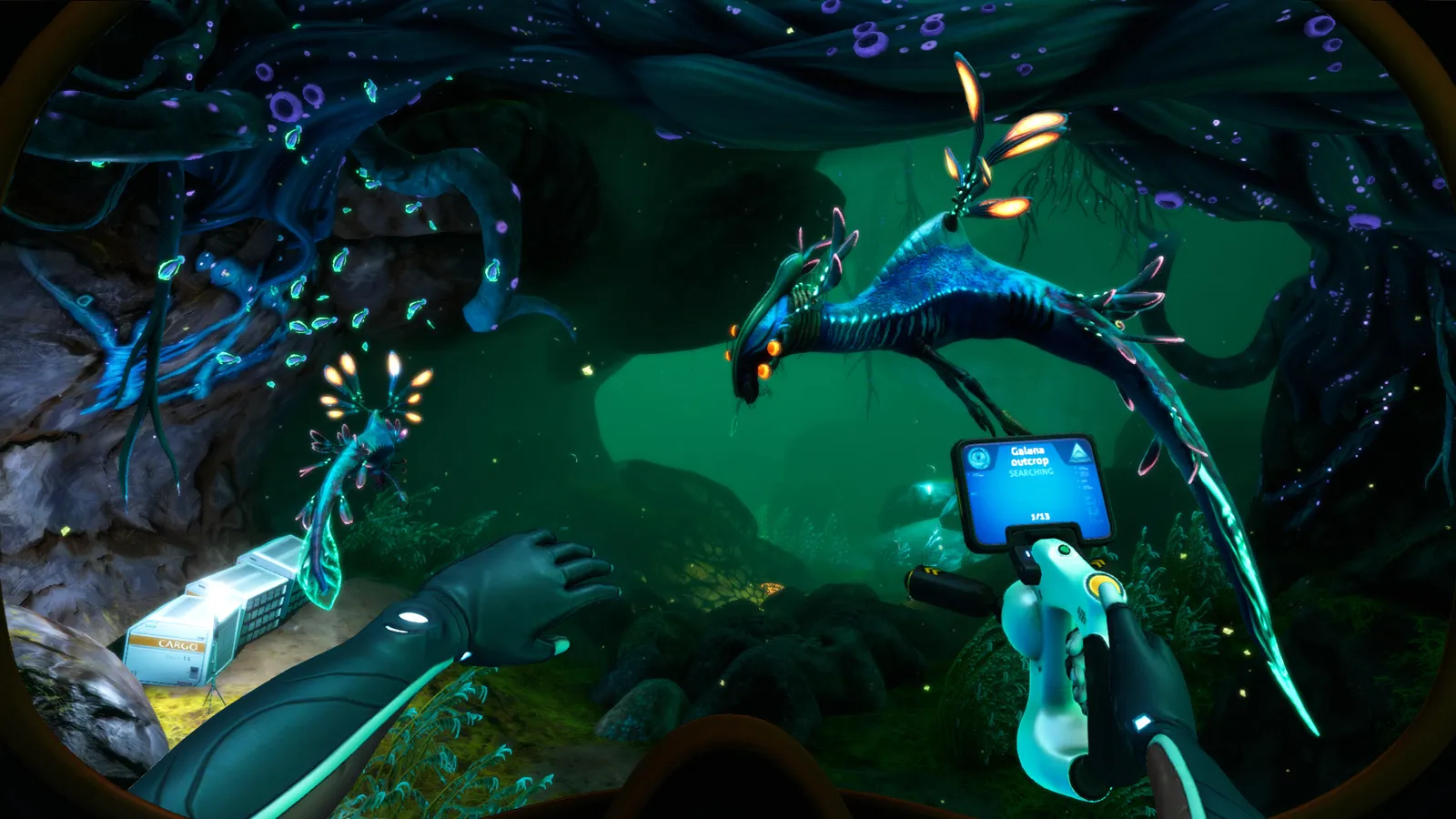
The Subnautica Mushroom Forest explained: both zones with coordinates, resources like lithium and diamonds, wrecks, Cyclops fragments and base spots.
Subnautica Mushroom Forest — Location, Resources and Wrecks
There are actually two Mushroom Forests in Subnautica — the larger Northwestern (50–230 m deep) and the smaller Northeastern (75–250 m, sitting next to the Aurora's bow). Both are forested with giant Tree Mushrooms, and together they form the game's safest, richest mid-game biome: abundant lithium, shale outcrops (diamonds), the Wreck 9, and — critically for progression — most of the Cyclops hull and bridge fragments. This guide covers both zones' coordinates, resources, hazards and the best base spots.
Here's what you'll learn:
- Where both Mushroom Forests are on the map
- What resources and outcrops each zone holds
- The honest danger assessment (it's not as safe as it looks)
- Which fragments and wrecks you should farm here
- The best base locations in the biome
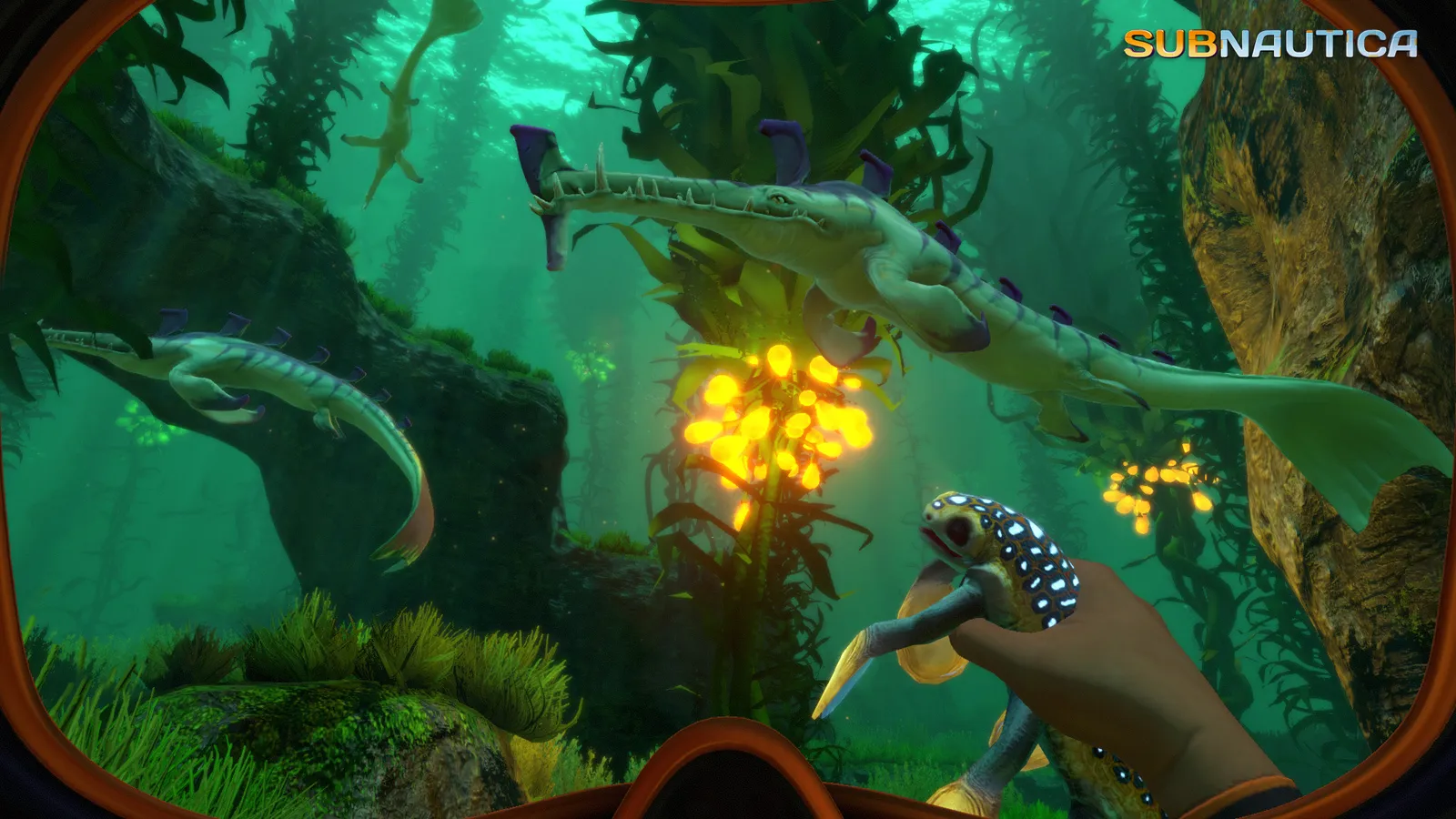
Official resources: Steam store page · Official Subnautica Wiki — Northwestern Mushroom Forest · Official Subnautica Wiki — Northeastern Mushroom Forest · IGN Subnautica page · Wikipedia — Subnautica
Per the official Subnautica Wiki: "The biomass in this area is dominated by plantlife. Picking up faint Alterra technology signatures." The PDA's first impression is accurate — and the "Alterra signatures" are exactly what you're after.
Where Are the Mushroom Forests?
| Zone | Location | Depth | Size |
|---|---|---|---|
| Northwestern Mushroom Forest | Northwest, between the Dunes, Northern Blood Kelp, Underwater Islands and Grassy Plateaus | 50–230 m | The larger of the two |
| Northeastern Mushroom Forest | Northeast, directly next to the Aurora's bow | 75–250 m | The smaller |
Both are surface biomes (no cave roof), and both are within easy Seamoth range of the starting area. The Northwestern one borders the Dunes — which is the only dangerous adjacency. The Northeastern one borders the Bulb Zone, whose predators wander in.
Head northwest from your lifepod and you'll hit the Northwestern Mushroom Forest before the Dunes border — the giant trees are visible from far away. If you have the compass, it's roughly between the starting shallows and the underwater islands. The whole biome is covered in our map-with-coordinates context for how navigation works in this game.
Resources and Outcrops
Both forests are resource-rich, but the Northeastern one is the prize: the wiki describes it as "packed with resources, especially Lithium and Shale Outcrops."
| Resource | Where |
|---|---|
| Lithium | Abundant in both zones; the Northeastern forest is the best source outside the mountains |
| Diamond (Shale Outcrops) | Northeastern forest has a heavy shale concentration |
| Gold / Copper (Limestone + Sandstone) | Common nodes throughout |
| Gel Sack | Always at the base of the giant Tree Mushroom in the Northwestern forest |
| Acid Mushroom, Fungal Sample, Coral Tube | Standard flora harvests |
| Eggs | Boneshark eggs near the Crash Zone clearing (Northeastern); Jellyray eggs scattered |
The lithium alone makes the Mushroom Forest a mandatory stop — it feeds the Prawn Suit recipe, Cyclops depth modules and the Modification Station. A single sweep of the Northeastern forest solves your lithium problem for most of the game.
Wrecks and Fragments
- Wreck 9 sits in the Northwestern Mushroom Forest (the wiki places it toward the Grassy Plateaus border, with two Purple Pinecones southeast of it). It holds a data box and fragment clusters — one of the mid-game's most useful wrecks.
- Cyclops Hull and Bridge fragments litter the seafloor around the giant trees — this is the safest place on the map to complete the Cyclops blueprint, since you can gather both sets without fighting anything.
- The Mushroom Forest Arch Cache (-750, -239, 435) is tucked in a small trench-cave on the northwestern zone's outskirts, near the Kelp Forest border.
- The Mushroom Forest Caves run beneath the forests — the largest entrance is in a cliff facing the Bulb Zone under the biggest Tree Mushroom in the Northeastern zone, and the caves connect to the Bulb Zone Caves.
How Dangerous Is It Really?
Officially a low-danger biome, but "low" is doing work:
- Northwestern: Bonesharks lurk in the denser parts, and Reapers patrol the Dunes border — the wiki warns to stay cautious on that side. Ampeels wander in from the Northern Blood Kelp.
- Northeastern: Bulb Zone fauna (Mesmers, Ampeels, Bonesharks) wander in routinely, a stray Reaper can drift in from the Crash Zone, and there's always a Reaper near the Mountains/Kelp border by the natural bridge — the wiki says to stay away from that specific corner.
The interior around the big trees is genuinely peaceful; the borders are where the trouble lives. Farm the interiors, keep an eye on the edges, and you'll never see a leviathan.
The most efficient route into the Northeastern Mushroom Forest from the Bulb Zone passes the bridge near the Mountains border — and that's exactly where the permanent Reaper patrols. Swim the long way around through the forest interior instead of cutting the corner.
Base Building in the Mushroom Forest
The Mushroom Forest is one of the community's favorite base spots, and for good reason:
- Defense by terrain — the tree canopy and trunks break line-of-sight for patrols, and the interior has no resident predators.
- Resources on the doorstep — lithium, shale, copper and gold within swimming distance.
- Central-ish position — the Northwestern zone sits between the Underwater Islands, Blood Kelp and Dunes, making it a good staging base for deep expeditions.
- The Multipurpose Room bases here work great — with a Bioreactor (fish from the nearby Kelp forest) or solar at the shallower depths.
A popular setup: a base perched on the giant Tree Mushroom's flat crown or wedged among the trunks at 100–150 m, with a Moonpool for the Seamoth and a clear flight path to the surface. The view is also the best on the map — which is why the modding scene has never needed to fix this biome.
FAQ
Where is the Mushroom Forest in Subnautica?
There are two: the Northwestern Mushroom Forest (between the Dunes, Northern Blood Kelp and Underwater Islands) and the smaller Northeastern Mushroom Forest right next to the Aurora's bow. Both are 50–250 m deep and reachable early with a Seamoth.
What resources are in the Mushroom Forest?
Lithium (abundant, especially in the Northeastern zone), diamonds from shale outcrops, gold and copper from limestone/sandstone, plus a gel sack at the giant tree in the Northwestern zone. The forest is the best early lithium source.
Is the Mushroom Forest dangerous?
The interior is among the safest biomes in the game — no resident predators. The borders are the catch: Reapers patrol the Dunes border (Northwestern) and the Mountains border (Northeastern), and Bonesharks/Ampeels wander in from neighboring biomes.
Are there Cyclops fragments in the Mushroom Forest?
Yes — hull and bridge fragments scatter across the seafloor among the trees, making it the safest place to complete the Cyclops blueprint (9 fragments across three sets, detailed in our Cyclops guide). Wreck 9 in the Northwestern zone holds additional fragments and a data box.
Can I build a base in the Mushroom Forest?
Yes, and it's a popular choice: safe interior, lithium and shale at your doorstep, and a central position for mid-game expeditions. Multipurpose Room bases with a Bioreactor work well here.
Related Guides
- Subnautica Cyclops Guide — Fragments, Upgrades and Pilot Tips
- Subnautica Aurora Guide — Door Codes, Entry & Loot
- Subnautica Gel Sack Guide — Farming Aerogel for the Prawn Suit
- Subnautica Multipurpose Room Guide — Blueprint, Building and Power
- Valheim Biomes Guide — Every Zone Explained
Last updated: August 13, 2026.
More Subnautica Guides
Every leviathan in Subnautica and Below Zero: sizes, aggression, spawn biomes, health and how to deal with each — plus the extinct giants.
How to enter the Aurora in Subnautica: every door code (1454, 1869, 6483, 2679), the radiation suit requirement, what tools you need and all the loot inside.
All Subnautica Aurora door codes: 1454, 1869, 2679 and 6483, where each code is found, and exactly what's worth looting behind every door.
Subnautica Below Zero map explained: how big Sector Zero is, every biome with depth ranges, key coordinates, navigation tips and the best map mods.
Is Subnautica Below Zero multiplayer? No official co-op — but a full story-synced mod exists for Windows. Plus Nitrox and Subnautica 2's official co-op.
Subnautica Below Zero Picture Frame guide: the 16:9 aspect ratio you need for photos, where to get the blueprint, and how to load custom images.
Official Subnautica Below Zero pictures and 16:9 wallpapers: where to download store screenshots, wiki art and community shots in full HD.
The Subnautica map explained: all 18 aquatic biomes with depth ranges, resources and dangers, plus how to navigate without an in-game map.