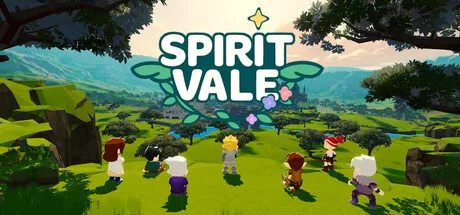
New to SpiritVale? A beginner's guide to the first hours — server choice, character creation, starter zones, key NPCs, and the mistakes that waste your time.
SpiritVale Beginners Guide — How to Start Strong
SpiritVale starts you in Wayfarer's Landing, a quiet port town at the edge of Nevaris, with one base class, a rusty weapon and the entire map open in front of you. There is no long tutorial chain and no quest wall — the game's philosophy is that you learn by killing things, and the community agrees that most newcomers spend their first few hours feeling slightly lost. This guide walks through the decisions that actually matter in your first session: server choice, class choice, the starter route, the town NPCs you will live with, and the beginner mistakes that cost real time.
For the complete picture of what the game is and how every system fits together, start with the main SpiritVale guide.
Here's what you'll learn:
- How character creation and server selection work (and why server choice barely matters)
- The 1–10 opening route through Sunny Meadows
- Every town NPC and what they actually do
- What to buy, what to save, and what to stop doing immediately

Before You Create a Character: Pick the Closest Server
Server choice is the least stressful decision in the game, because characters are shared across every server and region — a RuneScape-style setup where your progress follows you wherever you log in. The rule is simple: pick the region with the lowest ping. That's it.
Regions currently cover US (na/sun), EU (eu2/star), SEA (luna), Oceania (aurora) and South America (nova), with an Asia server in development. Live server player counts are tracked at spiritvale.info. Since you can switch freely, most experienced players don't stress about it at all — see the servers guide for details.
Character Creation: Pick a Class You Can Level
You choose from 7 base classes: Acolyte, Knight, Mage, Rogue, Scout, Summoner and Warrior. Every one of them eventually advances into a specialized job, so your early pick is not permanent in identity — but it does decide how comfortable your first 30 levels feel.
For a first character, the community's consistent advice is:
- Knight or Warrior — the tanky melee pair. Forgiving, cheap to play, hard to die on. The most recommended first classes in every beginner guide we checked.
- Necromancer-bound Summoner — summons do the work for you; the safest solo progression in the game.
- Avoid starting on Rogue or Mage if you want an easy time — squishy, positional, and unforgiving while you're still learning enemy patterns.
The full breakdown of all 15 classes — skills, roles and recommendations — is in the classes guide and the best class guide.
Your First Hour: Wayfarer's Landing to Sunny Meadows
Your opening session follows a simple arc:
- Spawn in Wayfarer's Landing. Open the map, mark Sunny Meadows, and walk out the gate.
- Kill level 1–5 monsters in Sunny Meadows 1 until you hit about base level 5–6.
- Move to Sunny Meadows 2 (6–10) and keep grinding. This zone also hosts a boss — the level 15 Sting is a little above the zone's range, so don't fight it solo at level 8.
- At level 10, you're ready to move to Forest Field 1 (11–15). This is also the level community guides commonly reference as the first advancement checkpoint.
While you grind, pick up everything and compare before you discard: equipment drops with substats rolled between 66.7% and 100% of max, so a low-tier piece with a great roll can beat a higher-tier piece with a bad one. Don't sell or dismantle gear without looking — this single habit saves beginners the most money.
Cards start dropping almost immediately, and it's easy to treat them as vendor fodder. Don't. Even early monster cards (small hit, HP or attack bonuses) meaningfully speed up leveling, and boss cards are the backbone of every endgame build. Start your card collection from day one.
The Town NPCs You'll Use Constantly
Wayfarer's Landing and the other towns are where the game's quality-of-life systems live. The NPC lineup (documented across community guides):
| NPC | Job |
|---|---|
| Waybinder | Stat and skill reset — change your build when you want |
| Weaver (NPC) | Card remover — pulls cards out of equipment |
| Gemsmith | Gem remover and refiner |
| Storage | Stash keeper — put overflow items here |
| Craftsman | Equipment crafting |
| Material Vendor | Crafting materials |
| Blacksmith | Equipment refiner (the +1/+2 ladder) |
| Artificer | Item upgrader |
| Stylist | Character appearance editor |
| Vending Stallmaster | Rent your vending stall |
Knowing these NPCs exists saves you the "wait, where do I reset my stats?" search. The Waybinder especially — being able to refund attribute and skill points means you can experiment with builds freely. See the stats guide for how the six attributes actually work before you spend points.
Early Money and What to Spend It On
Coins come from every kill — exactly level × 3 coins per kill — plus drops you sell or use. Early priorities:
- Gear with good substat rolls — the single biggest power increase in the first levels.
- Consumables (potions/scrolls) only as needed; don't hoard early.
- Storage upgrades come later — sell white/duplicate drops, keep anything with unusual substats.
Later, the real money is in boss drops, card farming and the player market — the farming guide and money guide cover those in depth.
Third-party gold sellers exist for this game. Buying gold funds the exploit/duplication economy the developers have been fighting (it literally forced a temporary shutdown of all trading in July 2026), and it's a fast road to a ban. Coins are not hard to earn legitimately.
Beginner Mistakes That Waste Time
- Selling before comparing — you will vendor genuinely good rolls without realizing it.
- Rushing into higher zones — each zone is tuned a level band above the last; over-leveling is cheap, dying repeatedly is not.
- Ignoring cards and gems — the two systems that multiply your damage the most are the ones beginners skip.
- Soloing everything — it works early, but the EXP curve starts punishing solo play hard around level 120. Forming a party early builds the habit and gets you the party EXP multiplier (up to 300% at 12 players). See the party guide.
- Panicking about "wipe" rumors — the pre-EA playtest was wiped before launch; the developers have not announced any wipe at full release, though it's not guaranteed either. Play the game, enjoy the ride; see the price & EA guide for the honest status.
Official source: the Steam store page describes SpiritVale as "a class-based action MMO inspired by classic RPGs" — the basis for this guide's system overview.
FAQ
How do I start playing SpiritVale?
Buy it on Steam for $14.99, install, pick your closest server region and one of the 7 base classes, then walk out of Wayfarer's Landing into Sunny Meadows.
What class should a beginner pick in SpiritVale?
Knight and Warrior are the most forgiving; Summoner (→Necromancer) is the safest solo option. Avoid Rogue and Mage until you know enemy patterns.
Which server should I choose?
Whichever region has the lowest ping — characters are shared across all servers, so you can switch anytime. Live populations are on spiritvale.info.
How do I make money early in SpiritVale?
Kill monsters (level × 3 coins each), compare and sell surplus drops, and start farming valuable cards early. Don't buy gold from third parties.
Is it worth starting SpiritVale now during Early Access?
The core systems are all live, the developer patches weekly, and Early Access pricing ($14.99) is promised to stay the same at full release. Expect rough edges — see the review guide for the honest verdict.
Related Guides
- SpiritVale Guide — Everything You Need to Know
- SpiritVale Classes — All 7 Base & 8 Advanced Jobs
- Best Class in SpiritVale — Tier List & Picks
- SpiritVale Leveling Guide — 1 to 150 Fast
- SpiritVale Money Guide — How to Make Coins
Last Updated: August 13, 2026 (patch 0.30.11).
More SpiritVale Guides
How to make money in SpiritVale — coin income, selling drops, card and boss farming, vending and Auction House sales, and the gold-selling danger.
How multiplayer works in SpiritVale — 12-player parties, the 300% EXP multiplier, party search, PvP arena (FFA/2v2/3v3), and whether solo is viable.
All six SpiritVale attributes explained — STR, VIT, AGI, DEX, INT, LUK — stat point costs, the 99 cap, hit and resist formulas, and class templates.
Every SpiritVale map explained — all 48 zones with level ranges, biomes, boss zones, the recommended leveling route, and how to travel around Nevaris.
Does SpiritVale work on Steam Deck? Controller support — DualShock and partial support, how to enable gamepad input, and the compatibility picture.
The best class in SpiritVale for every playstyle — tier list, beginner picks, fastest farming, solo bossing, PvP and party picks based on community consensus.
Every SpiritVale boss explained — the 25 world bosses with levels and HP, how to find and fight them, boss drops, and the 101-floor Eternal Tower.
How to build characters in SpiritVale — artifact sets, grimoires, the element wheel, set bonuses, and proven build templates for every class family.