
How to build characters in SpiritVale — artifact sets, grimoires, the element wheel, set bonuses, and proven build templates for every class family.
SpiritVale Builds Guide — Artifacts, Grimoires, Elements and Templates
A SpiritVale build is the sum of six interlocking systems: skills, stats, gear, cards, artifacts and grimoires — plus knowing the element wheel you're fighting into. The game's depth comes from how these multiply each other, and the community's most consistent advice is to build around a coherent idea (a set, an element, a sustain strategy) instead of equipping the highest-tier item you find.
This guide walks through the build systems and gives proven templates per class family. For the raw numbers behind stats, see the stats guide; for equipment specifics, the gear guide.
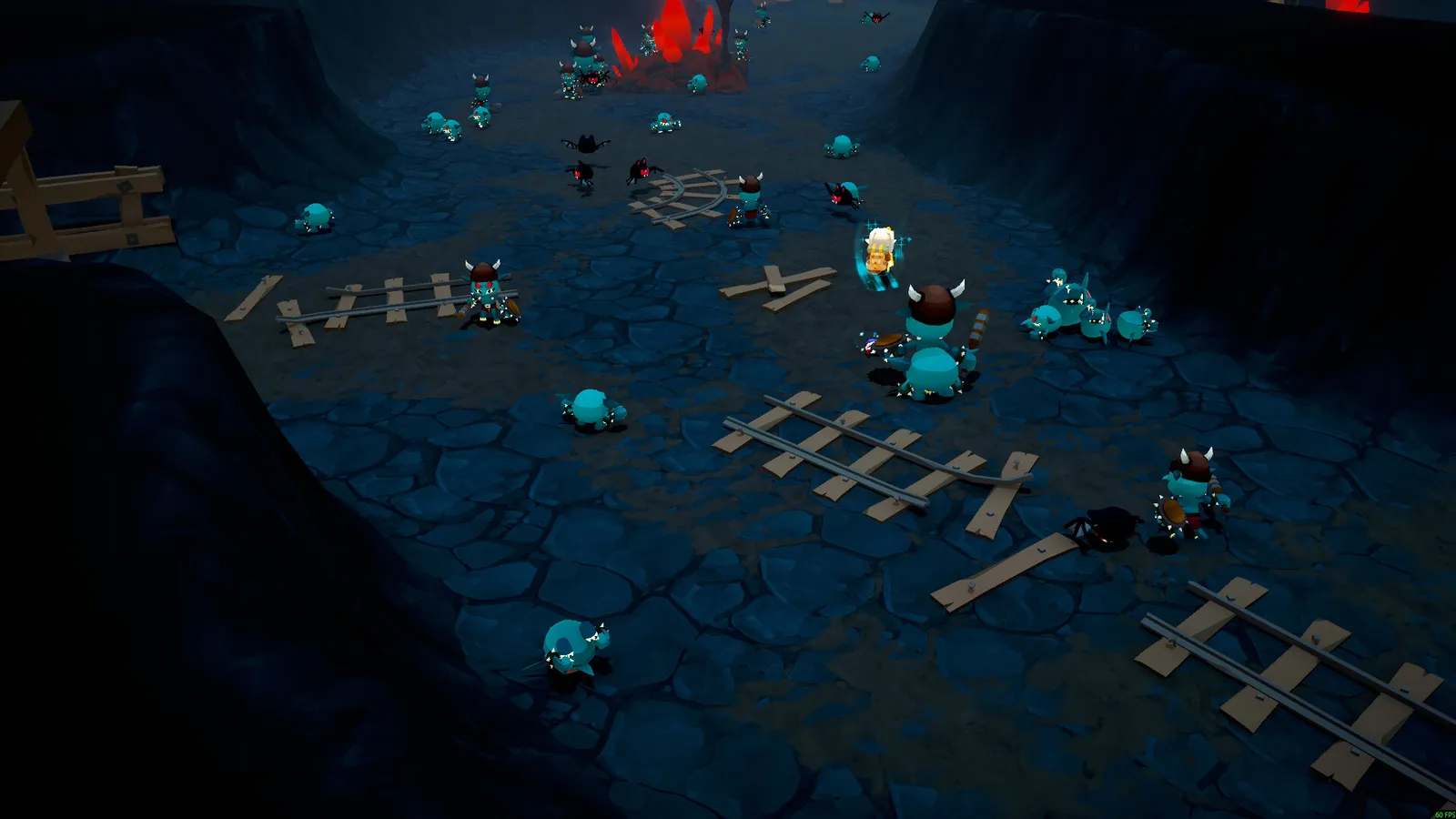
The Six Build Layers
- Skill tree — each class's unique skills (see the classes guide); skill points max out per-class (job level cap 50).
- Stats — STR/VIT/AGI/DEX/INT/LUK allocation.
- Gear — item bases, substat rolls (66.7–100% of max), refine level, enchant lines.
- Cards (258) — socketed passives; "practically the heart of your build" per community consensus.
- Artifacts (34 sets) — set bonuses at full-set, per-piece and per-refine thresholds.
- Grimoires — class books that modify how skills behave (single-target → AoE, added elements, etc.).
Artifacts: The Set-Bonus Layer
The wiki's artifact database lists 34 artifact sets with bonuses that activate at full-set, per-piece and per-refine milestones. Community-favored sets include Storm Quaver (crit/ranged) and Fury Brand (damage), which appear in gunslinger and melee crit builds. The principle: complete a strong set early and evolve around it — set bonuses are "one of the smartest ways to grow" per high-level players, and chasing a partial high-tier set often underperforms a complete lower set.
Grimoires: Skill Mods
Grimoires are class-specific books that modify skills — the wiki's grimoires database lists them per class (e.g., Scout's Hunting Ground, Skirmisher's Flow and Chain Reaction; Rogue's Venom Bloom — which one guide calls required for AoE on the Venom Strike build). Think of them as skill gems: they reshape your rotation's behavior, and choosing the right three is as important as choosing skills.
The Element Wheel
Every attack and defense carries an element: Neutral, Fire, Water, Wind, Earth, Poison, Shadow, Undead, Holy. The wiki elements page documents the matchups:
- Attacking a weakness (element chart ×1.25)
- Attacking into resistance (×0.75)
- Same-element attacks (×0.5)
Example: Fire deals ×1.25 to Earth, ×0.75 to Water, ×0.5 to Fire. This is why zone-appropriate cards and artifact elements matter — a build that shreds the desert (fire weak to water/earth patterns) can feel terrible in a water zone. Check the zone's monster elements, then tune your cards and artifacts accordingly.
Proven Build Templates (Early Access Community)
Melee crit (Warrior→Berserker, Rogue→Shinobi):
- Stats: 50 STR / 50 AGI / 50 LUK → STR
- Cards: attack-speed + leech sustain (Rapid, Leeching lines)
- Artifacts: damage sets (Fury Brand family)
- Play: clear-speed AoE rotations, position to maximize hits
Gunslinger crit-ranged (Scout→Gunslinger):
- Stats: ~50 LUK / 50 AGI / 50 DEX, remainder split AGI/DEX
- Cards: crit and hit lines; artifacts Storm Quaver / Fury Brand
- Grimoires: Hunting Ground, Skirmisher's Flow, Chain Reaction
- Gun choice changes everything: pistol (auto-attack), shotgun (burst), rifle (sniper rotation with Slow Trap → Piercing Shot → Sniper Shot)
Wizard AoE caster (Mage→Wizard):
- Stats: INT-first with VIT/DEX mix (respect the 50 rule)
- Cards: cast speed (Wizardry) + element-conversion for the target zone
- Artifacts: cast-speed/damage sets
- Play: Avatar of Fire/Storm for AoE farming; single-target Avatar for bosses
Priest support (Acolyte→Priest):
- Stats: VIT survival + DEX cast speed + INT heals
- Cards: regen + curse resist (LUK + resist cards = curse immunity in Sanctum of Light)
- Priority: "reliable healing, mana sustainability, cast speed, survivability, positioning" before personal damage
Necromancer safe solo (Summoner→Necromancer):
- Stats: INT/VIT
- Cards: sustain + minion-support lines
- Play: summons tank, Death Coil/Life Drain keep you topped up
Build Tools
The community maintains a build simulator (spirit-vale-builder) for planning class, attributes and skills before you spend points in-game — useful for testing the 50-point cost math. The wiki also hosts a crafting simulator to test Essence rolls.
Higher item tier isn't automatically better — a complete lower-tier set with the right substat rolls, cards and artifacts outperforms a mismatched pile of high-tier gear. Decide the build's core idea first (element? sustain? crit?), then fill every layer toward it.
SpiritVale patches every week (0.30.x), and balance changes already reshaped classes (Berserker post-launch). Templates here are a snapshot — check the updates guide and the wiki before committing materials.
Official source: element matchups and crafting formulas are documented on the SpiritVale Wiki elements page and crafting page (data v0.20.4).
FAQ
How do builds work in SpiritVale?
Six layers multiply together: skills, stats, gear (substats/refine), cards, artifact sets and grimoires — tuned to the zone's element wheel.
What are artifacts in SpiritVale?
34 sets with bonuses at full-set, per-piece and per-refine milestones (e.g., Storm Quaver, Fury Brand) — the set-bonus layer of every build.
What are grimoires in SpiritVale?
Class-specific books that modify skills — e.g., turning Venom Strike into an AoE (Venom Bloom) or enabling a sniper rotation (Hunting Ground, Chain Reaction).
How does the element system work in SpiritVale?
Every attack/defense carries an element; weakness hits deal ×1.25, resisted ×0.75, same-element ×0.5. Build your cards and artifacts around the zone's monsters.
Related Guides
- SpiritVale Stats Guide — Attributes, Formulas & Builds
- SpiritVale Gear Guide — Equipment, Crafting & Refining
- SpiritVale Cards Guide — All 258 Cards and Best Drops
- SpiritVale Classes — All 7 Base & 8 Advanced Jobs
- SpiritVale Guide — Everything You Need to Know
Last Updated: August 13, 2026 (patch 0.30.x meta snapshot).
More SpiritVale Guides
How the SpiritVale player economy works — vending stalls, the Auction House, player-to-player trading, the duplication-exploit history, and how to trade safely.
How farming works in SpiritVale — independent drops, coin income (level x 3), card farming, boss farming, and grinding efficiency.
How gear works in SpiritVale — the 442-item pool, substat rolls, refining, Essence crafting, enchantment, gems, and efficient gearing.
The complete SpiritVale guide: what this RO-inspired action MMORPG is, classes, cards, gear, leveling to 150, party play and Early Access state.
SpiritVale guilds explained — the guild UI, searching and applying, guild storage, what guilds are for in Early Access, and the future GvG and siege plans.
How long it takes to reach max level 150 in SpiritVale — honest time estimates by level band, solo vs party, and the factors that change the answer.
Is SpiritVale free to play? The official Fair-To-Play policy, cosmetic-only microtransactions, the $14.99 Early Access price, and the community verdict.
How job changes work in SpiritVale — every advanced class's change location, recommended level, what carries over, and how to plan your advancement route.