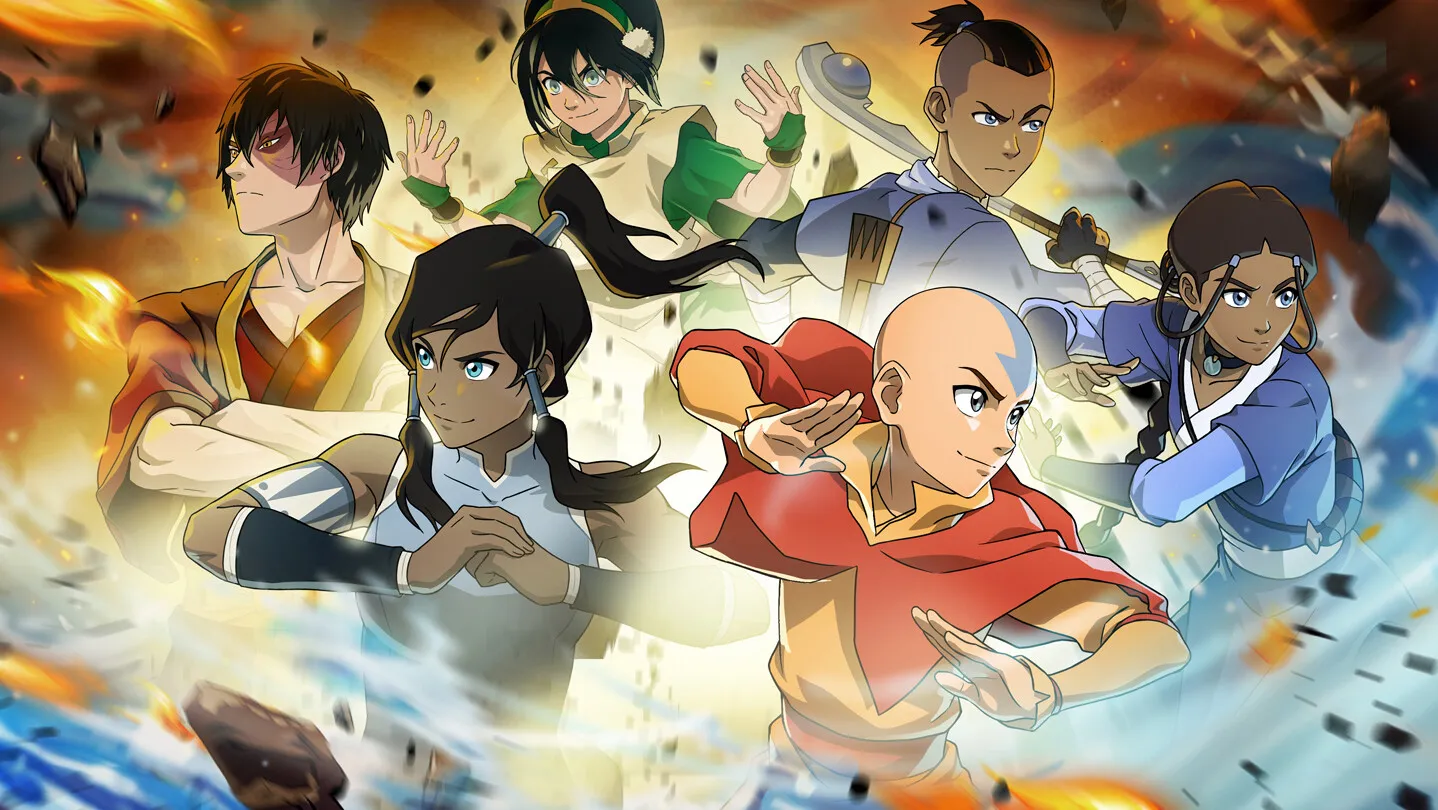
Kyoshi guide for Avatar Legends — big-body mobility, all-four-elements moveset, self-heal, supports (Rangi, Kelsang, Yun) and combos.
Kyoshi Avatar Legends Guide: Moves, Combos & Matchups
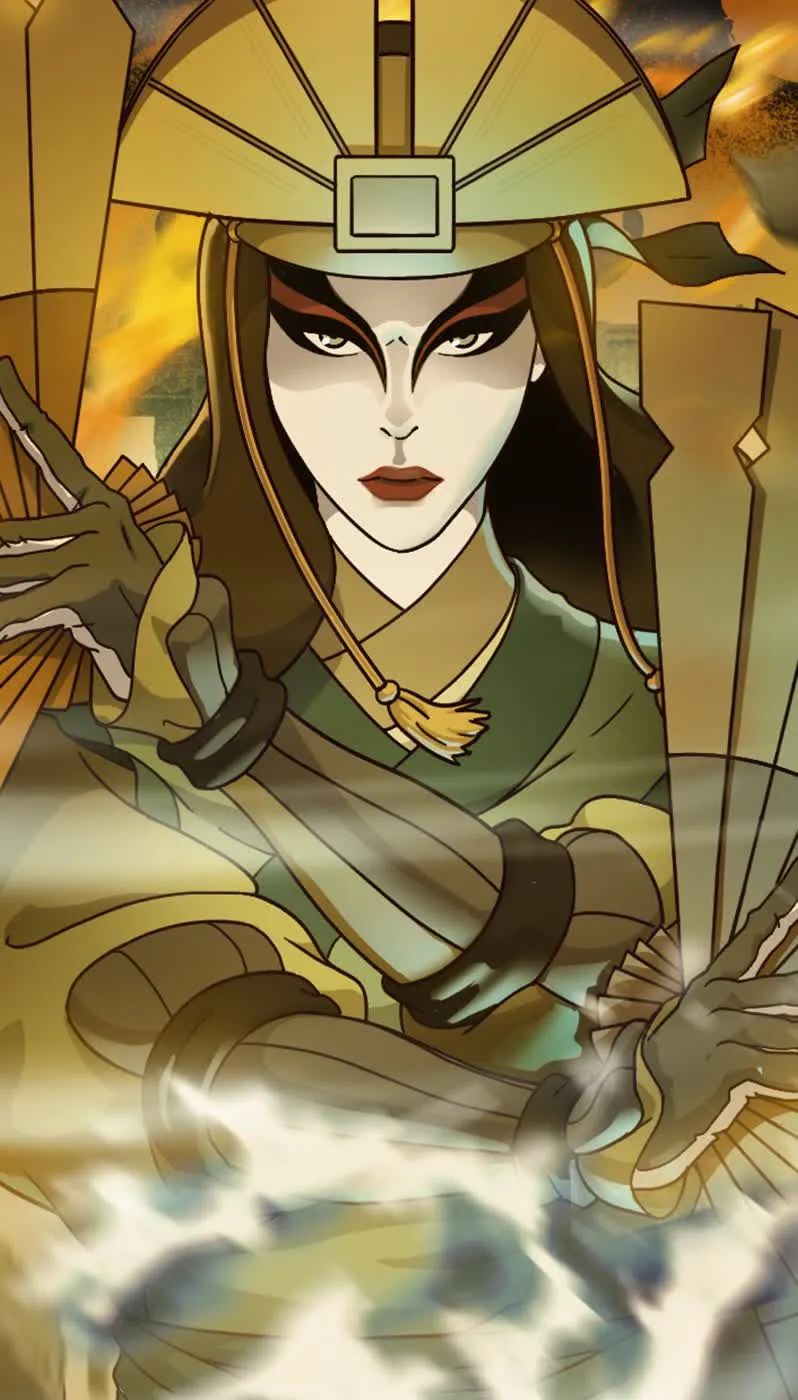
Kyoshi is the big-body space control character of Avatar Legends: The Fighting Game — a towering 7-foot-tall Avatar from 400 years before Aang, whose kit uses all four elements while being built on earthbending power. She's surprisingly fast for her size: she has a run instead of a dash, a traditional backdash, and some of the longest-reaching normals in the game. The community describes her as a character who converts her huge pokes into massive damage. She's also the roster's hardest character to place on tier lists — most launch roundups put her in the middle-to-lower pack (B/C tier) because her strengths and weaknesses pull in opposite directions. This guide covers her unique movement, her all-element moveset, the self-heal, supports, and how to make her work.
Here's what you'll learn:
- How Kyoshi's big-body mobility actually works (run, backdash, Flow)
- Her all-four-elements moveset and pillar stomps
- The self-heal mechanic and how to use it
- Which support to pick — Rangi, Kelsang or Yun
- Combos and her C-link conversion game
- Why tier lists disagree about her, and her real matchups
Official resources: Steam store page · Official site · Paramount Games page · EventHubs Kyoshi trailer coverage · PlayStation Blog element breakdown
Kyoshi's Big-Body Mobility
Kyoshi (voiced by Xanthe Huynh) breaks the "big body = slow" rule in a specific way:
- Run instead of dash — most of the cast dashes forward/back; Kyoshi has a run, which changes how she closes distance and how she can cancel into attacks.
- Traditional backdash — her retreat option, which she can use to create the space her huge pokes need.
- Huge normals — the tradeoff for her size is reach; her pokes cover distances other characters can't contest, and she can link C normals (SuperCombo notes her "ability to link C" as a defining trait), which makes her conversions scary once she lands one.
- Flow-dependent speed — her walk speed and jump stay slow unless she spends Flow; that's the crux of her tier-list problems (more below).
The official developer description (via EventHubs' trailer coverage) framed her as "a big-bodied character with powerful attacks who's also surprisingly mobile," with the explicit design goal of avoiding the usual big-body weaknesses.

Kyoshi Moves: All Four Elements
Kyoshi's moveset uses all four elements — a design note the developers made explicitly, similar to how Korra operates, but with a completely different playstyle:
- Earthbending base — her pillars, stomps and ground attacks are her primary toolkit.
- Air and water elements — she uses them for mobility and specific attacks (her air throw is a fan favorite; the sportskeeda review singled out "Kyoshi's air throw is such a thing of beauty").
- Pillar stomps — her signature pressure: summoning pillars to hit from range or under opponents, with Yun support improving them.
- Charged Backwards Heavy — her most important single button in practice: it can be charged to cover great distance and deals huge damage. The story-mode guides use it as the way to beat the boss Ozai (stunlock him from range).
- Grab super — her Chakra Art super is a command-grab style finisher that needs precise timing to land, a grappler-flavored tool on a big-body character.
- The self-heal — if Kyoshi is left alone for long enough, she heals herself. It's an explicit anti-runaway tool: you can't just zone her out and let her suffer.
Official source: per EventHubs' Kyoshi gameplay trailer report, "the developers gave Kyoshi the ability to heal herself if she's left alone for too long," and her choice of supports gives her "a double jump, enhanced follow up attacks and improved pillar stomps."
Best Kyoshi Supports: Rangi, Kelsang or Yun?
| Support | Effect | What it changes |
|---|---|---|
| Rangi | Powered-up followups | Her follow-up attacks hit harder — the damage option. |
| Kelsang | Double jump | Grants a double jump, a huge mobility upgrade for a character whose air options are otherwise limited. Kelsang's Gift is also noted by SuperCombo as a tool to alter her momentum midair. |
| Yun | Better pillar stomps | Improves her pillar pressure — the space-control option. |
Kelsang is the community favorite — a double jump fixes her mobility weakness (slow jump, Flow-hungry movement) more than the other two improve her strengths. Rangi is the pure-damage pick; Yun is for players who want to double down on her earthbending pressure.
Kyoshi Combos and the Self-Heal
Numpad notation; A/B/C = Light/Medium/Heavy, F = Flow, SUP = A+B+C. Per the combos guide:
The C-link conversion (her core combo identity):
5A > 5B > 5C > (link) 5C > 6C > pillar followup > 236A
Because she can link C normals, her BnB does more damage per confirm than most of the cast — one stray poke at max range becomes a full conversion.
Kelsang double-jump route:
j.B > j.C > (Kelsang double jump) > j.B > j.C > land > 2C > 236 SUP
The double jump lets her stay in the air longer and steal approaches; use it to bait anti-airs before committing.
Anti-runaway punish:
Backdash > charged 4C (Backwards Heavy) > 5B > 2C > corner pressure
This is the exact pattern the story-mode guides use against Ozai — charge the back heavy at range, stunlock, repeat. It works on human opponents too if they're respecting her reach. For the Ozai boss fight specifically, the story mode guide has the full breakdown.
Heal timing tip: when you're ahead, create space (backdash, run away, pillar between you) and let the self-heal tick. It's a legitimate round-winning resource — the opponent has to come to you, which plays into your space-control game.
Her walk speed and jump stay slow unless she spends Flow, and her specials cost Flow too. Budget the gauge like a resource bar: spend it to move in or out at the ranges your huge pokes rule, and don't blow it on fancy pressure that leaves you without an escape. The frame data guide has the numbers on what her Flow moves actually buy.
Kyoshi Matchups and Weaknesses
The tier list community places Kyoshi in B/C tier, and the reasons are consistent:
- Slow walk and jump unless she spends Flow — against fast characters (Aang, Azula, Katara) she can struggle to control the pace.
- Big hurtbox — she's 7 feet tall; jump-in pressure and crossups land on her more easily (community combo notes even mention "shenanigans involving Kyoshi's hurtbox").
- Grab super timing — her finisher needs precise timing, a familiar grappler trade.
- Flow management — her specials spend Flow, and her movement needs it, so she's constantly budgeting.
The upside: her huge pokes beat most characters at ranges they can't reach, she heals when left alone, and her C-links convert stray hits into massive damage. Operation Sports' tier list sums her up as "facing an uphill battle when matched with fast-paced characters who can abuse the openings in her armor and play around her large specials" — but in the right matchups (slower opponents, other big bodies), she's a bully. She's also the natural stepping stone to Avatar State Aang, the roster's other all-element space controller.
Frequently Asked Questions
Is Kyoshi good in Avatar Legends: The Fighting Game?
She's mid-tier at launch (B/C in most roundups) — her huge pokes and C-links are excellent, but her slow walk/jump and big hurtbox let fast characters exploit her. She's matchup-dependent, and strong in slower matchups.
How does Kyoshi fight in Avatar Legends?
As a big-body space controller with all four elements: run movement, a traditional backdash, enormous pokes, pillar stomps, a charged back-heavy, an air throw, and a grab super. She wins by keeping opponents at the range her normals rule.
Can Kyoshi heal herself in Avatar Legends?
Yes — if she's left alone for long enough, she heals herself. It's an explicit anti-runaway tool and a comeback resource: when ahead, create space and let it tick.
Which Kyoshi support is best — Rangi, Kelsang or Yun?
Kelsang (double jump) is the community favorite because it fixes her mobility weakness. Rangi (powered-up followups) is the damage pick; Yun (better pillar stomps) doubles down on her earthbending pressure.
Why is Kyoshi ranked low in tier lists?
Slow walk and jump unless she spends Flow, a huge hurtbox that eats jump-in pressure, a timing-demanding grab super, and constant Flow budgeting. Her strengths (reach, C-links, self-heal) are real but matchup-dependent.
Related Guides
- Toph Avatar Legends Guide: Moves, Combos & Matchups
- Azula Avatar Legends Guide: Focused & Firelord Moves
- Avatar State Aang Avatar Legends Guide: Unlock, Moves & Strategy
- Avatar Legends Fighting Game Elements Explained
- Avatar Legends Fighting Game Story Mode
Last Updated: August 14, 2026
More Avatar Legends: The Fighting Game Guides
Toph guide for Avatar Legends: pillar wall mechanics, meterless command grab, Element Surge, Supercombo inputs, frame data table, and armor combo routes.
Zaheer guide for Avatar Legends: flight mechanics, Red Lotus assists, Element Surge, Supercombo input table, 236X glider routes, and high-damage combos.
Avatar State Aang Avatar Legends guide — unlock via Chapter 11-1 or cheat code, plus his zoning moveset, Harmonic Drift, supports and 875 health.
Avatar Legends combos explained: chain combos, auto combos, EX moves, Energy costs, Flow cancels, Super Arts, and how to practice in Training and Trials.
All Avatar Legends DLC: Year 1 Pass (Iroh, Ty Lee, Lin Beifong, Bolin), fan-vote fifth slot, free Tagah in Fall 2026, prices and value.
Avatar Legends Fighting Game frame data — startup, active, recovery and advantage explained, universal Chi costs, and notes for Katara, Toph and Ozai.
Nightmare Korra Avatar Legends guide — unlock via Chapter 6-1 or cheat code, her Phantom teleport moveset, 850 health, supports and combos.
Does Avatar Legends have rollback? Yes — how the proprietary netcode works, online play feel, crossplay limits (Switch excluded) and latency tips.