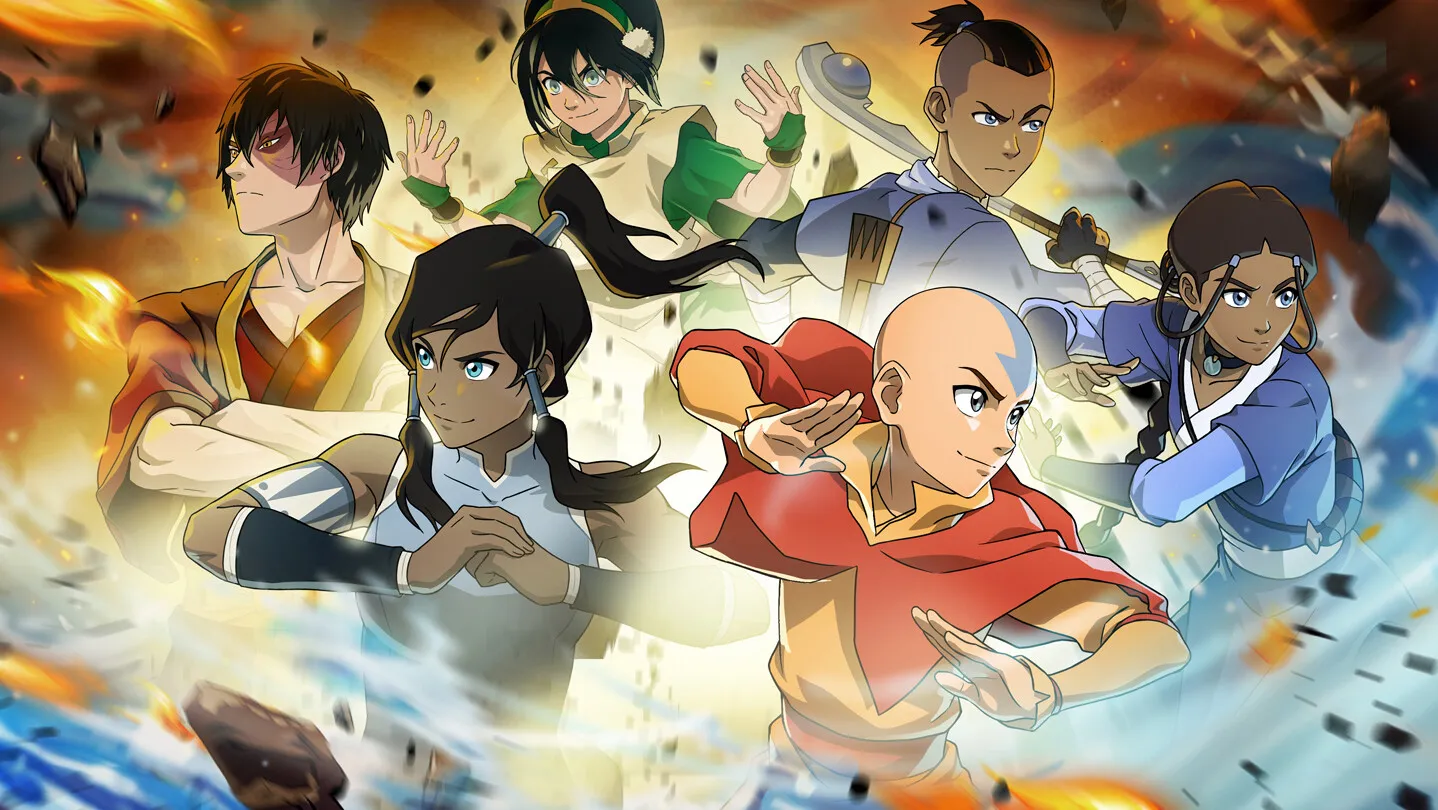
Avatar Legends combos explained: chain combos, auto combos, EX moves, Energy costs, Flow cancels, Super Arts, and how to practice in Training and Trials.
Avatar Legends The Fighting Game Combos Guide — Chains, Energy & Practice (2026)
Avatar Legends: The Fighting Game is a four-button fighter (Light, Medium, Heavy, Flow) built around a surprisingly deep combo system. The good news for newcomers: every character can chain Light into Medium into Heavy, and mashing the Light button with a direction runs an auto combo that cancels into a special. The good news for lab monsters: Flow cancels, EX moves and meter-driven Super Arts give every fighter room for creativity that rivals much more expensive titles — the combo freedom is one reason reviewers compared it to Skullgirls-era anime fighters.
Here's what you'll learn:
- How chain (gatling) combos work — Light → Medium → Heavy
- Auto combos and when they're actually useful
- Energy Points, EX moves, Super Arts and the 7-Energy Final Technique
- Flow cancels: the system that doubles your combo potential
- Character-specific routes for Aang, Zaheer and the rest of the cast
- How to practice efficiently in Training, Breakdown mode and Trials
Official resources: Steam store page · IGN game page · IGN review (8/10) · SuperCombo wiki
How Combos Work in Avatar Legends
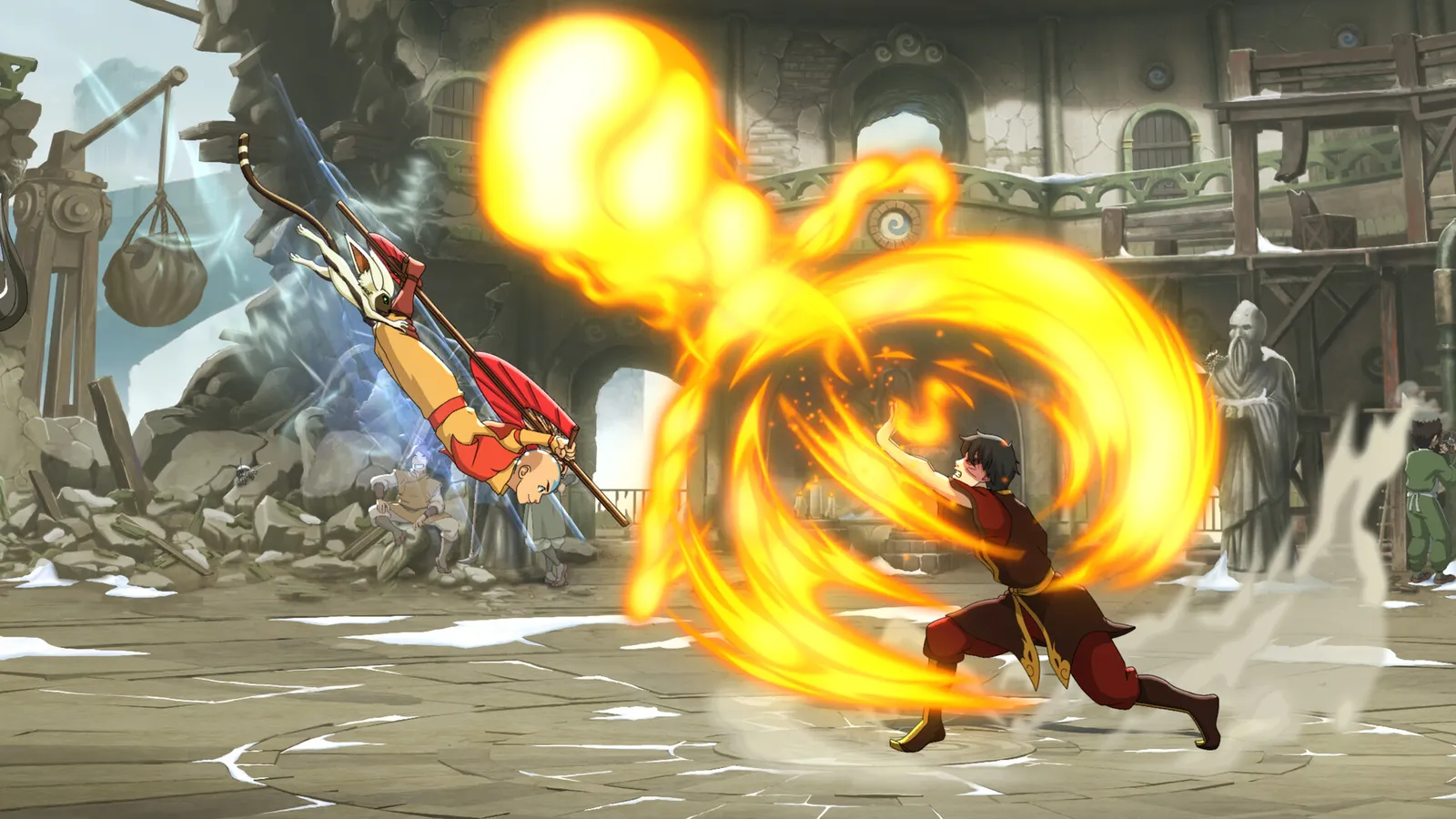
Avatar Legends uses a universal system that the community calls the gatling chain: most characters can chain their normal attacks in ascending order. Light (A) chains into Medium (B), Medium chains into Heavy (C), so a simple A, B, C string is a combo for nearly the whole roster.
Per the official Steam store page, the game is designed so "anyone can start bending with simple, intuitive controls" — the auto combo and universal chains are that on-ramp, while the depth sits in Flow cancels and meter management on top.
There are exactly three combo "layers" to learn, in this order:
- Normal strings —
A, B, Cand command normal variants (direction + button, like6B). Command normals extend strings but can't chain back into normals, so they go at the end. - Special cancels — cancel the last normal into a special move (quarter-circle inputs only — nothing harder than
236or214exists in this game). - Flow cancels and EX moves — cancel moves into your character's Flow movement to keep the pressure alive, and spend Energy Points on powered-up EX versions.
On most characters, Light attacks can be Flow-canceled, and almost every normal can cancel into specials, EX moves and supers. If a combo drops, the fix is almost always to delay your cancel slightly rather than speed it up.
Auto Combos — Mash Light With a Direction
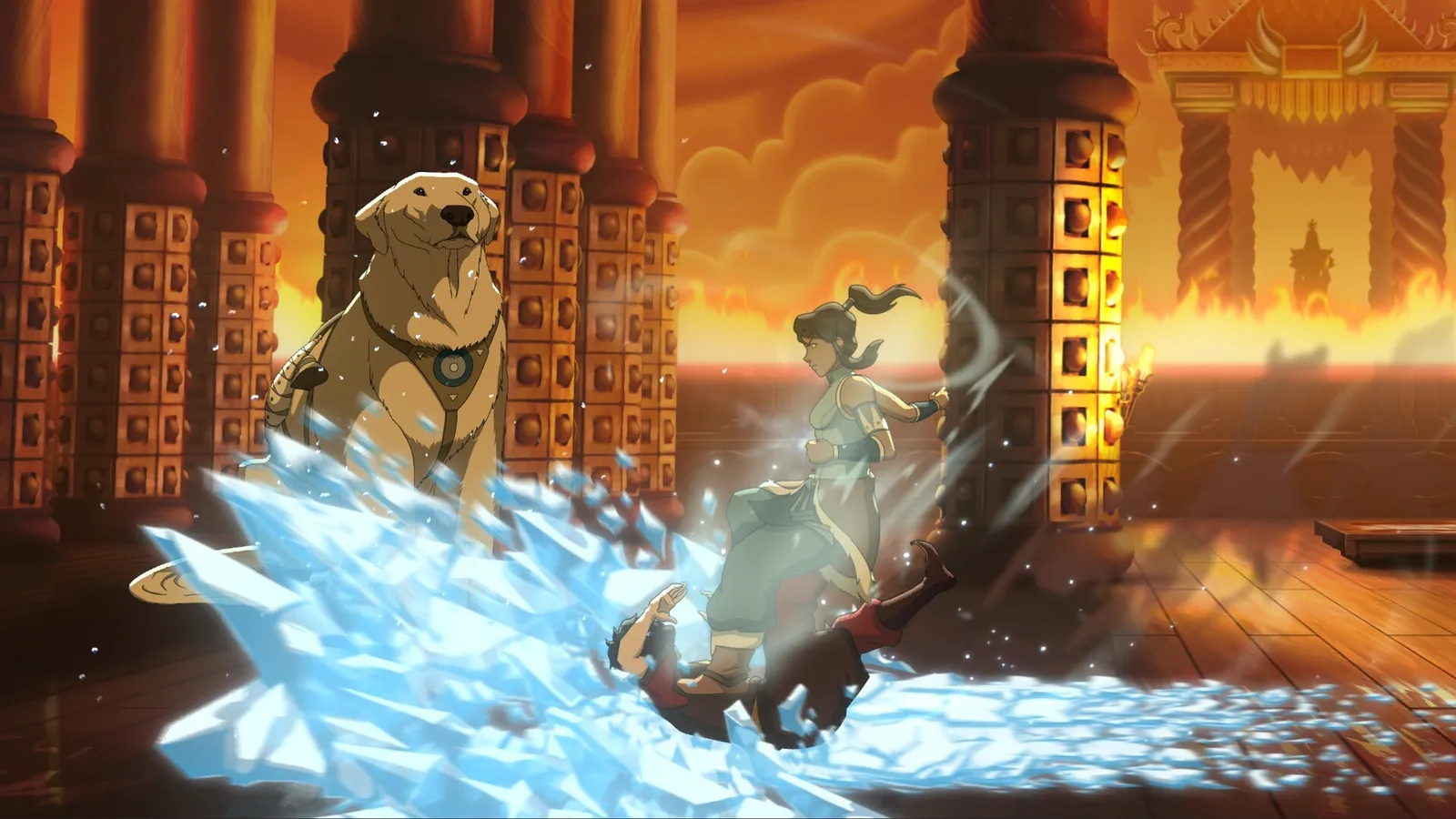
The game ships with an auto combo system: repeatedly press the Light button and your character automatically performs a short canned string that cancels into a special. Pressing Light with a direction (forward, crouching, or in the air) selects a different auto combo route.
Auto combos are intentionally not optimal — EventHubs' review notes they "are far from optimal with what's possible" in the full game. Treat them as a learning tool and a reliable punish option, not your long-term game plan:
- Great for players brand new to fighting games — see the how to play guide for the full beginner flow.
- Useful as a confirm: hit confirm into the auto combo, then end in a special for knockdown.
- Auto combos are cancelable, so you can drop out of them mid-string and switch into a real route once your execution catches up.
The developers deliberately gave non-bender Sokka a different toolset — no A, B, C bending chain. He compensates with his club, sword and boomerang, plus his Suki/Piandao/Yue supports. If you're learning chains on him, expect a different rhythm (see the character guides index).
Energy Points, EX Moves and Super Arts
The offensive meter in Avatar Legends is called Energy Points (the community and wiki community often call it Chakra — same resource). You earn Energy by hitting the opponent with Special Techniques, and you can bank up to 5 Energy Points at a time. Most specials grant roughly 1 Energy per successful combo hit.
EX Special Techniques — input a special motion with any two attack buttons at once (e.g. 236 + A+B). EX moves that enable combos or carry invulnerability cost 2 Energy; simpler utility EX moves cost 1 Energy.
Super Arts (the game's cinematic supers) come in two tiers:
| Super | Cost | Input | Notes |
|---|---|---|---|
| Super Art | 4 Energy | 236 + A+B+C |
Big damage, causes Hard Knockdown (no roll recovery) |
| Final Technique | 7 Energy | 214 + A+B+C |
The "True Chakra Art" — fully invulnerable startup, and instantly kills an Unbalanced opponent |
Flow your meter dry and you become "Unbalanced" — you can't use Flow moves until it recharges, and the opponent's 7-Energy Final Technique will instant-kill you if it lands. Spending all your meter on offense without managing your Flow gauge is how you lose a winning round.
Your Energy carries across rounds, which is what makes comebacks possible — and it's why the strongest players hold meter for the right punish rather than firing supers raw. Aang's own meter mechanics (his Avatar State activates automatically after losing a round with 7 Energy banked) are covered in the Aang guide.
Flow Cancels — the Combo Multiplier
The Flow button is Avatar Legends' signature mechanic: a dedicated movement/defense button that's unique per character — Aang glides, Katara ice-skates, Azula sidesteps. What matters for combos is the Flow cancel: canceling a normal or special into your Flow movement mid-string.
Flow cancels do three things:
- Extend combos — a cancelled normal can be followed by air normals or another special, adding damage and carry.
- Keep pressure on block — Flow-cancel a blocked string into movement instead of eating a punish.
- Create resets and mixups — cancel into an overhead or low route mid-string to mix up your opponent's blocking.
The cost is the Flow Gauge: every Flow move drains it, and repeated cancels drain it fast. Overusing Flow cancels is the single most common way players put themselves in the Unbalanced state (Polygon's review compares the risk/reward to Street Fighter 6's Drive system). Budget your cancels — two or three per combo is plenty in most routes.
The wiki documents that blocking depletes small amounts of the gauge, and characters can't block while airborne. Push your advantage when you see your opponent's Flow bar run low, and stop Flow-canceling into a guarded opponent — you're paying meter to lose turns.
Character-Specific Combo Routes
Every fighter uses the base system differently. A few launch-window routes that stand out:
- Aang — his
5C(stand Heavy) wallsplats on hit and sets up some of his best routes; his 4-Energy Super Art consumes the wallsplat, so the ordering of your combo matters. With Momo support, Aang gains charged air juggle loops that the SuperCombo wiki notes deliver "very high damage." Full routes in the Aang guide. - Zaheer — the only character with active assists:
214Asummons Ming Hua,214BP'Li,214CGhazan mid-combo (air OK), and the 2-Energy214XXsummons his selected support for an enhanced attack. His flight (j.Flow) makes his aerial combo routes the deepest in the game. See the Zaheer guide. - Katara — corner routes built around Water Whip stance cancels into her Ice Carpet Flow dash are already dominating online play per the community combo compendiums.
- Sokka — boomerang and sword vortex pressure; his supports (Suki makes Flow cancels cheaper) directly enable his best strings.
Counter hits matter too: they grant +6 frames of hitstun, which converts moves that normally whiff into combo starters. Learn your character's counter-hit confirms early — it's the highest-value execution skill in the game.
How to Practice: Training, Breakdown Mode and Trials
Avatar Legends has one of the better practice setups in the genre, which matters because the combo ceiling is high:
- Training Mode — includes hitbox display, frame data readouts, and save states for practicing specific situations (per the official store listing).
- Breakdown mode — Training's "replay your last combo in slow motion step-by-step" feature. If a route is dropping, this shows you exactly which link failed.
- Trials — per-character combo challenges, rendered as a rhythm-style input prompt that walks you up from basic BnB to character-defining routes. Trials get genuinely hard — beating every Trial for every character is one of the game's 42 Steam achievements and the community's favorite badge of honor.
- Run your character's Trials from the start. 2) Replay any failed trial in Breakdown mode. 3) Take the trial combo into a real match once, then back to the lab. This loop is faster than grinding Training Mode randomly, and it builds match context around the combo instead of muscle memory in a vacuum.
A reasonable path for a new player: finish the story mode for roster exposure, complete your character's first few Trials, then head online — our story mode guide covers what the single-player offers, and the rollback netcode guide explains why the online practice will feel close to offline.
Frequently Asked Questions
How do combos work in Avatar Legends: The Fighting Game?
Chain Light → Medium → Heavy (the universal gatling string), cancel into a special, then spend Energy Points on EX moves and Super Arts. Flow cancels let you extend routes by canceling moves into your character's unique movement.
How do you do EX moves and supers in Avatar Legends?
EX moves are a special motion plus any two attack buttons (1-2 Energy). Super Arts use 236 + A+B+C (4 Energy) and Final Techniques use 214 + A+B+C (7 Energy), both of which you can bind to a super macro.
What are Flow cancels in Avatar Legends?
Canceling a normal or special into your character's Flow movement mid-string. They extend combos, preserve pressure on block, and enable resets — but each cancel drains your Flow gauge, and draining it makes you "Unbalanced" and vulnerable to instant-kill Final Techniques.
How do I get better at Avatar Legends combos?
Use Trials to learn routes, Breakdown mode to debug drops, and keep an eye on your Energy and Flow gauges while you practice — meter management is half the combo skill in this game.
What are the hardest combos in Avatar Legends?
Zaheer's flight-assisted aerial routes with Red Lotus assist extensions are generally considered the deepest, along with Momo-support Aang air juggle loops and the highest-tier Trials challenges for characters like Korra and Katara.
Related Guides
- How to Play Avatar Legends: The Fighting Game — Beginner's Guide
- Avatar Legends Aang Guide — Moves, Combos & Airbender Strategy
- Avatar Legends Zaheer Guide — Moves, Combos & Red Lotus Strategy
- Avatar Legends The Fighting Game Rollback Netcode Guide
- Avatar Legends The Fighting Game Character Guides Index
- Avatar Legends The Fighting Game Tier List
Last updated: August 14, 2026.
More Avatar Legends: The Fighting Game Guides
How to play Avatar Legends: The Fighting Game — 4-button controls, Flow gauge and Unbalanced state, Chakra supers, chain combos, supports, and a training path.
Full Avatar Legends Fighting Game roster — all 12 launch fighters by element, 36 supports, unlockable Avatar State Aang and Nightmare Korra, and Year 1 DLC.
Avatar Legends Fighting Game system requirements — official min specs, recommended hardware, Steam Deck, FPS performance, download size and controllers.
Avatar Legends Fighting Game tier list — S/A/B launch rankings, the best characters, beginner-friendly picks, and how patches will move them.
Aang guide: full airbender moveset (Air Scooter, Gliders, Wind Summon), which support to pick — Gyatso, Appa or Momo — plus combos, critical hits and strategy.
Katara guide for Avatar Legends: The Fighting Game — waterbending moveset, Water Whip Stance mixups, the best support (Kanna, Pakku or Hakoda), and combos.
Korra guide for Avatar Legends: The Fighting Game — brawler moveset, the Avatar Cycle mechanic, Avatar State install, supports (Naga, Tonraq, Raava) and combos.
Kyoshi guide for Avatar Legends — big-body mobility, all-four-elements moveset, self-heal, supports (Rangi, Kelsang, Yun) and combos.