
Persona 5 story themes, the 2016 setting and timeline, and the full mystery explained — from Shido's framing of Joker to the mental shutdowns.
Persona 5 Story Themes & Timeline — The Setting Explained
Persona 5 takes place in Tokyo in 2016, running from April to December of that year (with Royal's third semester extending into January–February 2017), and its story is a rebellion-themed heist drama: a group of wrongly branded high schoolers steal the "distorted desires" of corrupt adults inside the Metaverse. The game's central question is the one its hero lives with — what happens when society brands you a criminal for doing the right thing — and it answers it through themes of justice, masks, and the freedom to defy expectations.
This guide covers the setting and timeline, the story's themes and its literary roots, and the game's central mystery — including the two questions new players always search for: who framed Joker, and who's really behind the "mental shutdowns." For the characters involved, our characters guide has the full roster; for how the story's length breaks down, the playtime guide has the calendar math.
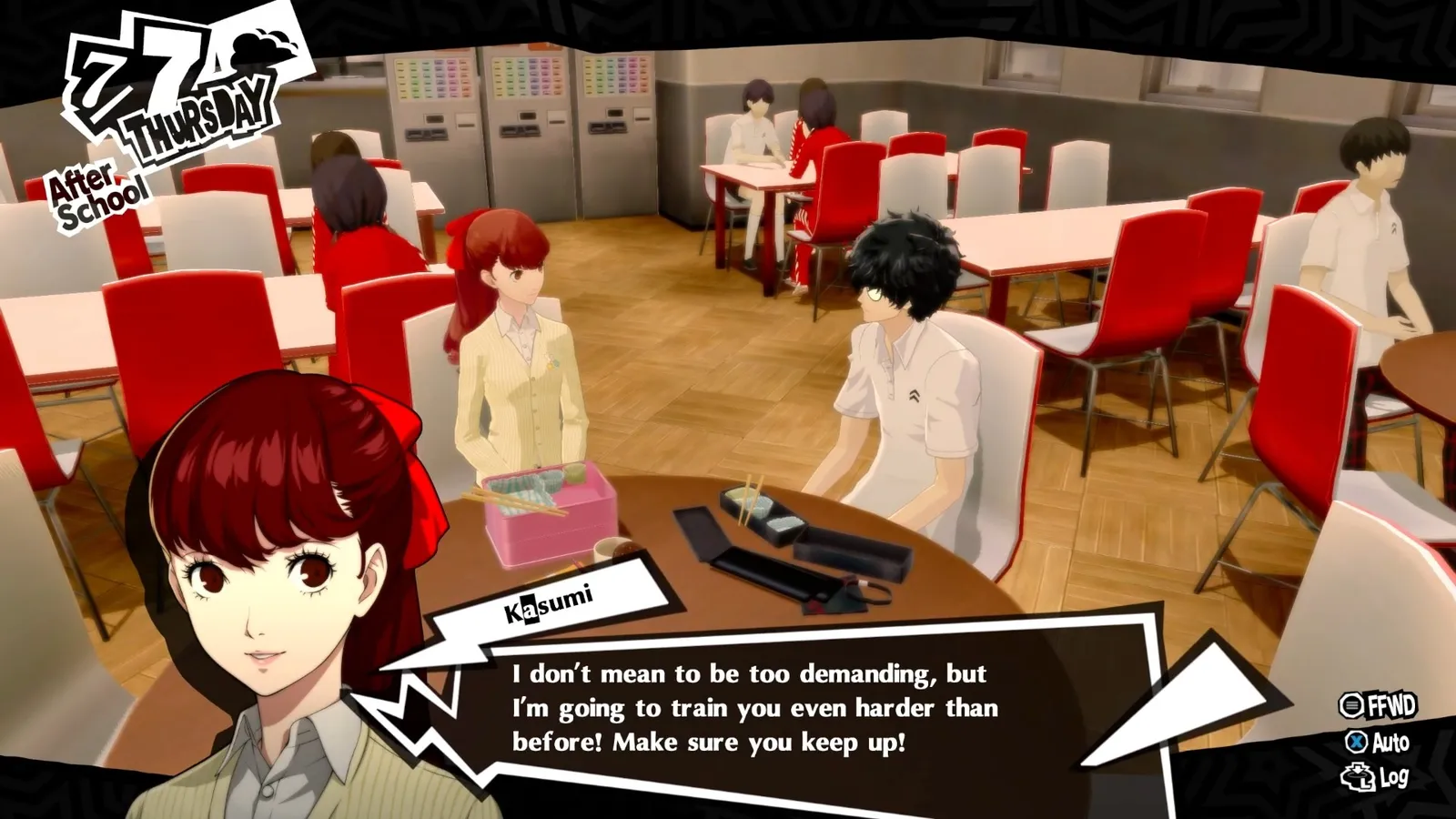
Per the official Persona 5 Royal Steam store page, the premise is: "Forced to transfer to a high school in Tokyo, the protagonist has a strange dream. 'You truly are a prisoner of fate. In the near future, ruin awaits you.'" — with the goal of rehabilitation looming over a year in the city.
When Does Persona 5 Take Place?
2016. The game's calendar runs from April 2016 (Joker's transfer to Shujin Academy) through December 2016 in vanilla, and Royal's third semester extends the story into January and February 2017. The 2016 dating is the community consensus — the in-game calendar, the 2016-specific dates and events all line up (GameFAQs' timeline thread and TheGamer's P5 timeline both land here), and TheGamer breaks the year into April–June (Kamoshida/Madarame/Kaneshiro), July–September (Futaba, Okumura), October–December (Sae, Shido, Mementos) and the Royal-only January–March third semester.
The setting is modern Tokyo — a deliberate first for the series. Where Persona 3 and 4 used fictional towns, director Katsura Hashino told Game Informer the team wanted a real city, "particularly Shibuya" (Persona Central's summary of the interview), so the "20XX" opening year is the only fictionalization — everything else is grounded in 2016 Tokyo, from the subway map to the districts. Our locations guide walks through how faithful the map is.
The Story's Core Mystery: Who's Been Assaulting People?
Two questions, one answer at the center of the plot:
-
Who framed Joker? The game opens with the protagonist convicted of assault and on probation. The truth, revealed late in the story: Joker intervened to stop Masayoshi Shido, a powerful politician, from forcing himself on a woman in the street — and Shido used his connections to have the charge turned back on Joker, who got a criminal record and a year of probation while the woman was pressured into silence. TheGamer's tragic moments article summarizes it: "In an attempt to save a woman from getting assaulted, he gets hurt and arrested because the aggressor just so happened to be a corrupt and powerful politician."
-
Who's behind the mental shutdowns? The "psychotic breakdowns" and "mental shutdowns" blamed on the Phantom Thieves are the work of Goro Akechi, acting on Shido's orders using his Persona Loki — he's the one who killed Wakaba Isshiki (Futaba's mother) and Kunikazu Okumura (Haru's father), as part of Shido's conspiracy to clear his path to becoming Prime Minister. Akechi is also revealed to be Shido's illegitimate son, which is the engine of the whole tragedy. The reveal is documented across the Megami Tensei Wiki and community analyses like this breakdown of Akechi's role.
If you haven't finished the game, be aware this page (and the whole site) treats the plot as fair game — the Shido framing and Akechi reveal are the two twists most players search for, so we're giving them straight. If you want the mystery intact, come back after the casino arc.
The Themes: Rebellion, Masks and Stolen Desires
- Rebellion against a corrupt system. Every Palace ruler — the abusive teacher Kamoshida, the art thief Madarame, the mafia banker Kaneshiro — is an adult abusing power, and the Phantom Thieves are the corrective force society won't provide. The Personas themselves are literary rebels: Arsène (gentleman thief), Zorro, Captain Kidd, Goemon, Carmen — outlaws who robbed the powerful. Wikipedia's Persona 5 article notes the story was "strongly inspired by picaresque fiction," the genre of rogues who live by their own code.
- Masks and true selves. The Metaverse is a cognitive world where people's suppressed selves are literalized; awakening a Persona means tearing off a mask. This Jungian framing (Personas as the persona/mask of the psyche) runs through the whole series, and P5 makes it the visual and mechanical core — All-Out Attacks and awakenings are all mask-ripping.
- The freedom to be branded an outcast. The game's thesis is that the labels society imposes — "problem child," "criminal," "delinquent" — are cages, and that living authentically often means accepting the label. Ryuji's awakening ("since your name has been disgraced already, why not hoist the flag and wreak havoc") is the clearest statement of it.
- Royal's addition: reality vs. comfort. The third semester asks whether a painless illusion (Maruki's ideal world) is worth more than an imperfect reality — the same theme Persona 4 touched and Royal makes explicit, and it recontextualizes the whole game's stance on "stolen desires."
For a catalogue of the series' recurring tropes and character patterns, the TV Tropes pages for Persona 5 are a deep (and often very funny) companion read — a popular search destination for fans trying to name the exact archetypes the game plays with.
Frequently Asked Questions
When does Persona 5 take place? Tokyo, 2016 — April through December for the base game, with Royal's third semester extending into January–February 2017. The setting is the first real-city setting in a mainline Persona game.
What is the main theme of Persona 5? Rebellion against corrupt authority: a group of socially branded teenagers steal the distorted desires of abusive adults and reclaim their own freedom. Masks, true selves and the cost of conformity are the recurring motifs.
Who framed Joker for assault in Persona 5? Masayoshi Shido, the politician — Joker intervened to stop Shido assaulting a woman, and Shido used his influence to convict Joker of assault instead, giving him a criminal record and a year of probation.
Who is behind the mental shutdowns in Persona 5? Goro Akechi, using his Persona Loki on behalf of his father Masayoshi Shido — he killed Wakaba Isshiki and Kunikazu Okumura via cognitive shutdowns to clear Shido's path to power.
What is Persona 5's story about? A wrongly convicted student and his friends become the Phantom Thieves, changing the hearts of corrupt adults by stealing their "Treasure" in the Metaverse — while uncovering a national conspiracy that framed the protagonist in the first place.
Related Guides
- Persona 5 Characters — Every Phantom Thief Explained
- Persona 5 vs Persona 5 Royal — Every Difference
- Persona 5 Review — Scores and Verdict
- Persona 5 Locations & Map
- Persona 5 Age Rating — ESRB, PEGI & Parents' Guide
Official resources: Persona 5 Royal Steam page · Atlus official Persona 5 Royal site · Wikipedia — Persona 5 · Megami Tensei Wiki — Persona 5 · TV Tropes — Persona 5 characters
Last Updated: August 13, 2026
More Persona 5 Guides
The Persona 5 logo explained: the red-and-black wordmark, the Royal gold subtitle, where to download official logo files, and the fonts behind the UI.
The Persona 5 MC (main character) explained: Joker's canon name Ren Amamiya vs Akira Kurusu, his Persona Arsène, voice actors and the P5X protagonist Wonder.
The best official Persona 5 and Royal merchandise: figures, Morgana plushies, apparel, art books and collector's editions, and where to buy them.
Persona 5 and Royal New Game Plus: what carries over (social stats, money, compendium, equipment), what resets, NG+ exclusives like Satanael, and trophy tips.
Persona 5 review roundup: Metacritic 93, IGN 9.7 and what critics loved and hated, plus how the 2026 versions hold up.
Persona 5 Royal on Steam Deck: performance at 60 FPS, best settings for battery life, resolution scaling tips, and ProtonDB community verdicts.
Persona 5 Take Your Heart Edition contents and price: SteelBook, Morgana plush, art book, school bag, soundtrack, plus Royal's Phantom Thieves Edition.
All Persona 5: The Phantom X characters: Wonder and the new Phantom Thieves, every Phantom Idol, their Personas, roles and how to unlock them.