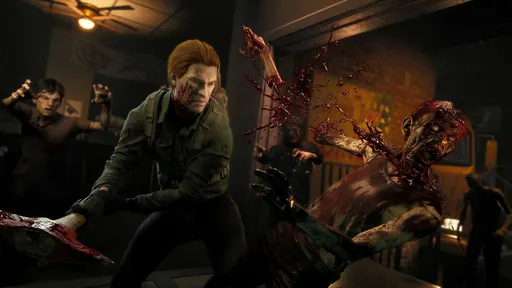
No More Room in Hell 2 permadeath explained: what you lose when a Responder dies, difficulty rules, the Rescue Beacon, and how to keep characters alive.
No More Room in Hell 2 Permadeath Guide — How It Works & How to Survive
Permadeath is the defining mechanic of No More Room in Hell 2. Your Responder is a persistent character: build them up across runs, kit out their loadout, level their skills — and if they die permanently, they're gone along with everything they carried. The Armageddon 1.0 update reworked exactly when permadeath applies, making it friendlier on lower difficulties while keeping the full horror on Hard and Nightmare. Here's how the system works, what you actually lose, and how to keep your Responders alive.
Here's what you'll learn:
- What permadeath actually means in NMRIH2 (and what it doesn't)
- Exactly what you lose when a Responder dies
- How the 1.0 difficulty tiers change the permadeath rules
- The Rescue Beacon — the new insurance item from 1.0
- Practical habits that dramatically lower your death rate
Official resources: Road to 1.0: Permadeath (official blog) · Armageddon 1.0 update notes · Steam store page · IGN Early Access review
Is No More Room in Hell 2 Permadeath?
Yes — with a big 1.0 caveat. The developers were explicit in their Road to 1.0: Permadeath blog: permadeath is "one of the gameplay pillars" of the game. But the Armageddon update softened when it bites:
Per the official Road to 1.0: Permadeath blog: "Permadeath still exists on Beginner and Normal, either through your team wiping prior to a respawn point or dying after extraction has been called. Once players advance to Hard or Nightmare, permadeath as it has come to be known throughout Early Access returns and Responders are in danger from the moment they spawn in."
So on Beginner and Normal, an individual death usually means a respawn (timed on Beginner, after the next major objective on Normal) — you only lose your Responder to a full team wipe or by dying after extraction has been called. On Hard and Nightmare, a death is a death: your Responder is gone.
What You Lose When a Responder Dies
The losses stack, which is why a death hurts:
- The Responder character itself — level, skills, and progression are gone. Account-level progression (which unlocks loadout tiers) survives.
- Purchased loadout gear — loadout items are character-specific. Per the community wiki's documentation, if the equipped Responder dies, "the item would need to be repurchased for a new Loadout." Gear found in-match was already gone with the run.
- Credits and consumables — in Early Access, players commonly reported losing most of their carried Credits alongside the character; the 1.0 economy reset means you start fresh either way.
- One nuance: loadout unlocks bought with Credits are permanent if they're account-level gated. Only items with a character-level requirement relock until you level a new Responder high enough.
Loadout gear is only safe while the Responder survives. If you bought a nice kit and the run is going sideways, prioritize extraction over heroics — a successful extract banks both the character and their purchases.
Permadeath by Difficulty (1.0 Rules)
| Difficulty | Respawning | When permadeath bites |
|---|---|---|
| Beginner (was Casual) | Timed respawns, roughly every minute; zombies have -30% HP | Team wipe before a respawn point, or death after extraction is called |
| Normal (was Classic) | Respawn after each major objective; 125% character XP | Team wipe before a respawn point, or death after extraction is called |
| Hard | No match respawns (per the permadeath blog) | From the moment you spawn |
| Nightmare | No match respawns | From the moment you spawn; hordes denser, more Runners/Primes/specials |
On Hard and Nightmare the XP and Credit multipliers jump (200%/300% character XP and 200% Credits on Nightmare, per the 1.0 notes) — the game pays you for the risk.
The Rescue Beacon — Insurance in a Loadout Slot
New in 1.0, the Rescue Beacon is the only loadout item purchasable with either Credits or Merits, and it does one thing: prevents the next instance of loss your Responder would suffer.
Per the official Armageddon notes: "When equipped, it prevents the next instance of loss that a Responder would receive. This works in any situation where permadeath is enabled so even players on Beginner may benefit if extractions prove too difficult."
The tradeoffs are real:
- It takes up one of your loadout slots — a slot you might want for medkits or ammo.
- It's consumable — one charge, gone after saving you.
- Maintaining protection across several failed runs is expensive, whether paid in Credits or hard-earned Merits (the free currency from weekly assignments).
Spend Merits on a beacon for your best Responder — the one with the highest level and best loadout — before a Hard/Nightmare run, not for your throwaway starter characters. It turns a catastrophic death into a lesson.
How to Keep Your Responder Alive
The death-rate killers, and their fixes:
- Stamina discipline. Empty stamina = auto-infection on grapples and no shove to escape. The beginners guide breaks down the stamina economy; short version: reserve some for shoves in crowds.
- Don't split the squad. Eight players revive each other. A solo Responder is a dead Responder — the multiplayer guide explains the regroup-first loop.
- Treat infection as an emergency. Infection is a timer to permadeath. Head for pills or gene therapy the moment you hear yourself cough — full details in the infection guide.
- Learn before you risk. Solo Mode has zero permadeath risk — use it to learn maps and mechanics before taking a kitted Responder into Nightmare.
- Know when to fold. Failed two waves in Survival Mode? Take the early extraction. Alive with less loot beats dead with a full bag.
Why Permadeath Is Controversial
Permadeath in a co-op game is a polarizing design choice, and it shows in the game's review history — the Steam rating spent its Early Access in Mixed-to-Negative territory partly because players lost kitted Responders to bugs, crashes, and unfair grapples (see our wiki overview for the full context). The 1.0 design is a direct response: softer permadeath on low difficulties, the Rescue Beacon, solo practice, disconnect protection, and reconnects. The hardcore crowd still gets full-stakes Nightmare runs; the casual crowd gets training wheels. Whether that satisfies both sides is the big open question for 1.0.
Frequently Asked Questions
Is No More Room in Hell 2 a permadeath game?
Yes — Responders are persistent characters erased if they die permanently. In 1.0, permadeath only applies to team wipes or post-extraction deaths on Beginner/Normal, and fully from spawn on Hard/Nightmare.
What do you lose when you die?
The Responder character (level, skills), their purchased loadout gear (must be repurchased), and carried Credits. Account-level unlocks survive; character-level-gated items relock.
Does permadeath apply on every difficulty?
Not equally. Beginner/Normal forgive individual deaths with respawns; Hard/Nightmare trigger permadeath from the moment you spawn.
What is the Rescue Beacon?
A consumable loadout item (bought with Credits or Merits) that prevents the next instance of loss — effectively one free save for a Responder, at the cost of a loadout slot and its price.
How do I avoid dying and losing my Responder?
Save stamina for shoves, stay with the squad, treat infection as an emergency, learn maps in Solo Mode first, and take early extraction rather than wiping.
Is permadeath permanent?
Yes — when it triggers, the character is gone for good. That's why the 1.0 rebalance, the Rescue Beacon, and solo practice exist: to keep the stakes without making losses feel cheap.
Related Guides
- Beginner's Guide — How to Play & Survive Your First Runs
- Infection Guide — Stages, Cures & How to Avoid It
- Solo Mode Guide — Can You Play Alone?
- Survival Mode Guide — Waves, Maps & Extraction
- Weapons Guide — Best Guns & Every Weapon Type
Last updated: August 14, 2026.
More No More Room in Hell 2 Guides
No More Room in Hell 2 multiplayer explained: 8-player online co-op, squads and private lobbies, matchmaking, voice chat, and playing with friends.
No More Room in Hell 2 price: $19.49 in the 35% Steam launch sale ($29.99 base), console pricing, Deluxe Edition, Game Pass and microtransactions.
No More Room in Hell 2 on PS5 and Xbox: release date, $29.99 price and PS Plus deal, performance status, controller support, and console-known issues.
Raven Rock walkthrough: the Armageddon 1.0 map's objective chain — bunker entry codes, the director, power, bio-scanners, and the train extraction.
No More Room in Hell 2 release date: Armageddon 1.0 launched Aug 11, 2026 on PC, PS5 and Xbox. Full Early Access timeline from Oct 2024, plus what's next.
Rescue Beacon guide: the Armageddon 1.0 item that prevents a permadeath loss — how it works, Credits/Merits cost, tradeoffs, when to equip.
Can you play No More Room in Hell 2 solo? Yes — 1.0 Solo Mode has zero permadeath and no progression; here's how it works and how to use it.
No More Room in Hell 2 Survival Mode guide: the 5-minute wave loop, all 3 maps, supply drops, traps, and helicopter extraction rules.