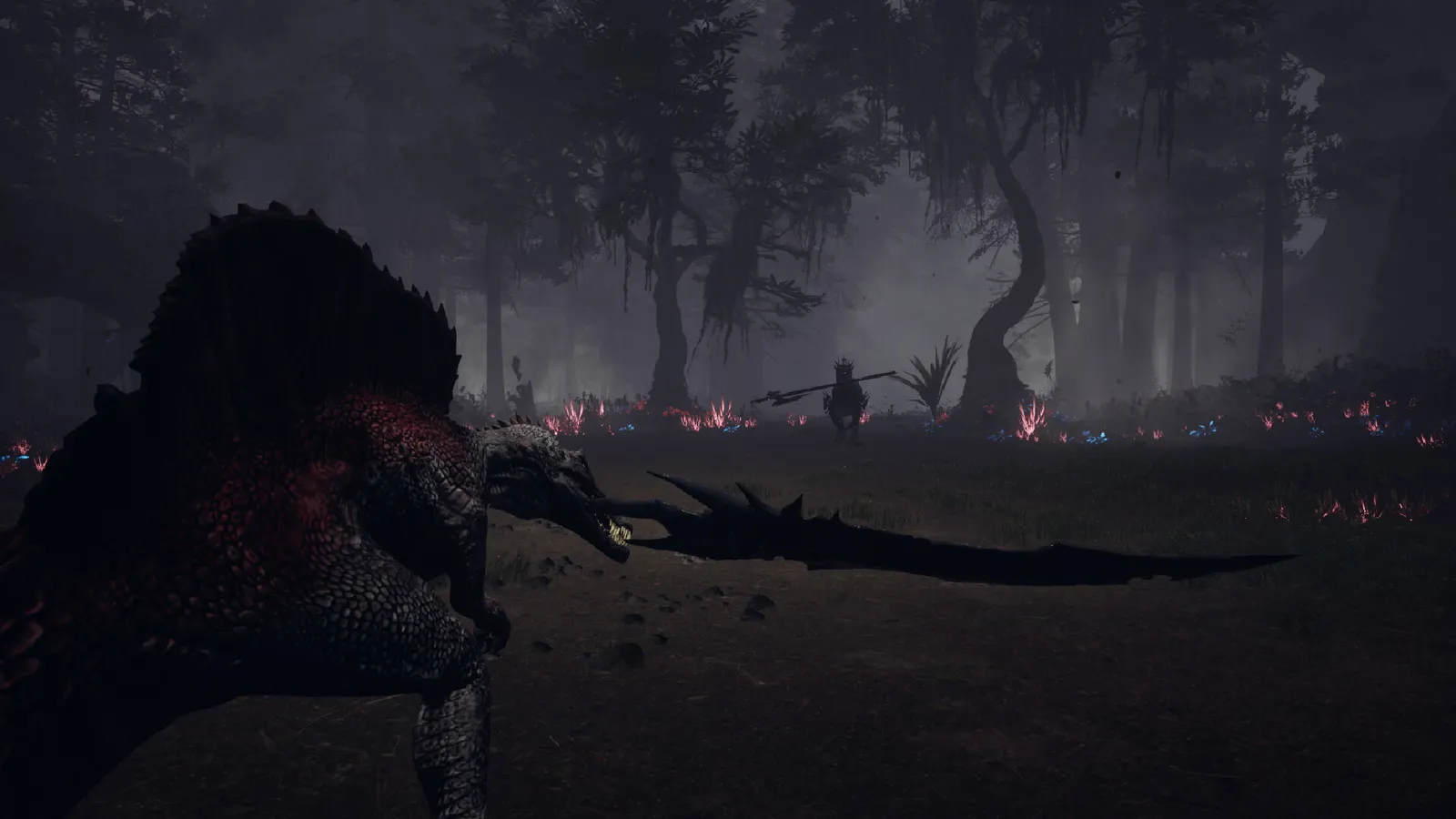
Dinoblade combat explained: commitment timing, stamina management, punish windows, Perfect Deflects, the Resolve/Instinct Counter loop and Soul Arts.
Dinoblade Combat Guide — Stamina, Parry & Punishes (2026)
Dinoblade's combat is the entire game: a commitment-based system where every swing locks you in, stamina is a shared pool for offense and defense, and the way to win is reading enemy animations and punishing their mistakes — not spamming attacks. It's frequently described as Sekiro-adjacent: parrying, posture-style pressure and aggressive rhythm matter more than dodging and turtling. Here's how the whole system fits together, from the basic loop to the flashiest Soul Arts.
Here's what you'll learn:
- Why "commitment" makes every attack a decision
- How stamina works as your real health bar (and how to manage it)
- How to read attacks and find punish windows
- Dodge vs Block vs Perfect Deflect — when to use each
- Red-glint unblockables and how the developer says to handle them
- The Resolve bar and Instinct Counter parry sequence
- How Resonance fuels Charge Attacks and Soul Arts
- Every confirmed Soul Art, summon and transformation
- Finishers, clashes and the "one exchange, one reset" rule
Official resources: Steam store page · GamingBolt interview — red glints & readability · Official patch notes (Steam news) · TechTimes combat analysis
Commitment-Based Combat: Every Swing Is a Decision
The game's core principle is commitment: once you start an attack, you cannot cancel out of it. The greatsword's swings are weighty — fast to start, slow to recover — which means every button press is a decision about the enemy's next move. Attack during their wind-up and you'll eat the hit mid-animation.
Per developer Jean Nguyen in the GamingBolt interview: "I also don't want combat to be mindlessly spamming to win so finding ways to make players stay on their toes and focus is important to keep the game engaging."
The practical rules:
- Never swing into an active attack. Wait for the enemy to commit first.
- Short strings over full combos. One or two hits in an opening beats a five-hit combo that leaves you exposed.
- The "one exchange, one reset" rule. Move in, land a confirmed punish, return to neutral. Add extra hits only to recoveries you know are safe.
Stamina Management: The Real Health Bar
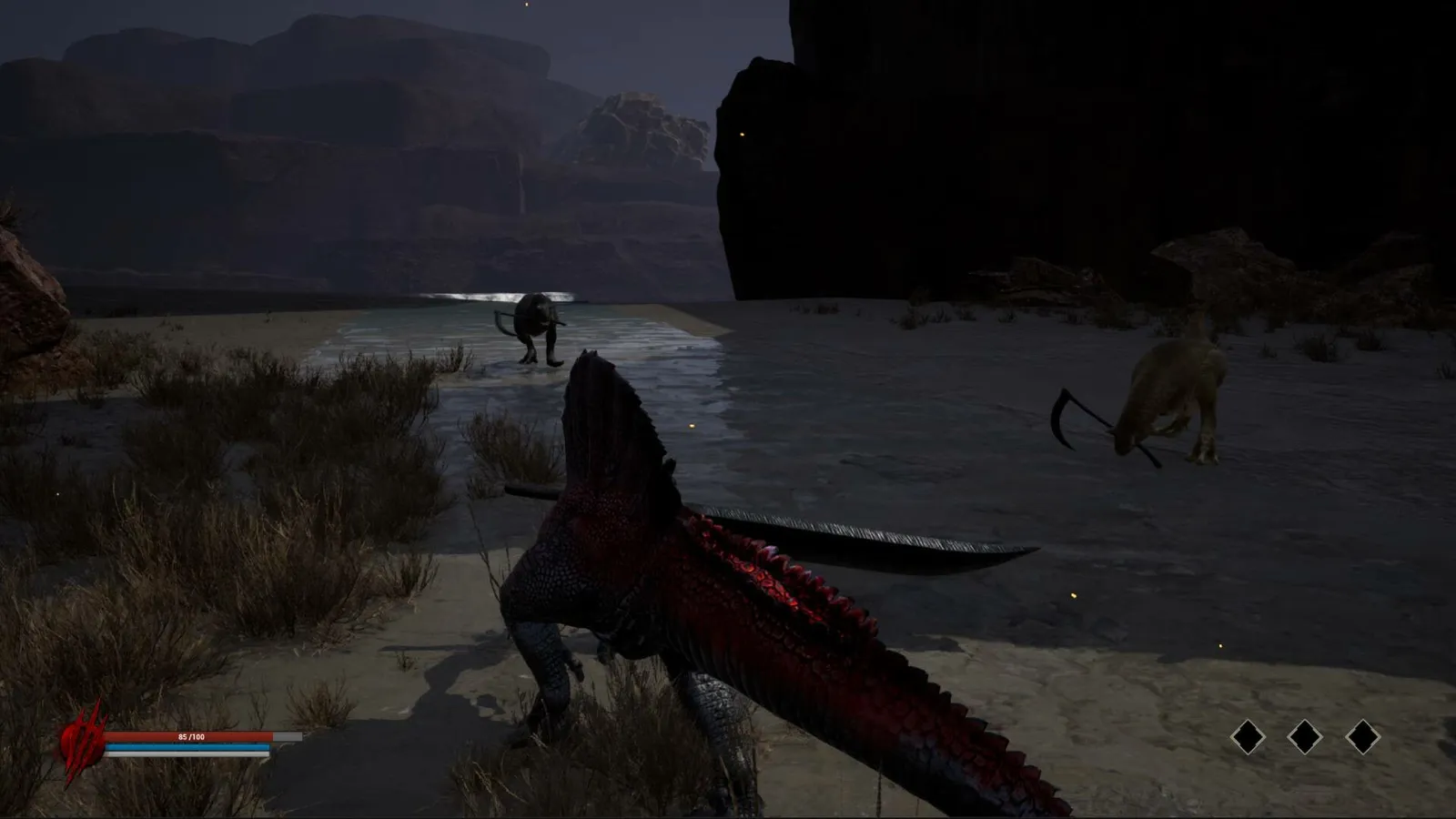
Attacking, dodging, blocking and sprinting all draw from the same stamina pool. Run dry and you cannot defend — which against late-game bosses means death. The single most repeated piece of advice across the community is the same: always keep enough stamina for at least one dodge or block.
Stamina specifics worth knowing:
- Regeneration is slow by default; it's restored fastest after a Perfect Deflect, so parrying doubles as stamina recovery.
- Stamina upgrades increase your max pool but reportedly don't speed up regen — community testing suggests the regen rate stays flat, so bigger pools matter for longer combos, not faster recovery.
- Sprinting does not drain stamina in the current build (a demo-era patch removed the cost: "Running no longer takes stamina").
- Blocking drains stamina per hit; a depleted guard breaks and leaves you wide open.
The classic Dinoblade death loop: attack until empty → get hit → can't dodge → can't block → panic heal → die. Break the chain early. If you're below half stamina and the enemy is still active, you are not allowed to attack.
Reading Attacks and Punish Windows
Every enemy in Dinoblade has readable patterns: openers, combos, recoveries. The punish window is the recovery period after an enemy commits to an attack and misses — the only time you should attack a boss.
The four-step loop:
- Observe — circle at medium range, watch one full attack cycle. Note tells: lowered heads, body shifts, roars.
- Avoid — dodge red-glint and AoE attacks; deflect or block the rest.
- Punish — strike during recovery, from the flank or rear.
- Reset — back off and let stamina recover before the next cycle.
Bosses are most vulnerable after high-commitment attacks (heavy slams, sweeps, charges) and between phases. Watch for combo length too — most bosses chain 2–3 swings, and dodging once is rarely enough. Punish only after the final swing of the chain.
Plant-eaters (like the Parasaurus-type enemies) block and parry your attacks instead of rushing. Bait them into swinging, then practice your deflect timing on their recoveries — perfect practice for the later bosses.
Dodge vs Block vs Perfect Deflect
| Defense | Use when | Cost / reward |
|---|---|---|
| Dodge | Red-glint unblockables, AoE, wide sweeps, anything you can't read yet | Moderate stamina; i-frames if timed |
| Block | Learning a new enemy, unsure of timing, repositioning | Drains stamina per hit; guard can break |
| Perfect Deflect | Readable, parryable attacks — your main tool | Restores stamina + Resonance, stuns, builds Resolve |
The Perfect Deflect (tap block at the moment of impact) is Dinoblade's signature mechanic. On success you take no damage, regain stamina and Resonance, briefly stun the enemy, and fill the boss's Resolve bar. Blocking late instead drains stamina, so there's a real risk/reward decision on every parry attempt.
When to dodge instead of parry — always:
- Attacks that glow red (unblockable)
- Area attacks and ground AoEs
- Late-game boss attacks you haven't learned yet
- Anything with a lingering hitbox (tail sweeps — wait for the tail to pass, then dodge through)
Developer Jean Nguyen: red-glint attacks "can not be blocked. They can still be parried but mistiming it will be punishing." The red flash also has a dedicated sound cue. Rule of thumb: if you've learned the timing, parry it; if not, dodge it. Never block it.
The Resolve Bar & Instinct Counter
Bosses display a Resolve meter (posture meter) under their health bar. Land attacks and Perfect Deflects to fill it — and when it's full, a perfectly timed parry triggers the Instinct Counter: a cinematic parry/clash sequence that deals enormous damage. It's the biggest single damage spike in the game and the mechanic new players most often ignore.
The July 30 official patch explicitly buffed it for the late game:
Per the official July 30 patch notes, the update "Increased Damage Scaling on Player's Instinct Counter so that it doesn't fall off late game for Strength Builds."
Practical use: build Resolve with deflects through phase 1, save the Instinct Counter trigger for a full bar, then land a clash attack for the massive follow-up. Against bosses like Kira the Exile, winning the counter-clash deals most of the fight's damage.
Resonance, Charge Attacks and Soul Arts
Resonance (the blue bar under your health) is the mana for your abilities, and it does not regenerate passively. In combat you restore it only via Perfect Deflects; Save Stones fully refill it. This is the loop that makes parrying mandatory: no deflects, no abilities.
The Charge Attack is your basic Resonance tool: a ranged attack costing 5 Resonance plus stamina, taught at the first waterfall in the tutorial.
Confirmed Soul Arts (unlocked/upgraded with Boss SP from boss kills):
| Ability | What it does |
|---|---|
| Meteor Slice | High-damage single-target Resonance attack |
| Meteor Zone | Area-control burst with anime-style flair; good for groups |
| Meteor Dash | Movement/repositioning Soul Art |
| Alpha Roar | Stun + rage/transformation; scales with level (shown at Lvl 2 in dev footage) |
| Survival Instinct | Defensive Soul Art (tree entry) |
| Freezing Roar | Roar variant that immobilizes enemies (confirmed in official footage) |
| Sword energy beam | Ranged beam fired from the greatsword (official gameplay footage) |
| Dark Form | Transformation ability — extremely powerful, but leaves you with no stamina (community-reported) |
Summons unlock after defeating bosses (Kira unlocks the summoning system): call previously defeated bosses into battle for limited-time support, plus passive bonuses — wider parry windows, faster stamina replenishment, damage assists. Later summons are tracked by an achievement ("collect all summons").
Roar briefly stuns everything around you. Use it to escape a surrounded fight, interrupt a defensive herbivore's guard, or create the opening to heal. Just watch your Resonance — it's the same pool as your bigger damage abilities.
Finishers, Clashes and Advanced Rhythm
Light and heavy combos end in big flamboyant finishers — the payoff for landing a full string. Clashes happen during Instinct Counter sequences (and on certain boss attacks like Kasei's greatsword follow-up swing): win the clash input and you land massive damage.
The deeper rhythm that separates good players from great ones:
- Alternate attack cadence. Never walk in holding a combo; attack in bursts tied to enemy recoveries.
- Deflect for resources, dodge for safety. Perfect Deflects are your stamina/Resonance battery; treat dodge as the fallback, not the default.
- Transformations change the rules. Dark Form and rage forms trade defense for burst — use them when a stagger or phase transition guarantees the opening.
- Respect the jank. Hitboxes are occasionally unreliable and the camera can be awkward; if a hit "shouldn't" have connected, it still did — recover instead of arguing with the game.
Frequently Asked Questions
How does combat work in Dinoblade?
Every action (attack, dodge, block, sprint) draws from one stamina pool, and attacks can't be cancelled — so fights are about reading enemy animations, avoiding red-glint unblockables, and punishing recovery windows with short combos. Parrying (Perfect Deflect) restores stamina and Resonance and fills the boss's Resolve bar.
What is a punish window in Dinoblade?
The recovery period after an enemy commits to an attack and misses — the only safe time to attack. Land one or two hits, then reset to neutral distance. Punish heavy attacks (slams, sweeps, charges) and the end of long combos.
Should I parry or dodge in Dinoblade?
Both, but parry is the primary tool: Perfect Deflects restore stamina and Resonance and build Resolve. Dodge attacks that glow red, AoEs, and anything you haven't learned yet. Blocking is the fallback for reading new enemies.
How do I restore Resonance in Dinoblade?
Perfect Deflects restore Resonance mid-fight; Save Stones fully refill it. There's no passive regeneration, so a pure-dodge playstyle will starve your abilities.
What are the best abilities in Dinoblade?
Meteor Slice (single-target damage) and Meteor Zone (area control) are the core Soul Arts; Alpha Roar's stun + transformation is excellent utility. Dark Form is the highest-damage transformation but drains your stamina completely. Late-game, upgraded Soul Arts with high Resonance "completely trivialise fights," per community testing.
Related Guides
- Dinoblade Beginner's Guide — How to Play, First Steps & Early Build
- Dinoblade All Bosses Guide — Full Boss List & How to Beat Them
- Dinoblade Walkthrough — Full Campaign, Biomes & Boss Order
- Dinoblade All Dinosaurs — Complete Bestiary Guide
- Dinoblade System Requirements — PC Specs, Steam Deck & Settings
Last updated: August 14, 2026.
More Dinoblade Guides
Dinoblade final boss guide: Maakyuurii the Ice King and the Flame Reborn phase, how to reach the meteor fight, prep loadout, and the Boss Rush unlock.
Games like Dinoblade: Monster Hunter, Sekiro, Elden Ring, Primal, ARK and more — the best dinosaur, soulslike and weapon-combat alternatives ranked.
Dinoblade playtime explained: 2-3h focused, ~6h typical, 8h+ for 100%, plus the 16-boss gauntlet, Boss Rush replay, and the demo as a measuring stick.
Was Dinoblade on Kickstarter? No campaign exists — the real story is a 2022 viral animation, 500K wishlists, a 97% demo, and a July 23, 2026 launch.
Dinoblade mods, save files and OST explained: no Steam Workshop, a small Nexus mod scene, Steam Cloud saves, and the 8-track Boss Theme Collection.
Dinoblade price explained: $19.99 on Steam, the 10% launch discount ($17.99), regional pricing, no DLC or bundles, and whether it's worth the money.
Dinoblade release date confirmed: July 23, 2026 at 10 AM on Steam (PC, Windows-only). Full timeline from the 2022 viral clip to launch, plus console status.
Dinoblade on Steam Deck: Valve's official Playable rating, what works and what doesn't, best graphics settings, and community performance reports.