Dinoblade beginner guide: how to play the Spinosaurus soulslike — first steps, stamina/parry basics, the Instinct Counter, and the best early stat build.
Dinoblade Beginners Guide — How to Play & Early Build (2026)
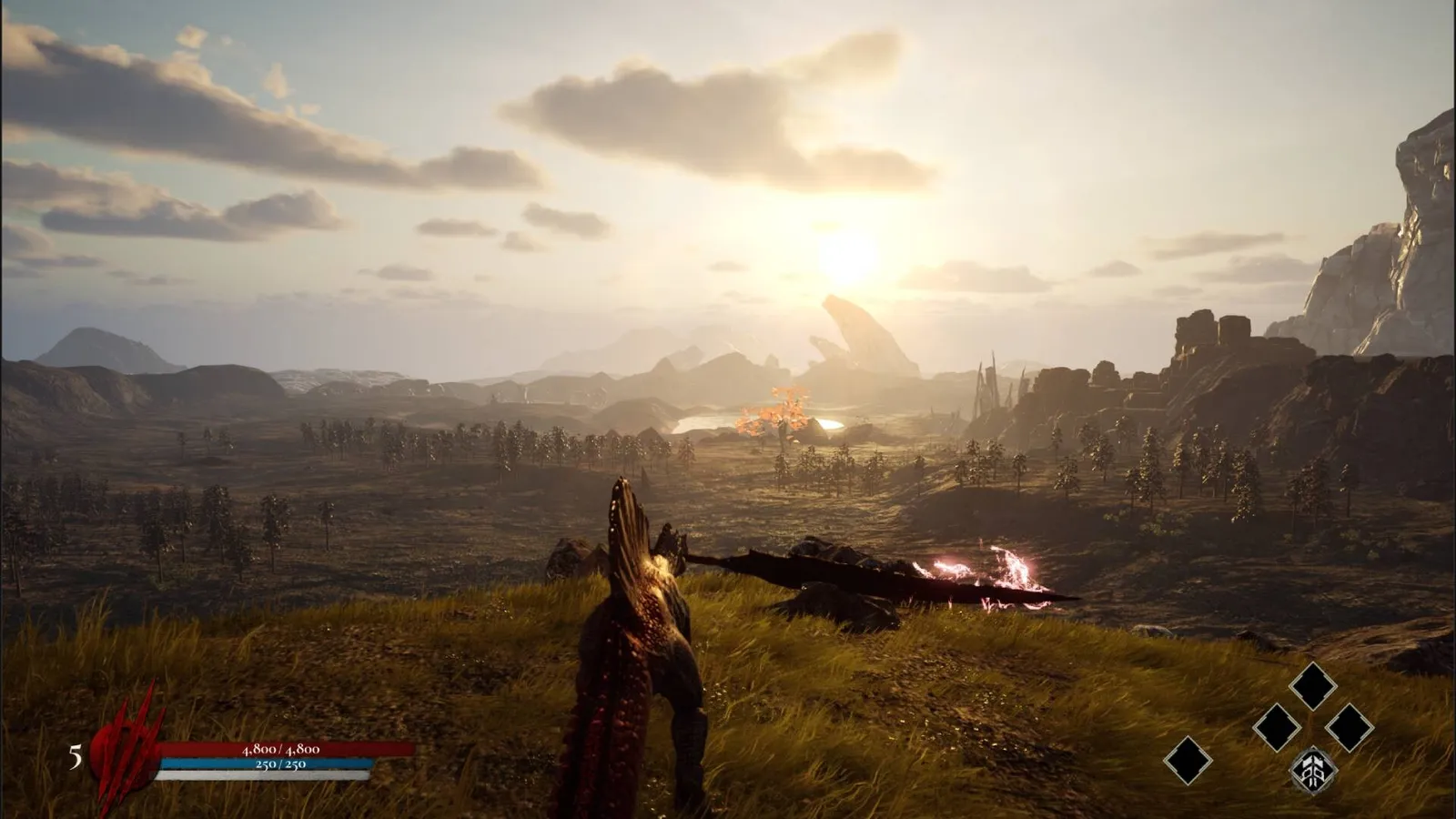
Dinoblade is the action RPG where you play a young Spinosaurus swinging a colossal greatsword from its jaws — and underneath the absurd premise is a genuinely demanding, timing-based combat system. If you come in expecting a hack-and-slash, the first hour will humiliate you. This guide covers how the game actually works: the commitment-based attacks, the parry loop that fuels your abilities, and the stat build that makes the early game survivable.
Here's what you'll learn:
- What Dinoblade is and where the "dinosaur soulslike" came from
- What happens in your first hour (tutorial, cavern, first Save Stone)
- How stamina, commitment and punish windows actually work
- The three defenses: Dodge, Block and Perfect Deflect
- The Resolve bar and Instinct Counter — the mechanic new players miss
- The best early stat build (Health vs Strength vs Stamina vs Resonance)
- How healing charges and Health Stones work
- The fastest SP farming loop
- The classic beginner mistakes, and how to avoid them
Official resources: Steam store page · GamingBolt interview with developer Jean Nguyen · TechTimes launch feature · SteamDB
What Is Dinoblade?
Dinoblade is a third-person action RPG set in a prehistoric world reshaped by a cataclysmic event. You play a young Spinosaurus carrying a colossal Great Sword "forged from ancient power," and almost every dinosaur you meet — including rivals armed with katanas, hammers, axes and scythes — fights back like a trained duelist. The game's store page describes it plainly: every region is ruled by a ferocious Alpha predator, and defeating them unlocks the path forward.
Per the official Dinoblade Steam page, "Each region is ruled by a ferocious Alpha, an apex predator who guards the path forward. Defeat them, or be devoured."
The game comes from Jean Nguyen, a senior gameplay animator at Sucker Punch Productions (Ghost of Tsushima, Ghost of Yōtei), who founded Team Spino LLC. Dinoblade started as a viral 2022 animation of a Spinosaurus swinging a Buster Sword, became a free Steam demo in October 2025 that held a 97% positive rating, and launched on July 23, 2026 at $19.99 — selling roughly 36,000 copies in its first 24 hours (GamesRadar, Insider Gaming).
The combat is closer to Sekiro than Dark Souls: it's built around parrying, a boss "Resolve" bar, and aggressive rhythm rather than turtling behind a shield. For the full picture of the game's identity, start with our Dinoblade wiki overview.
The First Hour: What Actually Happens
The game opens with a cutscene, then drops you in front of a flaming greatsword. Pick it up and the tutorial begins in earnest:
- Block/Deflect tutorial — you're taught to parry immediately. A timed parry (Perfect Deflect) restores both stamina and Resonance; blocking too late drains stamina.
- Light attack combo — chain light attacks to break a blockade; two more enemies appear.
- The cavern — sprint/dodge, lock-on, and your HUD shows 3 Healing Charges. Clear the small dinosaurs rushing you (this levels you up), fight a larger one, and save at the first Save Stone.
- Charge Attack tutorial — crossing the waterfall teaches you the ranged Charge Attack, which costs 5 Resonance (the blue bar under your health) plus stamina.
Follow the moon in the sky to the next Save Stone, go right, and you'll learn the Instinct Counter: when a boss's Resolve Bar is full, a perfectly timed parry triggers a huge counterattack sequence. At the end of this path you fight Kira, the Exile — the first boss, and a genuinely fair introduction (details in our all bosses guide).
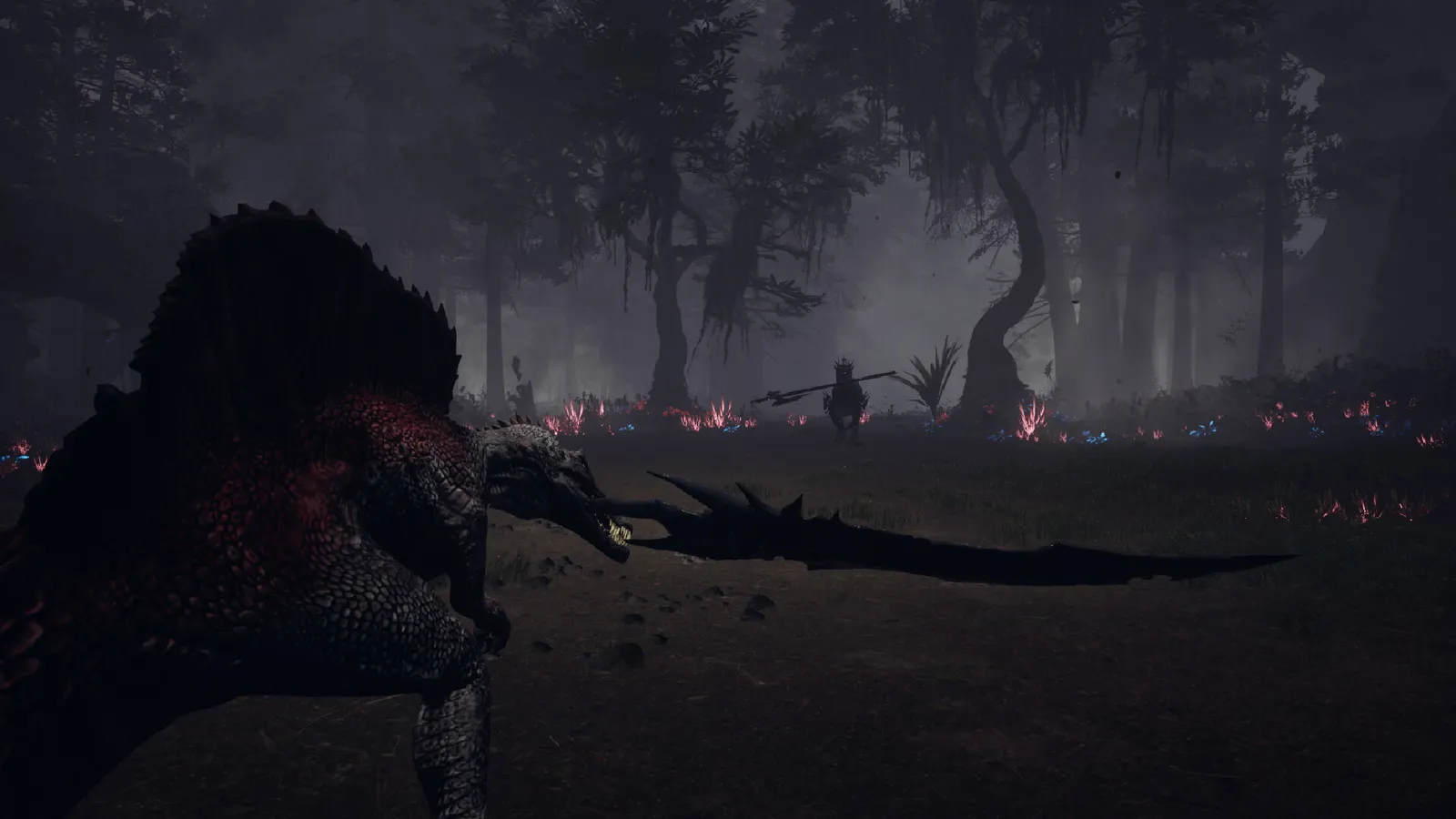
Treat the first encounter with any new enemy as reconnaissance: watch one full attack cycle before committing. In Dinoblade, "dying to learn" is the intended loop — you keep all your SP when you die, so failed attempts cost nothing but time.
Core Combat: Stamina, Commitment and Punish Windows
Every offensive and defensive action in Dinoblade comes from the same stamina pool — attacking, dodging, blocking and sprinting. That single pool is why the game punishes button-mashing: spend it all on offense and you literally cannot dodge the retaliation.
The core loop is the commitment → punish cycle:
- Observe. Watch the enemy's wind-up animation. Most attacks have a readable tell (a lowered head, a body shift, a roar).
- Avoid. Dodge attacks that glow red (unblockable), parry or block the rest.
- Punish. After the attack misses or the combo ends, land one or two hits during the recovery — the "punish window."
- Reset. Back off, let stamina recover, and repeat.
The most common new-player death is attacking three times when the window only allows two. One safe hit is worth more than a full combo that leaves you standing in front of a boss with zero stamina.
The golden rule: always keep enough stamina for at least one dodge or block. If your bar is empty, you can't defend — and late-game bosses will one-shot you for it.
The Three Defenses: Dodge, Block, Perfect Deflect
| Defense | What it does | Best against | Cost |
|---|---|---|---|
| Dodge | Roll with invincibility frames (i-frames) | Red-glowing unblockable attacks, AoE, huge sweeps | Moderate stamina |
| Block | Hold to reduce damage taken | Learning new enemies, uncertain timing | Drains stamina per hit |
| Perfect Deflect | Tap block exactly as the attack lands | Readable attacks — the game's core skill | Nothing; restores stamina + Resonance |
The Perfect Deflect is the centerpiece mechanic. On a successful deflect you take no damage, regain stamina and Resonance, stun the enemy briefly, and fill the boss's Resolve bar. Land enough deflects and a full Resolve bar triggers the Instinct Counter — a cinematic parry sequence that deals enormous damage. Players who master deflects beat bosses in a fraction of the attempts of pure-dodge players (intoindiegames hands-on).
Attacks that glow red (with a sound cue) are unblockable. Developer Jean Nguyen confirmed in the GamingBolt interview that red-glint attacks can still be parried — but mistiming one is brutal. When in doubt, dodge.
Resonance: The Mana That Refuses to Regenerate
Resonance is the blue bar under your health and the resource for your abilities: Charge Attacks (5 Resonance), Meteor Slice, Meteor Zone, Roar, and transformation skills. Unlike most action RPGs, Resonance does not regenerate passively during combat. The only reliable in-combat sources are:
- Perfect Deflects (restores Resonance + stamina)
- Resting at Save Stones (full restore)
This is the game's cleverest design loop: you must engage with the parry system to keep your abilities fueled. A player who dodges everything runs out of Resonance, and long boss fights grind down into basic attacks. It also means parry practice is a direct upgrade to your damage output.
The Best Early Stat Build
Leveling up grants SP to spend on four attributes: Health, Strength, Stamina, and Resonance. Two facts make planning easy: you never lose SP on death, and stat costs never increase — so you can eventually max everything.
For the early game, the hands-on consensus is clear: survivability first.
| Stat | Early-game priority | Why |
|---|---|---|
| Health | 1st | More HP = more chances to learn boss patterns without dying |
| Stamina | 2nd | Bigger pool = more attacks, dodges and blocks before you're helpless |
| Strength | 3rd | Damage only matters if you're alive to land it |
| Resonance | 4th | Abilities are stronger once you've learned the deflect timing |
A common late-game observation: most bosses can one-shot you regardless, so raw damage investment is often wasted early. Build Health and Stamina to the first Alpha boss, then start pushing Strength. If you want the deeper breakdown of every system, see the combat guide.
Healing Charges, Health Stones and SP Farming
Healing works like Dark Souls' Estus: you carry a fixed number of Healing Charges that refill at Save Stones. No consumable hoarding, no inventory management — just charges. Health Stones found on side paths permanently increase your max healing charges, the single most impactful upgrade in the game. Look for breakable rocks, alcoves and unusual landmarks in every region.
When a boss wall stops you, farming is fast and safe:
- Find a Save Stone near a cluster of enemies.
- Kill everything nearby and collect SP.
- Rest at the Save Stone (enemies and SP pickups respawn, HP and Resonance restore).
- Repeat.
Save transformation abilities for farming bursts — activate your rage/Roar form, wipe a group instantly, rest, repeat. It's the fastest SP loop in the game.
Common Beginner Mistakes
- Draining stamina on offense — always hold back a defensive reserve.
- Trying to parry everything — red-glint attacks and AoEs must be dodged; force a deflect and you'll eat a hit.
- Panic-dodging early — the dodge has a slower startup than most souls-likes; dodge when the attack actually releases, not when the wind-up starts.
- Healing in the open — heal only during long boss animations (roars, failed charges) or after creating distance.
- Skipping side paths — the game is linear, but optional routes hold Health Stones, Boss SP, weapons and mini-bosses. A single extra heal charge can decide a boss fight.
- Ignoring the Resolve bar — the Instinct Counter is your biggest damage spike; build it with deflects, don't forget it exists.
Frequently Asked Questions
Is Dinoblade hard for beginners?
It's challenging but forgiving. Boss patterns are readable, you keep all SP on death, stat costs never rise, and the deflect window is generous compared to most souls-likes. Expect the first boss (Kira, the Exile) to take a handful of attempts while you learn the rhythm.
What should I level first in Dinoblade?
Health and Stamina first — they buy you learning attempts and defensive options. Strength becomes worthwhile after you reach the first Alpha boss, and Resonance matters most once you're comfortable landing Perfect Deflects.
How do I heal in Dinoblade?
You use a limited number of Healing Charges that refill when you rest at Save Stones. Permanent Health Stones found on side paths increase your max charges — search every region before its boss.
What is the parry system in Dinoblade?
A Perfect Deflect (block timed at the moment of impact) negates damage, restores stamina and Resonance, and fills the boss's Resolve bar. A full Resolve bar + another perfect parry triggers the Instinct Counter, a massive damage sequence.
How long does Dinoblade take to beat?
A focused run is roughly 2–3 hours; a typical playthrough lands around 6 hours; 100% completion runs 8+ hours including Boss Rush and all collectibles — full breakdown in our walkthrough.
Related Guides
- Dinoblade Walkthrough — Full Campaign, Biomes & Boss Order
- Dinoblade Combat Guide — Stamina, Punish Windows, Parry & Soul Arts
- Dinoblade All Bosses Guide — Full Boss List & How to Beat Them
- Dinoblade All Dinosaurs — Complete Bestiary Guide
- Dinoblade System Requirements — PC Specs, Steam Deck & Settings
Last updated: August 14, 2026.
More Dinoblade Guides
Dinoblade demo explained: what the free Steam demo covers (Kira, Axe, Kasei), how long it takes, its 97% rating, and whether demo progress carries over.
Games like Dinoblade: Monster Hunter, Sekiro, Elden Ring, Primal, ARK and more — the best dinosaur, soulslike and weapon-combat alternatives ranked.
Dinoblade playtime explained: 2-3h focused, ~6h typical, 8h+ for 100%, plus the 16-boss gauntlet, Boss Rush replay, and the demo as a measuring stick.
Was Dinoblade on Kickstarter? No campaign exists — the real story is a 2022 viral animation, 500K wishlists, a 97% demo, and a July 23, 2026 launch.
Dinoblade mods, save files and OST explained: no Steam Workshop, a small Nexus mod scene, Steam Cloud saves, and the 8-track Boss Theme Collection.
Dinoblade price explained: $19.99 on Steam, the 10% launch discount ($17.99), regional pricing, no DLC or bundles, and whether it's worth the money.
Dinoblade release date confirmed: July 23, 2026 at 10 AM on Steam (PC, Windows-only). Full timeline from the 2022 viral clip to launch, plus console status.
Dinoblade on Steam Deck: Valve's official Playable rating, what works and what doesn't, best graphics settings, and community performance reports.