MARVEL Tōkon: Fighting Souls Guide — 4v4 Tag System, Modes, Roster & Everything Explained
The complete MARVEL Tōkon: Fighting Souls guide: how the 4v4 tag system works, Vital Gauge, Wall Breaks, every game mode, the 20-character roster, editions, and whether the PC port is fixed yet.
MARVEL Tōkon: Fighting Souls Guide — 4v4 Tag System, Modes, Roster & Everything Explained
MARVEL Tōkon: Fighting Souls is a 2.5D 4v4 tag-team fighting game from Arc System Works (Guilty Gear, Dragon Ball FighterZ), published by Sony with Marvel Games, released August 6, 2026 on PS5 and PC. It's the first Marvel fighting game built around a shared health bar and staggered team unlocks — you start every match with one fighter and one assist, then grow into a full four-character team as you land combos and Wall Breaks. This guide covers the whole game: the tag system, every mode, the launch roster, the three editions, and the current state of the PC port.
The game launched to Mixed reviews on Steam (40% positive, ~2,150 English reviews) mostly due to PC performance and forced PSN login. A major performance update shipped days after launch, and many players report their issues are now fixed. We cover the details in the review and patch notes.
The 4v4 Tag System: How Matches Actually Work
Tōkon's headline mechanic is a 4v4 tag fight with one crucial difference from every Marvel vs. Capcom: your whole team shares a single health bar called the Vital Gauge. There are no individual lifebars to chip down — the match is about building access to your full team while wearing down the opponent's one bar.
- Match start: you control one "leader" character plus one assist. The other two teammates are locked.
- Mid-match unlocks: your third and fourth fighters become available as you fulfil conditions — damage dealt, Wall Breaks, throws, and round progression. By round three of a best-of-five, both teams are usually running at full strength.
- Assists: three assist types per team slot — Forward (projectile pressure), Down (anti-air), and Unique (character-specific call). Assists are tied to team slots, not fixed per character, so you can put any of your four fighters in any assist role.
- Active tag: instead of only calling assists, you can swap control to any available teammate mid-combo for real team combos.
- Tōkon Assemble: the all-out team super, usable when your team is at full strength and your Skill Gauge is maxed — the ending cinematic hits and the match can swing in seconds.
The design is deliberately friendlier than a standard tag fighter: you only need to learn one or two characters to contribute, because your assists handle the rest. Game director Kazuto Sekine has stressed this is the whole point — a 4v4 fighting game where casual players don't need to learn four characters to enjoy it.
Because the Vital Gauge is shared, the most important resource in any match is when your third and fourth fighters unlock. Characters that build the unlock meter fast (Hulk, Wolverine — see the tier list) effectively give you a longer team cycle than zoner characters that stall.
Wall Breaks, the Guilty Gear DNA
Tōkon borrows the Wall Break directly from Guilty Gear Strive: hit the opponent into the corner and a big hit shatters the wall, transitioning the fight into the next section of the stage. In Tōkon, Wall Breaks also accelerate your team unlock meter, so corner pressure isn't just damage — it's your fastest path to activating your full 4v4 lineup.
Input System: Motion or Quick
Arc System Works ships two input modes:
- Traditional: Light / Medium / Heavy / Unique attack buttons, motion inputs for specials and supers, the full Guilty Gear execution layer.
- Quick Skill: one-button specials for casual play. Simplified inputs still earn meter at a reduced rate, so hardcore players are rewarded for motion inputs without new players being locked out.
The Skill Gauge builds into EX specials and supers — level-3 supers cost the full 100 meter and are where Tōkon Assemble lives.
Assemble Gauge vs. Skill Gauge: Two Meters, Two Jobs
Tōkon runs on two independent resources, and confusing them is the fastest way to lose rounds:
- Assemble Gauge fuels your team mechanics: assists, active tags, armored counter attacks, and defensive swaps. This is the meter that decides whether you can call the teammate who actually wins you the round. Assemble builds from tagging, landing assists, and taking damage.
- Skill Gauge fuels your character mechanics: EX specials and supers, up to the level-3 100-meter ultimate. Skill builds from landing normals and specials — this is your damage economy.
The strategic layer comes from the trade-off: every bar of meter you spend on assists is bar you don't have for supers, and vice versa. Zoner-style teams (see best teams) tend to feed the Assemble Gauge for constant pressure, while damage teams feed the Skill Gauge for explosive level-3 closes.
Team Generation: Build Your Own Squad
Beyond the five canonical teams, Tōkon lets you assemble any four characters you own. The Team Generation system automatically names your custom squad based on the leader and the characters you pick — the name-generation word pool was hand-picked by the dev team, so combinations produce flavourful, on-theme team names (like Guilty Gear Strive's lobby titles). You can also name teams manually. Custom teams are fully usable online, which means the "five fixed teams" framing only applies to Episode Mode's story perspective — competitive play is a free-for-all of team compositions.
Match Structure: Best-of-Five Rounds
Every match plays best-of-five rounds. Rounds are not independent resets like most fighters — because the Vital Gauge is shared and your team unlock state carries over, a lost round isn't a clean slate. You start round one with one fighter, and by round three or four both teams are typically fighting at full 4v4 strength. This makes comebacks a genuine design feature: a player who survives round one down a character can claw back access to their full team in round two while the opponent is still dealing with the unlock tax.
The practical effect is that Tōkon matches are longer than a typical 2-out-of-3 fighter set, and stamina matters — tournaments and ranked sessions reward players who stay sharp through five rounds, not just players who win the first exchange.
Every Game Mode, Explained
Episode Mode (Single-Player, ~10 Hours)
The flagship single-player mode: an interactive comic written by Kieron Gillen (Immortal X-Men, The Wicked + The Divine), told in motion-comic style with animated panels and full voice acting in 10 languages. It runs about 10 hours across five team-perspective storylines and is fully playable — fights are woven into the story, not just cutscenes.
The plot: a new villain, The Champion, plans to destroy Earth, and his henchwoman The Promoter runs the gauntlet you climb. Which team you play changes the story beats. The final battle is a 4v4 against The Champion himself. Full route in the Episode Mode walkthrough, story analysis in the lore guide.
Arcade Mode
The classic single-player ladder: eight fights plus a boss, with a score attack focus. Good for achievement hunting and learning matchups.
Versus, Training, All-Star Arena, Arcadia Rumble
- Local Versus: up to 4v4 versus matches with friends, shared/split screen.
- Training Mode: full training suite (frame data, dummy recording, hitbox display).
- All-Star Arena: a gauntlet mode where you fight through increasingly hard team compositions.
- Arcadia Rumble: an offline-friendly party mode with optional online features — mini-games and sudden-death rules built around the 4v4 format.
Online: Ranked, Casual, and the 64-Player Lobby
Online play has ranked and casual matchmaking plus a lobby that holds up to 64 players, with room matches for private groups. Cross-play is full between PS5 and PC (Steam and Epic), so the PC and console pools are one — see the crossplay guide for the account requirements.
Every online feature (lobby, ranked, casual, player profile) requires a PlayStation Network account, and the game cannot be played at all in ~132 countries where PSN doesn't operate. This is the single most-cited negative review complaint on Steam — check availability for your region before buying. Full details in the platforms guide.
The Launch Roster: 20 Characters in 5 Teams
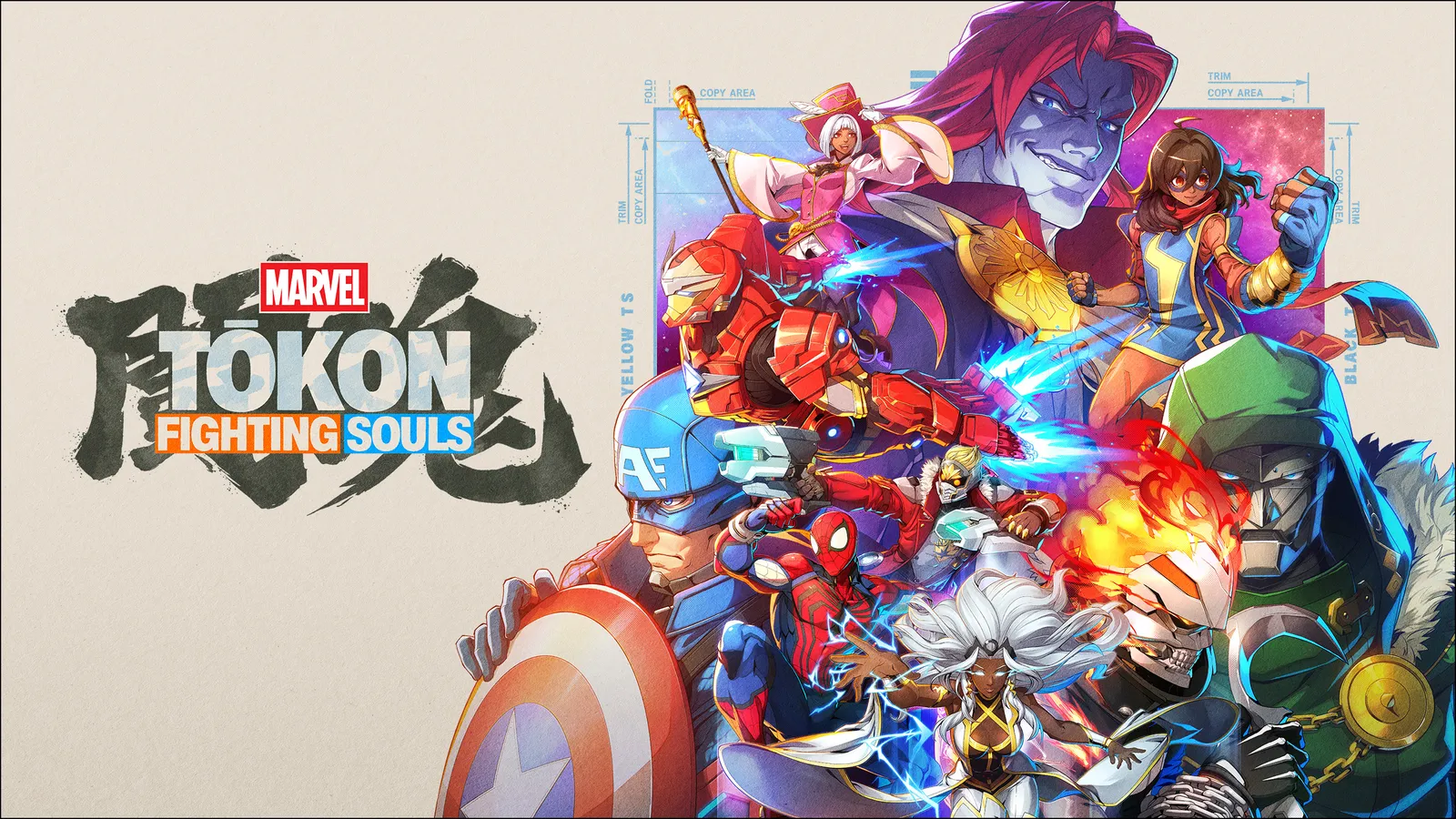
The 20 launch characters are organised into five fixed teams, each built around the Episode Mode storyline:
| Team | Leader | Roster |
|---|---|---|
| Fighting Avengers | Captain America | Captain America, Iron Man, Hulk, Shuri |
| Unbreakable X-Men | Storm | Storm, Wolverine, Magik, Danger |
| Amazing Guardians | Spider-Man | Spider-Man, Star-Lord, Ms. Marvel, Peni Parker |
| Knights of Doom | Doctor Doom | Doctor Doom + 3 launch-announced members |
| Samurai Outriders | Ghost Rider | Ghost Rider (Robbie Reyes), Blade, Deadpool, Loki |
Arc System Works built the roster to span gameplay archetypes — rushdown (Wolverine, Blade), zoners (Doctor Doom, Ms. Marvel), grapplers (Hulk), and odd picks that have never appeared in a Marvel fighter before (Danger, Peni Parker, Shuri). Full profiles for all 20 in the characters & roster guide.
At the time of writing, the three non-Doom members of the Knights of Doom were confirmed at launch by coverage, but the specific roster as of the August 6 release should be double-checked against the in-game character select — some pre-release coverage listed them as "to be revealed." We mark unverified names as such in the roster guide.
Editions & Pricing
Three editions, identically priced on PS5 and PC:
- Standard — $59.99: base game, all 20 launch characters.
- Digital Deluxe — $84.99: base game + Year 1 Characters and Stage Pass (four DLC characters + one stage, delivered by December 31, 2027) + Howard the Duck lobby avatar + Cosmo lobby pet.
- Ultimate — $99.99: everything in Deluxe + five costume packs (Spider-Man Advanced Suit 2.0, Storm Punk Rock, Iron Man Classic, Captain America Classic, Doctor Doom Supreme Ruler) + animated chromatic color unlocks for all 20 launch characters.
Deluxe and Ultimate are digital-only; the Standard edition also gets a physical release. The first confirmed Year 1 DLC character is Phoenix Cyclops. Which edition is worth it — see the price & editions guide.
System Requirements & Platform Notes
- Minimum: Windows 11 64-bit, Intel Core i5-8400 or AMD Ryzen 5 1600X, 16 GB RAM, NVIDIA RTX 2060 6GB or AMD Radeon RX 6600 XT 8GB, 27 GB storage.
- Recommended: i7-8700 or Ryzen 5 3600X, RTX 3070 8GB or RX 7600 XT 16GB.
- Performance: locked 60fps in battle, 4K support on PC (Ultra settings), full DualSense haptic feedback on PC.
- Platforms: PS5 and PC only — no Xbox, no Switch. Unreal Engine 5, Easy Anti-Cheat, Steam Cloud saves, 39 Steam achievements.
The requirements are notably higher than Street Fighter 6 or Tekken 8 — see the system requirements guide for discussion of whether you actually need the full recommended spec.
Beginner Priorities (TL;DR)
- Learn one leader, let assists do the rest — Tōkon is designed so you don't need four characters. Pick a starter from the beginners guide.
- Focus on the unlock meter, not raw damage — full team access wins rounds; Wall Breaks are your fastest unlock fuel.
- Use Quick Skill inputs first — swap to motion inputs once you're comfortable; you'll earn meter faster.
- Set your assists by role, not by favourite character — a Forward assist on the right slot changes your neutral more than swapping leaders.
- Check PSN availability before buying on PC — the account requirement is the biggest source of negative reviews.
FAQ
What is MARVEL Tōkon: Fighting Souls? A 2.5D 4v4 tag-team fighting game developed by Arc System Works, published by Sony Interactive Entertainment with Marvel Games. It launched August 6, 2026 on PS5 and PC (Steam and Epic). It's the first Marvel fighting game built around a shared health bar and mid-match team unlocks.
How does the 4v4 tag system work? You start each match with one leader and one assist; your other two fighters unlock mid-match as you build a meter through combos, Wall Breaks, and throws. Assists come in Forward, Down, and Unique types, and you can actively tag teammates in to control them directly. The team shares a single Vital Gauge health bar.
What is the Vital Gauge in MARVEL Tōkon? The single shared health bar for your entire four-character team. There are no individual lifebars — damage depletes the one gauge, and the match is about building team access while chipping down the opponent's gauge. This is the core design difference from Marvel vs. Capcom.
How many characters are in MARVEL Tōkon at launch? 20 playable characters across five teams: Fighting Avengers, Unbreakable X-Men, Amazing Guardians, Knights of Doom, and Samurai Outriders. The Year 1 Pass adds four more characters post-launch.
Is MARVEL Tōkon on Xbox or Switch? No. It's PS5 and PC only (Steam and Epic Games Store). There's no Xbox, Switch, or PlayStation 4 version, and none has been announced.
Does MARVEL Tōkon have crossplay between PS5 and PC? Yes — full cross-platform multiplayer between PS5 and PC (Steam and Epic), including ranked, casual, and lobby play. A PlayStation Network account is required for all online features on every platform.
Is MARVEL Tōkon hard to learn? No, and that's deliberate. The Quick Skill input mode gives every character one-button specials, and the team system means you only need to learn one leader to be effective — assists do the rest. The depth for veterans comes from the meter economy, Wall Break timing, and assist slot choice. It's closer to Dragon Ball FighterZ's accessibility than to Guilty Gear's execution wall.
Does MARVEL Tōkon run on Steam Deck? Officially no — the game is rated "Unsupported" on Steam Deck because of the Easy Anti-Cheat and the mandatory PlayStation account architecture, and it won't install or run out of the box. Community reports of workarounds exist, but with EAC blocking and the online features requiring PSN, treating the Deck as a Tōkon machine is not realistic at this point. Full detail in the system requirements guide.
How long is MARVEL Tōkon: Fighting Souls? Episode Mode alone runs about 10 hours across its five team-perspective storylines. Add Arcade, All-Star Arena, Arcadia Rumble, and the achievements (39 total) and a single-player completionist run lands around 20–25 hours; online play is effectively endless. See the how long to beat guide for the breakdown.
Related Guides
- MARVEL Tōkon Beginner's Guide — How to Play & Win Your First Matches
- All Characters & Full Launch Roster
- Tier List — Best Characters Ranked
- Episode Mode Walkthrough — Full Story Route
- MARVEL Tōkon Review — Is It Worth It After the Fixes?
- Crossplay Guide — PS5 & PC Online
Official resources: Steam store page · Marvel.com game page · Wikipedia · IGN game page
Last Updated: August 12, 2026