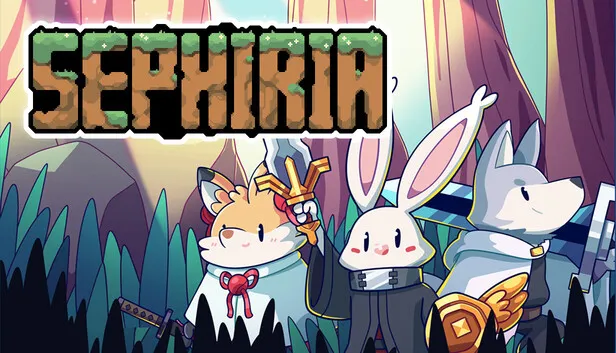
Sephiria guide: what it is, the descent run loop, all 6 weapons, the Artifact inventory puzzle, Talents, co-op, and how it compares to Dungreed.
Sephiria Guide — Everything About the Bunny Tower Roguelite
Sephiria is a top-down action roguelite from TEAM HORAY, the South Korean studio behind Dungreed. You play a brave bunny who must descend a demon-infested tower to stop a cult from slaughtering the village of Bunnyville. It launched in Early Access on April 3, 2025, and hit its full 1.0 release on July 31, 2026 — adding the sixth and final chapter, the final boss, more weapons and Talents, and additional hard-mode content. If you liked Dungreed, Hades, or Enter the Gungeon, this is the same "one more run" energy with a much stranger hook: your build lives in a physical inventory grid where artifacts and tablets have to touch.
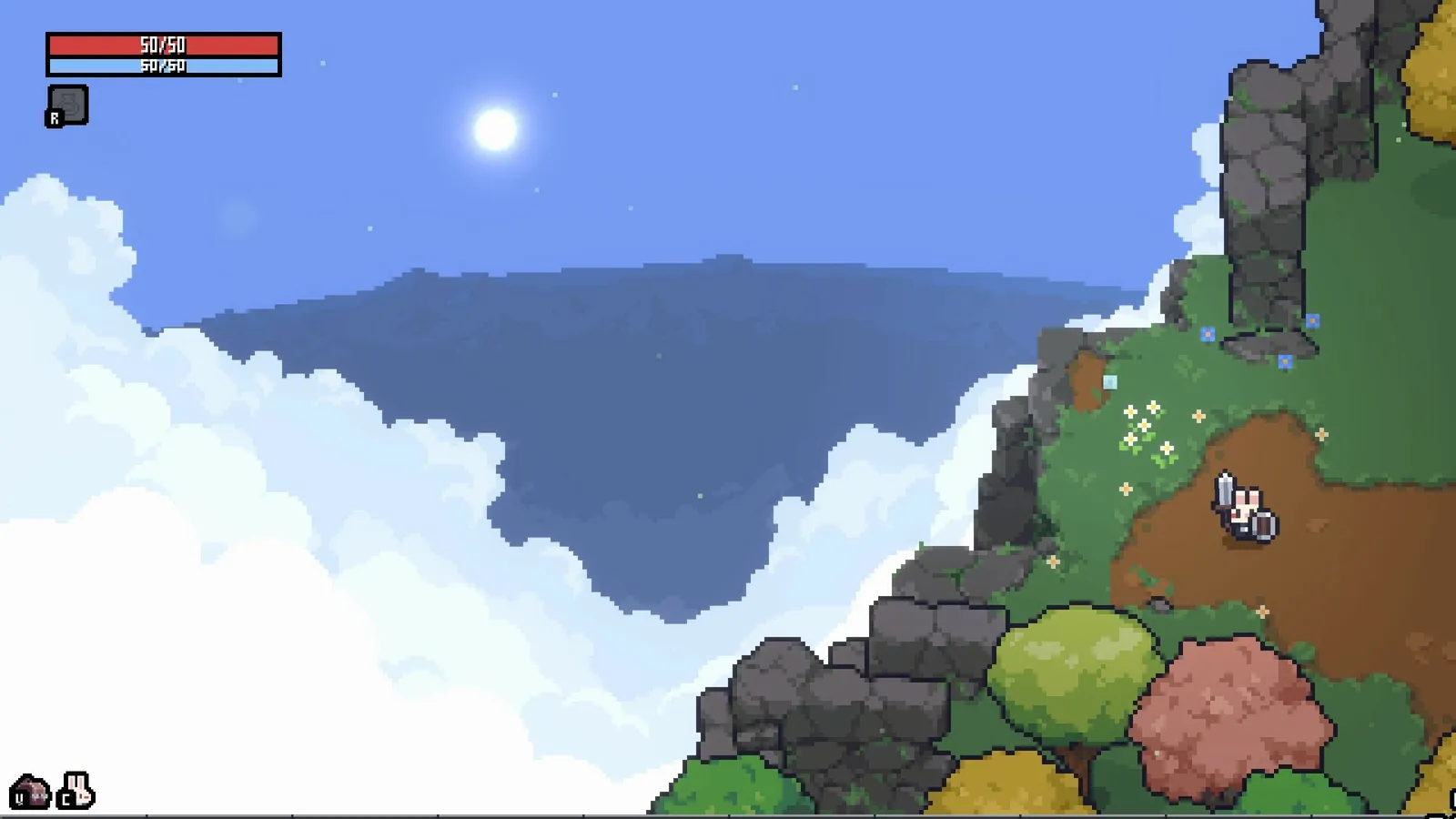
What Is Sephiria?
Sephiria opens on the "Day of Destiny," when a prophecy comes true and demons start pouring out of a colossal tower that supports Bunnyville. The villagers will be slaughtered unless the protagonist — a small merchant of death sent back in time by the World Tree — goes down the tower and changes fate. That framing matters: instead of climbing, you descend through themed biomes (mole mines, grasslands, a library, a wasteland, a root cave), meet anthropomorphic animals who trade, ally, or fight you, and collect artifacts to become strong enough to face what waits at the bottom.
Per the official Sephiria Steam page, the full game spans 6 chapters, more than 60 distinct enemies, over 10 unique bosses, and 6 weapons with over 50 upgrades each — with online co-op for up to 4 players.
The tone is deliberately cute on the surface: pixel art, a rabbit hero, a village of animals. But the deeper you descend, the darker the rooms get, and the bosses escalate into full bullet-hell encounters. Community reviews consistently praise this contrast — the game looks like a cozy farming title and plays like a demanding action game.
Core Loop: Descend, Die, Spend, Repeat
Every Sephiria run follows the same skeleton: you start from the hub village, pick a weapon, enter the tower, and descend floor by floor. Each floor is a starting room → three path choices → boss room. The path nodes are shown at the top of the map, and you pick your route based on what your build needs: level-up orbs, artifact choices, enchantment altars, tablets, currency chests, +15 max HP hearts, weapon anvils, shops, or the rare Tree Roots node that grants a Miracle once per run.
Two currencies drive progression:
- Sapphires — the permanent meta currency. You earn them by dying (the deeper you got, the more you bank) and spend them on the Destiny Inscription tree in the village: health, inventory space, Talent Points, level-up restoration, dice rerolls, and weapon unlocks.
- Leaves — the in-run currency. Earned from enemies and events, spent at shops and merchants.
This is a roguelite (not a roguelike): you keep permanent power between runs through Destiny Inscriptions and Talents, while artifacts, tablets, and your inventory board reset each run. Community data on Game Brain puts the median playtime around 28 hours, and completionist runs for all achievements go well past 60.
Repair the house first (unlocks Talents), then spend Sapphires on Talent Points and Level Up Restoration before anything else. A bunny that can heal on level-up and has Talent support survives far more runs than one chasing damage nodes early.
The 6 Weapons
The Steam page lists 6 distinct weapons, each with a branching upgrade tree of 50+ nodes, and each with its own attack coefficients:
| Weapon | Style | Signature mechanic |
|---|---|---|
| Sword & Shield | Balanced melee | Guard + Perfect Guard, sweeping special |
| Greatsword | Heavy melee | Massive single hits, spinning Whirlwind special |
| Dagger | Fast melee | 5-hit combos, Parry and Fury |
| Katana (Saber) | Combo melee | Lead/Strike stance switching, MP special |
| Crossbow | Ranged | 10-arrow magazine, piercing bolts, slow while firing |
| Staff | Ranged magic | Elemental magic, special-heavy play |
Weapon upgrades are permanent meta-progression applied at the village blacksmith, and each weapon can be enhanced twice — the second enhancement builds on the first, so the first upgrade you pick matters. The community wiki also tracks a seventh "Pole" weapon added in an earlier patch, but the official 1.0 store description counts six families. For the full stat table, coefficients, and upgrade recommendations, see the Sephiria weapons guide.
Artifacts and Tablets — the Inventory Puzzle
Sephiria's signature system is its inventory board. Artifacts are the effect items: damage multipliers, companions, defense, magic support, economy. Tablets are the modifiers: each tablet boosts adjacent artifacts according to a placement pattern (top row, cross, column, diagonal). The result is that your build is a physical puzzle — an artifact is only as good as where you place it, and tablets can cripple a neighbor if you misplace them.
Artifacts carry combo tags (Precision, Glacier, Ember, Dark Cloud, Windsong, Academy, Guardian, Planet, Colleague, Shadow, Arcane, Hextech). Collect enough compatible tags and you activate combo thresholds that transform the build. Two YouTube-level community tips worth internalizing: keep one or two flexible cells open until the board has a direction, and rearrange after every boss — two or three minutes of grid maintenance is worth more than another random artifact.
Some tablets boost artifacts above and below while downgrading those on either side. Placing one carelessly can silently kill your main damage artifact. The community wiki's Artifacts guide walks through the four questions to ask before locking in a pickup.
Talents and Destiny Inscriptions
Talents are permanent passive skills equipped at your repaired house. You unlock the system by repairing the house (collect 2 Wood in the southwest forest, return home, use the Hammer), then spend Talent Points — up to 25 — as you earn them through the Destiny Inscription tree. You can respec freely outside the dungeon.
Community consensus for early points is consistent across sources: Survival, Endure, and Wisdom first (stay alive, reduce damage, improve resource gains), then Swiftness (movement speed, and an extra dash at higher levels) and Wrath (damage) once you can actually survive rooms. The wiki's Talents guide also highlights Patience for defense and a Foundation Tablet.
Destiny Inscriptions are the permanent upgrade tree (the "fate tree"). Priority order recommended by the community: Talent Points → Level Up Restoration → Dice (reroll) → everything else, with the Graceful Weapon Training inscription (10 Sapphires) unlocking the staff after you clear Chapter 5.
The Dungeon Map, Nodes, and Random Events
Reading the floor map is the single biggest skill difference between a first-run player and a consistent clearer. Each floor path ends at a boss node, and the node icons tell you exactly what you are walking into. The community wiki's guide to the core systems breaks down the full node vocabulary:
- Level Up — green light orb that grants an instant level; you can skip it and bank the XP if you are close to leveling.
- Artifact — choose one of three artifacts. Enchantment — altar that upgrades an existing artifact (1–3 upgrades depending on size).
- Tablet — choose one of three tablets. Money — currency chest. Green Heart — +15 max HP.
- Anvil — weapon upgrade. Dice — grants two rerolls (requires the Dice inscription). Shop — smaller merchant inventory.
- Tree Roots — appears once per run; grants one Miracle with no fight.
Node modifiers at the bottom of a path add spice: Derangement (enemies randomly buffed), Mini Boss (the floor's mini-boss appears alongside the normal layout and drops valuable artifacts). Random events hide off the map entirely — arenas with 3–4 waves, secret rooms behind cracked walls, Lucky Clover (+6 max HP or +4 defense), a rat merchant with ~10% better prices, the Pocket Dimension (spend Sapphires to unlock 9 artifacts in a fixed order — this is the "blue portal" behind an achievement), obelisks that change your stats randomly, fountains with green (XP) / gold (money) / red (monsters) effects, and the blood-donation Iron Maiden event.
When you enter a room, ranged attackers (bombers, orb-shooters) drain more HP than anything melee. Kill them first, then mop up the melee line. This one habit saves more runs than any artifact pickup.
Hard Mode and Endgame (Root's Retreat)
Beyond the six story chapters, Sephiria's endgame is Hard Mode: a remixed tower with tougher enemies, new modifiers, and a leaderboard-style stage climb called Root's Retreat. Hard Mode is where three of the game's achievements live (clear Stage 1, Stage 15, and Stage 30), and the community wiki recommends a defense-first build for early Hard Mode attempts — lower burst is a fair trade when one mistake can end the run. The 1.0 launch announcement confirmed "additional hard modes and rewards" as part of the full release, and the final boss of Chapter 6 received a documented Phase 1 radial bullet-spread adjustment in a later patch, so check the current patch notes before trusting an old video of the fight.
Chapters, Enemies, and Bosses
The 1.0 release completes the six-chapter story. Stages include the Mole Base, Grassland, Library, Wasteland, and Root Cave, with Chapter 6 serving as the final sequence. Boss rosters shift by chapter: for example, Stage 1 starts with Blackhand Mogdi (a two-phase mole chief), and from Chapter 2 onward Ordner or Haj can replace him; Stage 3 pits you against Erma the Crazy Scientist, who pilots a golem with three hitboxes (burns deal triple damage against her); Stage 4 ends with Ascard, the cult leader who is the story's main antagonist; and Stage 5's Qliphoth fight is a bullet-hell wall. The full health table and pattern notes are in the Sephiria walkthrough guide.
Online Co-op for up to 4 Players
Sephiria supports online co-op for up to 4 players through Steam Friend Invites. After both players finish the tutorial, the host opens the Mysterious Door in the hub and invites friends from the Steam list — there is no in-game server browser or code system. Hosts and guests earn unlocks and upgrades equally, the shop inventory is shared, and you can trade items and revive fallen companions. The catch: EXP from a combat zone only counts for players present when the zone starts, so splitting up is the fastest way to fall behind. Full setup steps and progression rules are in the Sephiria co-op guide.
Per the official Steam store feature list, co-op supports trading items and reviving fallen companions — "claim victory as a team."
Sephiria vs Dungreed — Same Studio, Different Game
Dungreed (2018) was TEAM HORAY's breakout hit: a side-scrolling platformer roguelite about a knight exploring a dungeon to save a kingdom, with heavy movement focus. Sephiria keeps the pixel art and the "village under threat" premise but flips the camera to top-down isometric and slows combat into deliberate dodge-and-position gameplay closer to Enter the Gungeon or Ember Knights. Reddit comparisons put it plainly: Dungreed is a 2D platformer with a lot of movement; Sephiria is top-down with more methodical positioning and a much deeper inventory system.
The community wiki reports a crossover costume tied to Dungreed ownership — the "Adventurer Bunny" — but flags the exact unlock condition as unverified. If you own Dungreed, check your Costume menu after a run; don't treat the old assumption as confirmed.
Costumes, Secrets, and Hidden Content
There are 20+ costumes at 1.0, from the default Brown Rabbit to unlockables like the Red-Clothed Cat (reach 50 Fire damage), Red Fox (use 10+ Tablets in one run), Frog (50 Lightning damage), Mole (defeat 300 fanatic moles), White Wolf (defeat the Stage 2 boss five times), Wizard Bunny (50 magic kills), and the Wingless Bat (donate blood to the friendly wanderer Manok five times — the same repeatable event tied to the game's secret rooms). See the Sephiria secret rooms guide for how to hunt cracked walls and the hidden content around them.
Price, Platforms, and System Requirements
Sephiria costs $14.99 on Steam, with a -40% launch discount ($8.99) that runs until August 10, 2026. The official launch announcement warned that the price will increase once the sale ends and Steam's price-change cooldown passes. The game runs on Windows and macOS (Apple Silicon native), ships in 12 languages, and is rated Steam Deck: Playable — it runs on SteamOS with minor caveats like small text and manual on-screen-keyboard use for text entry. Full specs are in the Sephiria system requirements guide.
There is also a free demo on Steam — the same first run through the early chapters, and your demo progress transfers to the full game. The itch.io demo is a solo, Windows-only build with multiplayer removed, so if you want to try co-op with a friend, use the Steam version.
Who Should Play Sephiria?
Sephiria is a strong fit if you enjoy any of these three things: (1) action roguelites with tight dodge-and-parry combat (Hades, Enter the Gungeon, Ember Knights); (2) inventory/build puzzles where placement matters more than raw item power (Backpack Hero, Luck be a Landlord-adjacent deckcrafting, Tetris-style grid management); or (3) pixel-art indie games with surprising mechanical depth under a cute skin. It is less of a fit if you want a pure action game with no meta-progression, or if you dislike inventory micro-management mid-run — because Sephiria expects you to treat the grid as a living puzzle, not a passive stash.
If the game clicks, expect a long runway: a full story clear sits around 25–30 hours for most players, and the combination of weapon trees, 27 achievements, Hard Mode stages, and costume unlocks keeps completionists busy well past 60 hours.
Is Sephiria Worth Playing?
Current player reception is strongly positive: Very Positive across all reviews (roughly 93–94% positive of ~9,200 reviews at the time of writing, and 97% positive among English reviews), with a 1.0 launch that peaked above 28,000 concurrent players within days — over 34,000 at the all-time peak per SteamCharts. Praise centers on the responsive combat, the attack-telegraph system, the inventory puzzle depth, and build variety; criticism focuses on difficulty spikes, some underpowered weapon paths, and tight inventory space in later chapters.
If you want a roguelite where build-crafting is genuinely spatial rather than just a list of numbers, Sephiria delivers something few games in the genre attempt. At the launch discount price it's an easy recommendation; at the eventual post-discount price it's still worth it for fans of the genre. Decide with the Sephiria review guide if you're still on the fence.
FAQ
What is Sephiria?
Sephiria is a top-down action roguelite by TEAM HORAY (the Dungreed studio) where a bunny hero descends a demon-filled tower to save Bunnyville. It features 6 weapons, a spatial inventory build system, 6 story chapters, and 4-player online co-op.
Is Sephiria a roguelike or a roguelite?
Roguelite. Runs are randomized and death resets your inventory, but Sapphires earned from dying fund permanent upgrades (Destiny Inscriptions, Talents, weapon trees) that make every run stronger.
How many weapons are in Sephiria?
Six: Sword & Shield, Greatsword, Dagger, Katana, Crossbow, and Staff. Each has a permanent upgrade tree with 50+ nodes.
Is Sephiria made by the Dungreed developers?
Yes — both games are by TEAM HORAY, a South Korean indie studio. Dungreed (2018) is a side-scrolling platformer; Sephiria is top-down and released 1.0 on July 31, 2026.
Does Sephiria have co-op?
Yes, online co-op for up to 4 players via Steam Friend Invites, with shared shops, item trading, and revives. Progression is earned equally by host and guests.
Related guides: Builds · Weapons · Secret Rooms · Tier List · Co-op · Walkthrough
Last updated: August 13, 2026.