Warframe Beginner's Guide — Is It Good, Pay-to-Win and How to Start in 2026
Warframe for beginners in 2026: what the game actually is, the first-week checklist (your frame, weapons, the star chart), the mod system, and how to not waste your first 20 hours.
Warframe Beginners Guide — Start in 2026 Without Getting Lost
Warframe is a free-to-play looter-shooter that's been running for over a decade — and it's famously overwhelming for new players. If you're searching "warframe beginners guide," you want to know: what is this game, what do I do first, which starter do I pick, and how do the systems (mods, crafting, the star chart) actually work? Here's the 2026 starter playbook.
What Warframe Actually Is
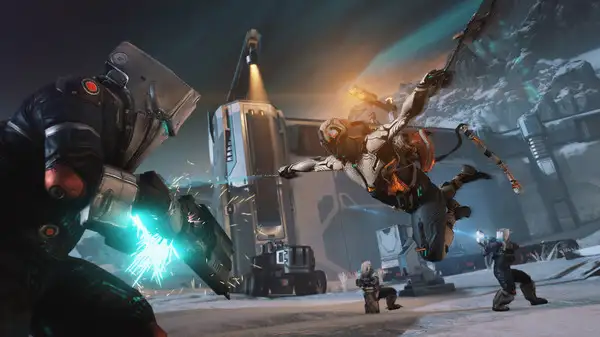
- Genre: free-to-play third-person looter-shooter with melee, parkour movement, and deep build-crafting
- The premise: you're a Tenno, piloting biomechanical Warframes (each with unique abilities), fighting across the solar system against the Grineer, Corpus, Infested, and more
- The loop: mission → loot → craft/upgrade → harder missions. The mod system is the build depth (see below)
- The size: the game has been growing since 2013 — dozens of frames, hundreds of weapons, and a full story campaign (including the celebrated 1999 update arc)
- Free-to-play reality: the game is genuinely F2P-friendly — everything meaningful is earnable in-game; Platinum (the premium currency) is tradable between players (see the trading guide)
Warframe's content in 2025–2026 is dominated by the 1999 update (the Höllvania setting) and the Tau-focused storyline (The Old Peace, December 2025, set up 2026's Tau expansion). New players have a decade of content ahead — which is a feature (endless goals) and a warning (don't rush the campaign).
The First-Week Checklist
Day 1: Pick your starter frame
The three starters (you pick one):
- Excalibur — balanced, the "classic" pick; good abilities, easy to build around. Recommended for first-timers.
- Mag — ability-focused caster; strong but less intuitive
- Volt — speed + electricity; great movement, squishier
Any starter works — you'll unlock/build other frames within weeks. Excalibur is the safe default.
Day 1–3: The star chart opens
- Play through the intro quests (Vors Prize → the opening arc) — they teach the loop
- Unlock missions on the star chart (Earth, Venus, etc.) — nodes unlock progressively; the main story quests unlock as you complete junctions
- Don't buy weapons with Platinum — credits/blueprints from the market are free; save plat
Week 1: The mod system clicks
- Mods are the game's gear: each weapon/warframe has slots, mods fill them, and mod capacity grows with ranks (use Endo + credits to rank up mods)
- The build rule: damage mods first (Serration for rifles, Pressure Point for melee), then elemental mods (the elemental combos — Corrosive, Viral — matter more than raw damage)
- Reactors/Catalysts (double capacity) are the premium-but-earnable upgrade — don't waste them on early gear
Week 2+: The crafting grind begins
- Blueprints drop from bosses/quests → craft frames (12-hour + wait times) in the Foundry
- Farming frames: each boss drops a frame's parts — the standard loop is "beat boss → craft frame"
Your first 20 hours are tutorial-shaped whether they feel like it or not: you're learning movement (parkour is the real combat skill), the mod system, and which content you enjoy. Don't rush to "endgame" — the star chart + story quests are the intended on-ramp.
The Mod System (The Whole Build Game)
Warframe's depth lives in mods:
- Slots & capacity: each item has 8 mod slots (more with a catalyst) and capacity that scales with the item's rank (and forma, which resets rank but adds polarity)
- Elemental combos: combining elemental mods creates new damage types — Viral (health shred), Corrosive (armor shred), Heat (DoT) are the current meta staples
- The new-player trap: slotting every mod you own with no synergy → weak builds. Learn one damage combo, build around it
- Don't buy weapons with Platinum — the market has free credit blueprints for everything early. 2) Don't spend Reactors/Catalysts on the starter gear — save them for your first "real" frame/weapon (after you know what you like).
Is Warframe Pay-to-Win?
The honest answer: no — it's pay-to-skip-time, and even that is optional:
- Every frame, weapon, and cosmetic is earnable in-game (crafting, drops, events)
- Platinum (premium currency) can be traded between players — you can earn plat by selling prime parts/mods (see trading guide), making the premium currency effectively farmable
- What money buys: time (skip crafting waits), cosmetics, and inventory slots (the one thing you might buy — slots for frames/weapons are the game's gentle monetization nudge)
Frequently Asked Questions
Is Warframe worth playing in 2026?
Yes — it's in one of its best content periods (the 1999/Tau storyline, The Old Peace update), the game is free, and a decade of content means enormous depth.
What should a new player do in Warframe?
Play the intro quests, unlock the star chart, learn the mod system (damage mods + one elemental combo), and craft new frames from boss drops. Don't rush to endgame.
Which starter warframe should I pick?
Excalibur (balanced, classic) for first-timers. Mag and Volt are fine alternatives — you'll build other frames within weeks anyway.
How does the mod system work in Warframe?
Mods fill 8 slots per item; capacity scales with rank and forma. Prioritize damage mods, then elemental combos (Viral/Corrosive/Heat). Catalyst/reactors double capacity — save them for gear you'll keep.
Is Warframe pay-to-win?
No — everything is earnable in-game, and Platinum is tradable between players (effectively farmable). Money buys time and cosmetics, not power.
Related guides: Warframe Trading · Warframe Builds · Warframe Tools
Last updated: August 11, 2026.