How to read the Stellaris galaxy map: hyperlanes, chokepoints and habitable planets, plus start settings and a first-50-years checklist for beginners.
Stellaris Map — Reading the Galaxy and Surviving Your First 50 Years
The Stellaris galaxy map is the whole game. Systems are linked by hyperlanes, and your expansion, defense and diplomacy all play out on "how you read the map." People searching "stellaris map" split into two camps: half want to know the map itself (size, shape, hyperlane density), and half are beginners asking "how do I actually start?" This guide answers both — learn to read the galaxy, then follow the checklist to survive your first 50 years.
Official resources: Steam store page · Stellaris Wiki (Paradox Wiki) · Wikipedia: Stellaris · IGN game page
Galaxy Map Basics: Reading the Board
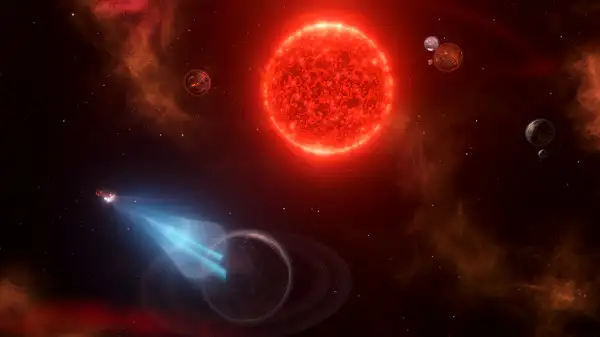
- Systems: the map's basic unit — a star, its planets and resource deposits. Drop an Outpost to claim one
- Hyperlanes: the routes connecting systems. Expansion only follows hyperlanes — lane topology decides your borders
- Gateways/Wormholes: fast travel for the late game; the L-Cluster is a special cluster of systems (Distant Stars content)
- Uninhabitable zones: black holes, pulsars and nebulae — dangerous, but with unique resources and risks
A system where two or three hyperlanes meet is a natural defensive line — upgrade the Starbase and park a fleet there and one system guards an entire direction. The first thing you should do when you load in is find your chokepoints.
Start Settings (Beginner Parameters)
| Setting | Recommendation | Why |
|---|---|---|
| Map size | Small (400 systems) or Medium (600) | Faster turns, fewer variables |
| Galaxy shape | Spiral or Elliptical (default is fine) | Shape only affects looks and neighbor density |
| AI empires | Default or fewer | Less pressure early |
| Difficulty | Cadet or Ensign | Cadet gives economic bonuses, ideal for learning |
| Hyperlane density | Default or low | Low density = more chokepoints, easier defense |
| Mid/end-game years | Default or later | Buys you time to learn |
The First 50 Years: A Checklist to Survive
Years 1–10: Exploration and Foundations
- Send science ships out immediately — explore to reveal the map fast, then survey for resources and anomalies. Anomalies are the fattest early income source in the game (see the Events overview)
- Never let a research slot idle: physics, society and engineering should always be running
- Outpost the key systems: prioritize planets, minerals and energy, expanding contiguously along lanes — skipping systems makes the cost skyrocket
- Planet basics: districts and research labs from the start — the early game is a race between minerals and science
Years 10–30: The Snowball
- Second colony: colonize your most habitable planet first (green and yellow ratings; stay away from red, under 40% habitability)
- Open diplomacy: make contact with every empire you meet and sign non-aggression pacts and commercial agreements when the timing is right
- Don't go naked: even pacifists need a defensive fleet — weak neighbors will test you
Years 30–50: Mid-Game Hooks
- Specialize your planets: one planet, one job (research, minerals or energy). Mixed planets are inefficient
- Pre-crisis check: as mid-game crisis warnings approach, make sure you're not the weakest empire in the galaxy
- Tech milestones: cruiser hulls plus repeatable research/economic techs
New Stellaris empires die of economic collapse, not war: spamming outposts (double cost in influence and economy), idle research, and colonizing bad planets (maintenance blows up). Golden rule: check your income before every expansion — do the math before you build.
Post-4.0 Map and Economy Changes (2025+)
The 4.0 "Phoenix" update reworked the economic foundation of the map:
- Trade is now a resource: the old trade route system is gone; Trade is used for market purchases plus fleet and planet logistics — fleets cost different upkeep in friendly vs. hostile territory
- Zones: the planet interface now has zone specializations, and Empire Focus (guided tasks) points beginners in a sensible direction
- Databank: an in-game encyclopedia lives in the corner of the screen — look up any concept without alt-tabbing
The beginner checklist still holds after 4.0; only the resource definitions changed (see the Update page).
How to Win at Stellaris
- Conquest route: fleets plus Colossi (Apocalypse) roll over the galaxy
- Diplomacy route: federation victory, dominate the Galactic Community
- Crisis route: become the crisis (Nemesis), or play galactic guardian and fight it off
- Sandbox route: what most players actually do — "winning" is telling your empire's story
Reputation and Player Count
- Reputation: Steam Very Positive with IGN 8.5-level evergreen reviews; reputation rebounded after the 4.0 performance overhaul
- Player count: Steam concurrent players sit steadily in the tens of thousands (peaks at 100k+ level) — a textbook long-tail success for a decade-old game (see the Dev Diary page)
FAQ
Is Stellaris hard for beginners?
Yes — the grand strategy learning curve is steep. But "United Nations of Earth start + small map + Cadet difficulty + this checklist" turns your first run into a manageable tutorial.
What empire should I start with in Stellaris?
The United Nations of Earth — balanced and straightforward. For a second run, try the Mechanist robot start.
How do I win in Stellaris?
Conquest / federations / surviving the crisis / sandbox storytelling — most players treat it as a sandbox, and the endgame crisis is the de facto final boss.
What map size should I use?
Beginners should use Small (400 systems) or Medium (600), with AI count at default or lower.
How many people play Stellaris?
Steam concurrent players average in the tens of thousands daily with peaks at 100k+ — a ten-year long tail (numbers fluctuate by patch).
What should I focus on early in Stellaris?
Research (never idle a slot), minerals (the fuel of expansion), and claiming systems contiguously along hyperlanes — and always check income before you expand.
Related guides: Stellaris Origins — every origin explained · Stellaris Update — current version · Stellaris events & anomalies · Stellaris DLC buying guide · Stellaris platforms & board game
Last updated: August 13, 2026.