MARVEL Tōkon: Fighting Souls Beginner's Guide — How to Play & Win Your First Matches
Everything a new player needs for MARVEL Tōkon: Fighting Souls: the 4v4 tag system, Tōkon Assemble, controls, best starter characters, Episode Mode, and PC vs PS5.
MARVEL Tōkon: Fighting Souls Beginner's Guide — How to Play & Win Your First Matches
MARVEL Tōkon: Fighting Souls is a 4v4 tag-team fighter from Arc System Works (the Guilty Gear and Dragon Ball FighterZ studio), released worldwide on August 6, 2026 for PS5 and PC (Steam & Epic). Instead of one hero per side, each player controls a team of four Marvel characters — you tag between them, call assists, and unload team-wide supers when the situation turns desperate. It launched with 20 characters in five official teams, a full single-player Episode Mode, and a fighting system the game itself documents as 46 mechanics.
This guide walks through everything a new player meets in the order they meet it: what kind of fighter this is, how the tag system works, the controls, which characters to start with, Episode Mode, and what to expect on PS5 versus PC.
Here's what you'll learn:
- Why Tōkon is a tag fighter, not four characters sharing a health bar
- The 8 tag mechanics and what Tōkon Assemble actually does
- The L/M/H/U control scheme and Quick Skills vs command inputs
- The official beginner-friendly characters (and which ones to avoid early)
- How Episode Mode works and what it unlocks
- The exact PC system requirements and the launch-week port situation
What Kind of Fighter Is MARVEL Tōkon?
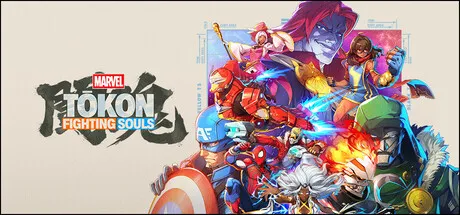
Tōkon (闘魂, literally "fighting souls") is a 2.5D tag-team fighter. Each side brings four characters, but only one is on screen at a time — the other three wait off-screen and come in when you swap to them or call them for a single assist attack. A match plays like a classic 2D fighter (you attack, block, and move), except every layer has a tag-team version attached to it: 8 tag mechanics, 11 assist types, 9 defensive mechanics, and the team-wide Tōkon Assemble.
The launch roster is 20 characters grouped into five official teams of four. Each team is exactly the size of a squad, which makes them ready-made line-ups:
| Team | Characters |
|---|---|
| Fighting Avengers | Captain America, Iron Man, Hulk, Black Panther (Shuri) |
| Amazing Guardians | Spider-Man, Ms. Marvel, Star-Lord, Peni Parker |
| Unbreakable X-Men | Storm, Magik, Wolverine, Danger |
| Knights of Doom | Doctor Doom, Magneto, Green Goblin, Carnage |
| Samurai Outriders | Ghost Rider, Blade, Loki, Deadpool |
Nothing in the game rewards or penalises keeping an official team together. The five teams are how the character select screen groups the roster, and since every squad holds four fighters, any team is a complete line-up — but mixing across teams is completely normal and often better.
The Tag System — Tōkon Assemble, Tag-Ins and Assists
The tag system is what makes Tōkon a tag fighter rather than four characters sharing a health bar. The game ships 8 tag mechanics, and Tōkon Assemble is the team-wide one everything else hangs off.
Tōkon Assemble is the All-Out Attack-style team super. You can only use it when you're in danger — the opponent has won two of the three rounds and your team is on the back foot — and all three bench members need to be available. It also requires the assist and skill gauges to be filled. When it triggers, a cinematic sequence plays and the main member finishes the opponent. It's a comeback tool, not a neutral button.
The other tag mechanics cover how characters enter and leave the fight:
- Tag swap — trade the point character for a teammate; the incoming member attacks as they enter
- Assists — call a teammate in for a single action without swapping to them
- Team Attack — a multi-member coordinated attack
- Air Tag-In / Grounded Tag-In — incoming member enters from the air or the ground
Assists are worth understanding early because they're the largest single mechanic category: 11 assist types, split into 4 positional slots (Assist A/B/C/D) and 7 role assists named for the job they do — Grounded Guard, Air Guard, Grounded Interrupt, Parry, Raid, Tag and Ultimate Assist. You pick the assist that solves the problem in front of you: a parry assist to punish aggression, a guard assist to get out of pressure.
The Controls — Light, Medium, Heavy, Unique
MARVEL Tōkon uses a four-button fighter layout: Light, Medium, Heavy and Unique. Most normal moves are on L/M/H, while the Unique button (and its variations) carries each character's signature tools — Captain America's shield throw, Spider-Man's webs, Doctor Doom's projectiles.
Beyond normals, the game gives you two input styles for specials:
- Quick Skills — one-button special moves, perfect for newcomers
- Command inputs — the classic motion inputs (quarter-circles and the like) for players who want cleaner control and shorter recovery
You can mix both: use Quick Skills while you're learning, then move specific moves to command inputs as you build muscle memory. The game ships with both available, so there's no wrong way to start.
The PS5 version uses spatial audio and DualSense features (haptics/triggers) to sell impacts and the motion-comic story beats. On PC these features are absent — gameplay is otherwise identical.
On offense, the basic loop is a Link Attack: chain Light → Medium → Heavy for the autocombo, then take a Break route (a damage-relevant branching point) and finish with a Super or Ultimate ender. Practicing one Link Attack route per character is enough to be dangerous online in the first weeks.
Defense & Offense Fundamentals
The game ships 9 defensive mechanics, and guarding is the base of all of them. Two habits matter more than anything else in week one:
- Don't mash on wake-up. Your opponent's incoming character can enter with an attack — hold guard when someone is about to land on you, then take your turn after the blockstun.
- Use your assists to escape. If you're stuck blocking a pressure string, a Guard Assist or Parry Assist creates the space to tag out.
Tōkon rewards patience the same way every Arc System Works game does: offense is strongest at close range with a mix-up, and defense is strongest when you know when to take the throw, the parry, or the chip damage.
Choosing Your First Character
The character select screen shows an EASE OF USE rating — the more stars, the easier the character. According to the official PlayStation Blog beginner's guide (by game director Kazuto Sekine), the most beginner-friendly characters are:
- Captain America — balanced all-rounder: shield throws, gap-closing lunges, anti-airs
- Ms. Marvel — long-range stretchy normals with an easy Elasti-Grab approach
- Wolverine — aggressive melee with simple confirms; press buttons, win scrambles
Iron Man and Spider-Man are also relatively easy to learn. On the other end, Storm and Danger are "highly technical" characters with slower payoff. Save them for your second or third pick.
When you build a first team, combine a close-range specialist with a long-range specialist. The official advice is that Wolverine's aggressive melee pairs well with Iron Man's projectiles — a rushdown point character with a zoner on the bench covers each other's bad matchups.
Since you keep your point character for the whole match, learning one hero at a time beats spreading practice thin across four. Pick a favourite, run Episode Mode with their team, then expand the roster once you can do one Link Attack route without looking at the buttons.
Episode Mode — The Single-Player Campaign
Episode Mode is Tōkon's dedicated story campaign. The story is an original Marvel narrative written by comics author Kieron Gillen, told from each team's perspective — every team has its own Episode, so you see the same events from five different angles as they respond to the Champion's threat to Earth.
Presentation is the standout: instead of fully animated cutscenes, the game uses motion-comic sequences — American comic artwork with manga-inspired panel transitions, voice acting, camera movement and effects. Voice acting ships in ten languages (English, French, Italian, German, Spanish, Brazilian Portuguese, Latin American Spanish, Japanese, Korean and Chinese).
Two things to know before you start:
- Battles are still the heart of it. The motion comics connect fights, they don't replace them. Each Episode is a sequence of story battles with a team's arc attached.
- Beating the first Episode unlocks The Champion — the game's antagonist, who becomes a playable 21st character. He's the only unlockable in the launch roster, and he doesn't use the quick team attacks like everyone else, so he plays more like a novelty than a serious pick.
PC vs PS5 — What to Know Before You Buy
Tōkon costs $59.99 for the standard edition on both platforms. It is a PS5 console exclusive — there is no Xbox or Switch version.
System requirements (PC):
| Component | Minimum | Recommended |
|---|---|---|
| OS | Windows 11 | Windows 11 |
| CPU | Intel Core i5-8400 / AMD Ryzen 5 1600X | Intel Core i7-8700 / AMD Ryzen 5 3600X |
| RAM | 16 GB | 16 GB |
| GPU | Nvidia GeForce RTX 2060 6GB / AMD Radeon RX 6600 XT 8GB | Nvidia GeForce RTX 3070 8GB / AMD Radeon RX 7600 XT 16GB |
A PlayStation account is required to play on PC, so create one before launch day. The game was also briefly region-locked on Steam for over 100 countries at announcement, but that restriction has since been lifted.
The PC port launched with serious performance and stability complaints — Steam reviews landed at Mixed within the first days, with widely shared reports of stutter, long load times and crashes that PS5 players didn't hit. Arc System Works acknowledged the problems, promised fixes in a day-one patch, and issued a response to the community. Notably, the game does not launch on Steam Deck / SteamOS (Linux) at all, which drew additional criticism. If you're on PC, check the current patch notes and recent reviews before buying — the situation was improving patch by patch through launch week.
On the plus side, PS5 owners get DualSense feedback and a lower-risk local/online experience out of the box; PC players get Steam's fighting-game ecosystem, a higher framerate ceiling on capable hardware, and Epic Game Store availability on day one.
FAQ
Is MARVEL Tōkon: Fighting Souls on Xbox or Switch? No. It's a PS5 console exclusive with a PC release (Steam and Epic Games Store). There is no Xbox Series X/S or Switch version, and none has been announced.
Do I need a PlayStation account to play MARVEL Tōkon on PC? Yes — a PlayStation account is required even on Steam/Epic, so it's worth creating one before you launch the game.
Who are the best characters for beginners in MARVEL Tōkon? Captain America, Ms. Marvel and Wolverine are the official beginner picks (highest EASE OF USE ratings). Iron Man and Spider-Man are the next step up; Storm and Danger are the most technical and least friendly to newcomers.
What is Tōkon Assemble in MARVEL Tōkon: Fighting Souls? It's the team-wide All-Out Attack super, usable only when you're in danger (the opponent has two of three rounds) with all three bench members alive and the gauges filled. It ends with a cinematic finisher by the main member.
Can you play MARVEL Tōkon: Fighting Souls on Steam Deck? No — the game does not launch on SteamOS/Linux at all, which was a widely discussed complaint at launch. Windows PC and PS5 are the only platforms.
How many characters are in MARVEL Tōkon at launch? 20 playable characters in five teams, plus The Champion unlockable (21 total) for beating the first Episode Mode chapter.
Related Guides
- MARVEL Tōkon: Fighting Souls — All 20 Characters & Teams
- MARVEL Tōkon: Fighting Souls — Tier List (Best Characters)
Last Updated: August 11, 2026 — verified against the official PlayStation Blog beginner's guide, Arc System Works specs and launch-week coverage.