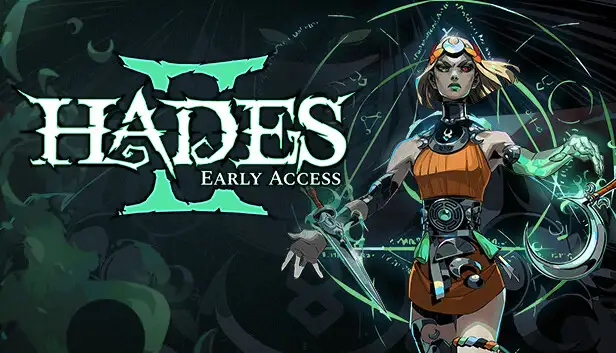
Pictures of the God Hades — Supergiant's Art, Design and the Myth Behind It
Hades and Hades 2's art and mythology explained: the real Greek myths behind the game, the art style (Greek pottery + modern), the myth-faithful vs myth-twisted characters, and the game's iconic soundtrack.
Hades Art & Mythology Guide — The Real Greek Myths Behind the Game
Hades is the rare game where the art direction and the mythology are one thing — Supergiant built the game's entire visual language (Greek pottery + modern comic, the chthonic palette) around its mythological source material, and then wrote a story that's both faithful to and subversive of the myths. If you're searching "hades art and mythology," here's everything: the art style's origins, the myth-faithfulness, and the real myths behind the cast.
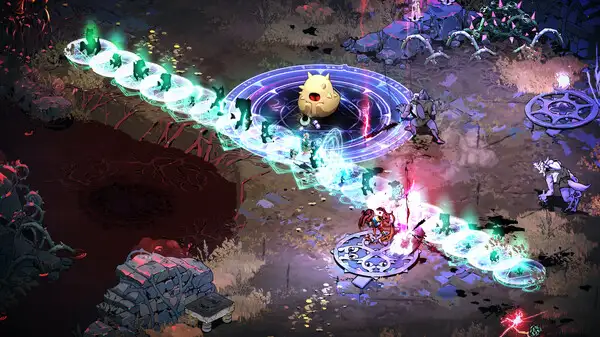
The Art Style: Greek Pottery Meets Modern Comics
Supergiant's art direction for Hades is famously deliberate:
- The core reference: ancient Greek pottery (black-figure and red-figure vase painting) — the character silhouettes, the linework, and the composition echo vase art
- The modern layer: bold colors, dynamic action, and comic-book energy over the vase-art foundation — the result is "ancient Greece as a modern action game"
- The palette: the Underworld is warm-and-dark (reds, golds, black — the chthonic/earth tones), contrasted with the cold surface; Hades 2 extends this with the moon/dawn tones of the Surface route
- The characters: every god keeps their mythic attributes (Zeus's lightning, Poseidon's trident, Demeter's cold) but gets Supergiant's "fashion-forward" reimagining
Supergiant's stated approach: "mythologically informed, not mythologically bound." The gods look recognizable (attributes, symbols, family traits) but are styled for the game's world. The art is about the myths without being museum-faithful.
How Accurate Is Hades to Greek Mythology?
The answer is structure-faithful, character-creative:
Faithful (the skeleton):
- The family tree is real mythology: Hades + Persephone, their children (Zagreus; Melinoë in Hades 2), Demeter's grief over Persephone's abduction, the Olympian siblings (Zeus/Poseidon/Hades), the Furies, the Fates, the Titans (Chronos devouring his children — the Hades 2 villain)
- The Underworld geography: the river Styx, Charon the ferryman, Cerberus, the Elysian Fields, Tartarus, the House of Hades — all real
- The mythic beats: Orpheus and Eurydice, Sisyphus, Achilles and Patroclus, Theseus and the Minotaur — all drawn from actual myths
Creative (Supergiant's twist):
- Characterization: mythic figures get modern, human personalities — Hades as a stern but caring father, Nyx as the nurturing night-mother, Zagreus as a rebellious but loving son
- The "shades": the game's named dead (Achilles, Orpheus, Sisyphus) are myth-accurate in story but given new context (their time in the House)
- Melinoë: a genuinely obscure mythic figure (a nightmare goddess in the Orphic hymns) — Supergiant picked her precisely because she was a blank slate
The Mythological Cast (Who They Really Are)
| Character | Real myth | The game's take |
|---|---|---|
| Zagreus | An obscure Orphic god (son of Zeus/early Dionysus) | The protagonist — Hades's son escaping the Underworld |
| Melinoë | Orphic nightmare goddess | Hades 2's protagonist — see the characters guide |
| Hades | God of the dead, Persephone's husband | The stern father — ruler of the House |
| Persephone | Goddess of spring, daughter of Demeter | The missing mother — her myth (abduction/marriage) is the series' emotional core |
| Chronos | The Titan who devoured his children | Hades 2's villain — escaped, conquering the Underworld |
| The Olympians | The standard 12 | Boon-givers with myth-accurate domains |
The Soundtrack (Part of the "Art")
The Hades soundtrack is inseparable from the game's identity:
- Composer: Darren Korb (Supergiant's composer, voice of Zagreus in Hades 1 and Orpheus), with vocals by Ashley Barrett
- The style: Greek-flavored folk/rock — bouzouki-like strings, driving percussion, and the signature vocal tracks ("In the Blood," "Good Riddance" — Eurydice's song — are fan favorites)
- Hades 2's score: Korb returned, expanding the sound with the moon/dawn themes of the sequel's dual routes
Frequently Asked Questions
What mythology is Hades based on?
Ancient Greek mythology — the Underworld, the Olympian gods, the Titans, and the mythic dead (Orpheus, Achilles, Sisyphus). Hades 2 centers the Titanomachy (Chronos).
How accurate is Hades to Greek mythology?
Structurally faithful (family tree, Underworld geography, mythic beats) with creative characterizations. Supergiant's motto: "mythologically informed, not bound."
Who is the art style of Hades based on?
Ancient Greek pottery (black/red-figure vase painting) fused with modern comic-book energy — the game's signature look.
Who composed the Hades soundtrack?
Darren Korb (with vocalist Ashley Barrett) — Greek-flavored folk/rock that's inseparable from the game's identity.
What is the story behind Hades?
Zagreus (Hades's son) tries to escape the Underworld to reach his mother Persephone; Hades 2 follows his sister Melinoë fighting Chronos's war against the Underworld and Olympus.
Related guides: Hades 2 Characters · Hades 2 Early Access · How Long Is Hades
Last updated: August 11, 2026.